
Introduction
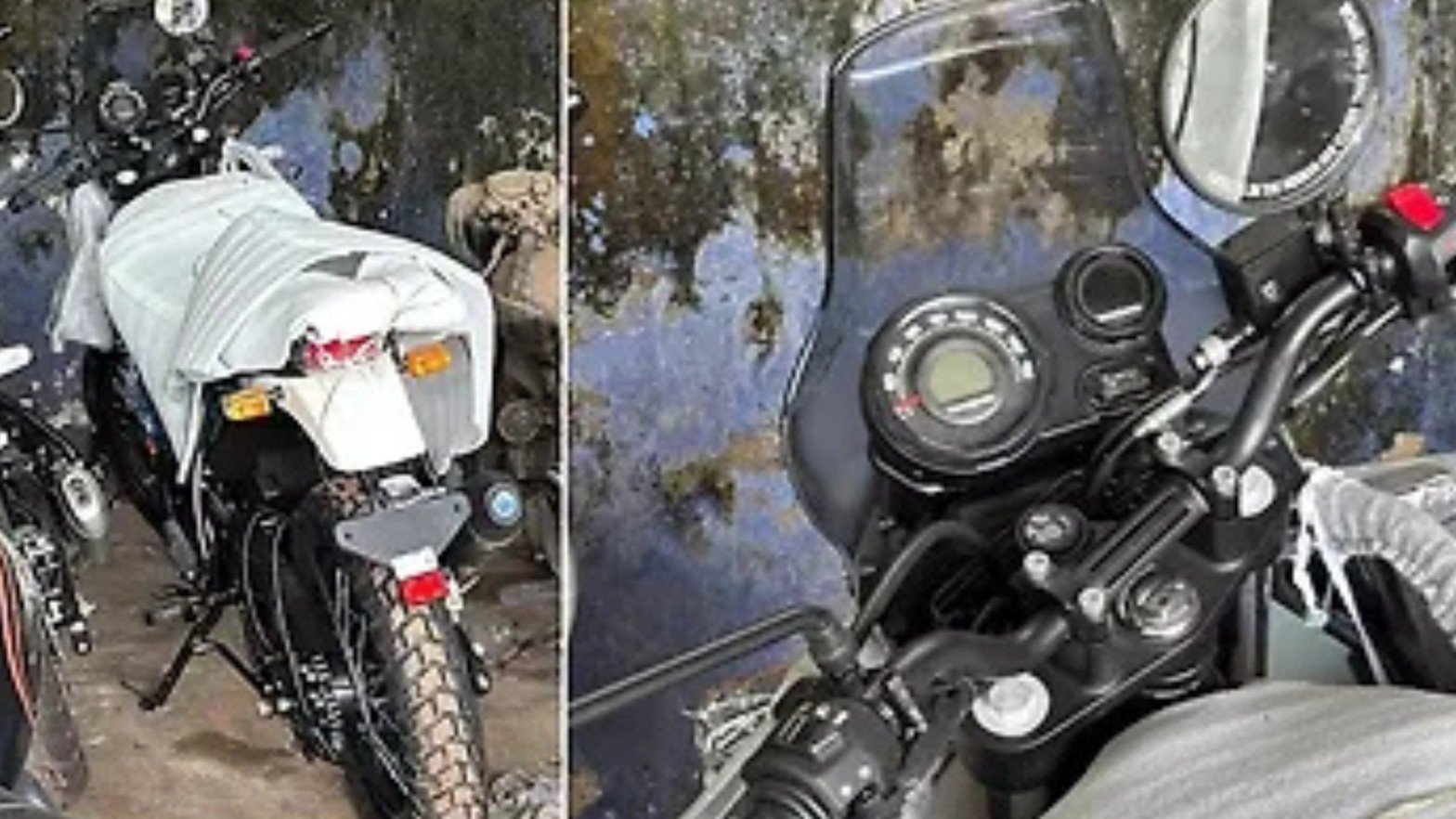
Just days before its official reveal, Royal Enfield’s most affordable new adventure motorcycle has already given itself away. The Himalayan 440, set to launch on September 4, 2026, has been spotted sitting at a dealership stockyard — apparently already delivered ahead of its own launch event. The photos, originally shared by a Reddit user and quickly picked up across the motorcycle press, give us the clearest look yet at a bike that’s been the subject of rumours for months.
And there’s one detail in these photos that’s already splitting opinion among longtime Himalayan fans: the instrument cluster. Here’s everything confirmed so far, and why that one change matters more than it might seem.
Key Highlights
- The Royal Enfield Himalayan 440 has been spotted at a dealership stockyard ahead of its confirmed September 4, 2026 launch.
- The bike gets a completely redesigned instrument cluster — a simple analogue speedometer with a small digital inset, paired with a separate Tripper navigation pod, replacing the Himalayan 411’s distinctive five-dial “cockpit” layout.
- It’s confirmed to share its 443cc LS440 engine with the Scram 440, producing 25.4 bhp and 34 Nm of torque — no change in power output from what’s already on sale.
- Spy shots show a 21-inch wire-spoke front wheel, larger than the Scram 440’s 19-inch unit, suggesting a genuine off-road focus.
- It’s expected to be priced around Rs 2.50 lakh (ex-showroom) — well below the Himalayan 450’s Rs 3.08-3.4 lakh range — though this remains an estimate, not an official figure.
- The launch date has a nice bit of symbolism attached: September 4, 2026 lands close to the 10th anniversary of the original Himalayan 411’s debut.
Table of Contents
How These Photos Surfaced
This particular sighting has a fairly traceable origin, which is worth mentioning since it adds a bit of credibility to the story. The images were first posted by a Reddit user, showing the motorcycle sitting at what appears to be a dealership depot — bikes that have already arrived ahead of the official public launch, likely so dealerships can prepare for deliveries starting soon after the event. Multiple publications picked up and verified the same set of photos independently, which is a reasonably strong sign this is genuine, not a hoax or an old image being recirculated.
The Big Story: A Completely New Instrument Cluster
If there’s one thing every single source agrees is the headline change here, it’s the dashboard — and it’s a genuinely significant shift from what longtime Himalayan fans are used to. The outgoing Himalayan 411 was known for its distinctive, almost “airplane cockpit” console, featuring as many as five separate round dials, including the well-loved Tripper navigation pod as one of several instruments.
The new Himalayan 440 takes a much simpler approach — the same setup already used on the Scram 440. It’s built around a single analogue speedometer with a small LCD inset for trip data and other ride information, positioned alongside a separate Tripper navigation module. It’s a genuinely more conventional, straightforward layout, and reactions to this are already mixed: it’s certainly more functional and easier to read at a glance, but it trades away some of the quirky character that made the 411’s cockpit so recognisable. One source specifically noted the Tripper unit might be offered as an optional extra rather than standard equipment — worth confirming at the actual launch event.
Engine: Confirmed, and Not What One Report Claimed
Here’s where we want to be direct about something, since getting this wrong would genuinely mislead anyone considering this bike. The Himalayan 440 is confirmed, across every credible source we checked, to share its LS440 engine with the Scram 440 — a 443cc, single-cylinder, SOHC, 2-valve, oil-cooled unit, producing 25.4 bhp at 6,250rpm and 34 Nm of torque at 4,000rpm, paired with a 6-speed gearbox. This is a modest, incremental improvement over the older LS411 engine’s 24.5 bhp and 32 Nm, thanks mainly to a 3mm larger bore — not a dramatic leap.
We came across one report claiming this bike gets a liquid-cooled engine and a genuine “power bump” — but that claim isn’t supported anywhere else, and directly contradicts the consistent, specific figures reported by outlets that have actually tracked this engine’s development closely, including Autocar India, which broke the original Himalayan 440 story. Since the Himalayan 411 and Scram 411 historically shared identical engines, there’s good reason to expect the same pattern here: no meaningful power change from the Scram 440, just the same proven, air/oil-cooled unit doing duty in a new chassis.
Wheels and Suspension: What’s Actually Different From the Scram 440
While the engine carries over unchanged, the chassis clearly doesn’t. The Scram 440 uses a 19-inch front wheel paired with a 17-inch rear. The spied Himalayan 440, by contrast, shows a noticeably larger 21-inch wire-spoke front wheel, with a 17-inch rear expected to complete the setup. This is a genuinely meaningful difference — a bigger front wheel generally rolls over rocks, ruts, and broken surfaces more confidently, which fits the Himalayan name’s off-road-focused identity better than the Scram’s more road-biased wheel sizing.
This particular test unit was spotted with standard wire-spoke wheels and tubed tyres, rather than the cross-spoke, tubeless-compatible wheels used on the pricier Himalayan 450. It remains unclear whether Royal Enfield will offer cross-spoke wheels on a higher Himalayan 440 variant, or reserve that setup exclusively for the 450 — this is genuinely unconfirmed at this stage. Longer suspension travel than the Scram 440 is also expected, given the Himalayan’s touring and off-road positioning, though exact suspension figures haven’t been confirmed yet.
Himalayan 440 vs Scram 440 — What We Know So Far
| Detail | Scram 440 | Himalayan 440 (spied) |
|---|---|---|
| Engine | 443cc LS440, 25.4 bhp/34 Nm | Same engine, unchanged |
| Front Wheel | 19-inch | 21-inch, wire-spoke |
| Rear Wheel | 17-inch | 17-inch (expected) |
| Tyres | Tubeless | Tubed (on spied unit) |
| Suspension Travel | Standard | Expected to be longer |
| Instrument Cluster | Analogue + LCD + Tripper | Same shared unit |
Where It Fits in Royal Enfield’s Line-Up
This bike is being positioned as a genuinely more affordable entry point into Royal Enfield’s well-regarded Himalayan family. Above it sits the Himalayan 450, powered by the more powerful Sherpa 450 engine and currently priced between Rs 3.08 lakh and Rs 3.4 lakh (ex-showroom). The Himalayan 440 is expected to slot in comfortably below that, giving budget-conscious adventure riders a way into the Himalayan name without stretching to the 450’s price bracket — essentially replacing the role the original Himalayan 411 used to play, before Royal Enfield moved that platform upmarket with the 450.
Expected Price
Official pricing won’t be confirmed until the September 4 launch itself, but early estimates from sources tracking this launch suggest a starting price around Rs 2.50 lakh (ex-showroom) — a meaningful gap below the Himalayan 450’s starting price, and in line with the bike’s positioning as the accessible, entry-level option in the range. As always with pre-launch estimates, treat this as an informed guess rather than a confirmed number until Royal Enfield makes it official.
The September 4 Date’s Nice Bit of Symbolism
Here’s a small, fun detail that adds some context to the timing of this launch: September 4, 2026 lands close to the 10th anniversary of the original Himalayan 411’s debut, which genuinely kicked off Royal Enfield’s entire modern adventure-touring lineup. Some reports also suggest Royal Enfield may choose to unveil the bike at the brand’s Himalayan Basecamp in Leh, Ladakh — a fitting, thematically appropriate location for a motorcycle carrying this name, and a nice touch if it plays out that way.
FAQs
1. When will the Royal Enfield Himalayan 440 launch?
It’s confirmed to launch on September 4, 2026.
2. What engine does the Himalayan 440 use?
The same 443cc, single-cylinder LS440 engine as the Scram 440, producing 25.4 bhp and 34 Nm of torque, paired with a 6-speed gearbox. There is no confirmed increase in power over the Scram 440.
3. What’s different about the Himalayan 440’s instrument cluster?
It replaces the Himalayan 411’s distinctive five-dial cockpit console with a simpler setup — an analogue speedometer with a small digital inset, alongside a separate Tripper navigation pod, shared with the Scram 440.
4. Does the Himalayan 440 have a bigger front wheel than the Scram 440?
Yes, spy shots show a 21-inch wire-spoke front wheel, compared to the Scram 440’s 19-inch unit, suggesting a stronger off-road focus.
5. How much will the Himalayan 440 cost?
It’s expected to be priced around Rs 2.50 lakh (ex-showroom), positioning it well below the Himalayan 450’s Rs 3.08-3.4 lakh range, though official pricing will only be confirmed at launch.
6. Is the Himalayan 440 replacing the Himalayan 411?
Yes, it’s expected to take over the Himalayan 411’s role as Royal Enfield’s more accessible, entry-level adventure motorcycle.
7. Will the Himalayan 440 get cross-spoke, tubeless wheels?
This is currently unclear. The spied test unit had standard wire-spoke wheels with tubed tyres, and it’s not confirmed whether a higher variant will offer cross-spoke, tubeless wheels like the Himalayan 450.
8. Is it true the Himalayan 440 gets a liquid-cooled engine and more power?
No, this claim isn’t supported by credible sources tracking this bike’s development. Every reliable report confirms it shares the same air/oil-cooled LS440 engine and output as the Scram 440.
Conclusion
With units already sitting at dealerships days before its official reveal, the Royal Enfield Himalayan 440’s September 4 launch looks about as confirmed as pre-launch news gets. The engine story here is refreshingly simple and consistent across every credible source: same proven LS440 unit as the Scram 440, no major power changes. The real story is in the chassis and design — a bigger, more off-road-ready front wheel, and a genuinely divisive new instrument cluster that trades some of the 411’s quirky character for a cleaner, more conventional layout. With pricing expected around Rs 2.50 lakh, this looks set to become the accessible entry point into Royal Enfield’s Himalayan family that many riders have been waiting for — we’ll know for certain in just a few days.
Read Also
Top 8 Best Bikes Under ₹2 Lakh for Highway Riding in 2026: Performance & Comfort
2027 Kawasaki Ninja 500 Launched in India at Rs 5.76 Lakh: Same Bike, Just Two Months Later