
Introduction
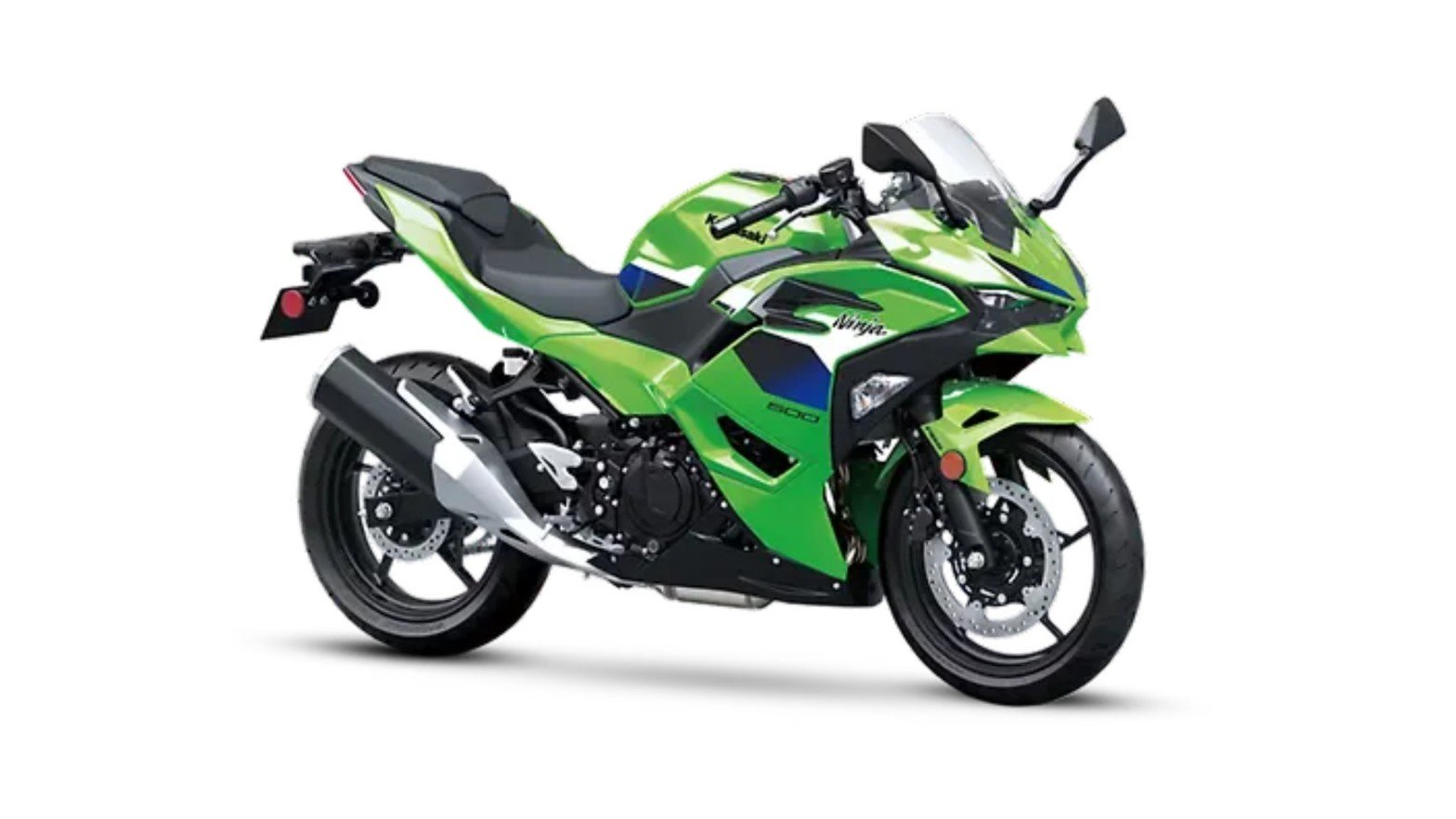
Here’s a genuinely funny detail buried in today’s Kawasaki announcement: the bike Kawasaki just replaced was only launched two months ago. The 2027 Kawasaki Ninja 500 is now on sale in India at Rs 5.76 lakh, ex-showroom — the exact same price as the 2026 model, which itself only arrived on June 17, 2026. If you’re wondering what’s actually new here, the honest answer is refreshingly simple: a colour, and basically nothing else.
That might sound like a letdown if you were hoping for a bigger update, but stick with us — there’s a genuinely interesting story in why Kawasaki keeps doing this, and it’s worth understanding before you decide whether to buy now or wait.
Key Highlights
- The 2027 Kawasaki Ninja 500 is priced at Rs 5.76 lakh (ex-showroom) — identical to the outgoing 2026 model.
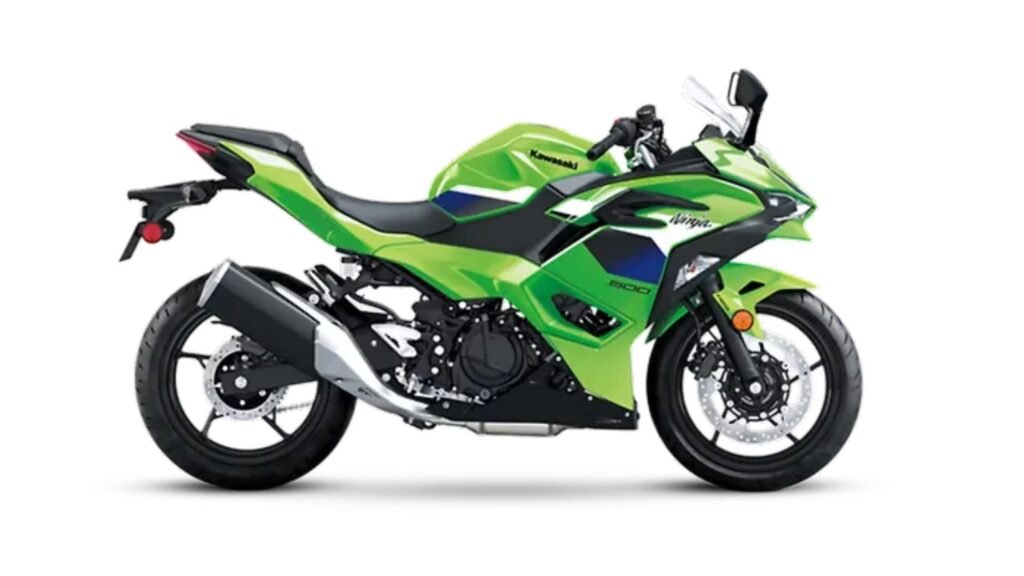
- It comes in a single “Standard” variant and a single Lime Green colour, with white and blue graphics — international markets get a second colour option that India misses out on.
- The engine remains a 451cc, liquid-cooled, parallel-twin, producing approximately 44.8-45.4 PS and 42.6 Nm of torque.
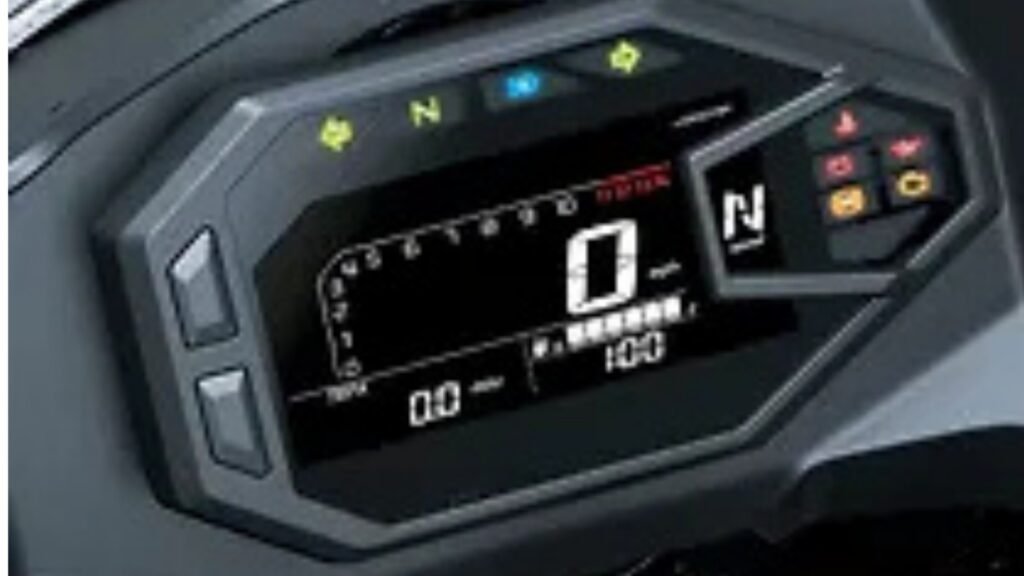
- The bike gets an LCD instrument console with Rideology app connectivity — not a TFT display, despite what some older listings still say.
- It’s sold via the CBU (Completely Built Unit) import route, not manufactured locally in India.
- Bookings are open now, with deliveries expected to begin in the last week of August 2026.
- It continues to rival the Aprilia RS 457, and is also frequently compared against the Yamaha R3 and KTM RC 390.
Why This Is Genuinely a “Colour Only” Update
Let’s not overstate this one — BikeDekho’s own coverage put it plainly: “if you’re wondering what’s new, well… absolutely nothing.” Every source we checked agrees. The engine, chassis, brakes, suspension, and features are all completely unchanged from the 2026 model. The only difference is the new Lime Green paint scheme, which India gets as its sole colour option this year.
If you already own a 2026 Ninja 500, there is genuinely no reason to consider upgrading — you’re not missing out on a single mechanical or feature improvement.
The Two-Month Turnaround, Explained
Here’s the part of this story that’s genuinely worth pausing on. Kawasaki launched the 2026 Ninja 500 on June 17, 2026. The 2027 model arrived barely two months later. That’s an unusually fast model-year turnover, even by the standards of a company that’s been fairly liberal about yearly colour refreshes on bikes like the Versys 650.
Our honest read: this isn’t really about the bike changing — it’s about Kawasaki keeping its India model-year naming aligned with international markets, where the “2027” designation may already be standard for bikes shipping globally. For Indian buyers, the practical takeaway is simple: don’t read too much into the “2027” badge. It doesn’t signal a meaningfully newer or better motorcycle than what was on sale in July.
Full Specifications
Since the mechanical package is unchanged, here’s the complete picture of what you’re actually buying:
| Specification | Detail |
|---|---|
| Ex-Showroom Price | Rs 5.76 lakh |
| Engine | 451cc, liquid-cooled, parallel-twin, DOHC |
| Power | ~44.8-45.4 PS @ 9,000 rpm |
| Torque | 42.6 Nm @ 6,000 rpm |
| Gearbox | 6-speed, with assist-and-slipper clutch |
| Frame | Trellis frame (shared design philosophy with the Ninja H2) |
| Kerb Weight | 157 kg |
| Seat Height | 785 mm |
| Front Suspension | Telescopic fork |
| Rear Suspension | Linked monoshock, preload adjustable |
| Front Brake | 310mm single disc |
| Rear Brake | 220mm single disc |
| ABS | Dual-channel, non-switchable |
| Wheels | 17-inch, front and rear |
| Tyres | Dunlop Sportmax — 110/70 front, 150/60 rear |
| Display | LCD instrument console with Rideology app connectivity |
| Fuel Compliance | E20 |
| Import Route | CBU (Completely Built Unit) |
| Colour | Lime Green (single option in India) |
Design and the New Lime Green Colour
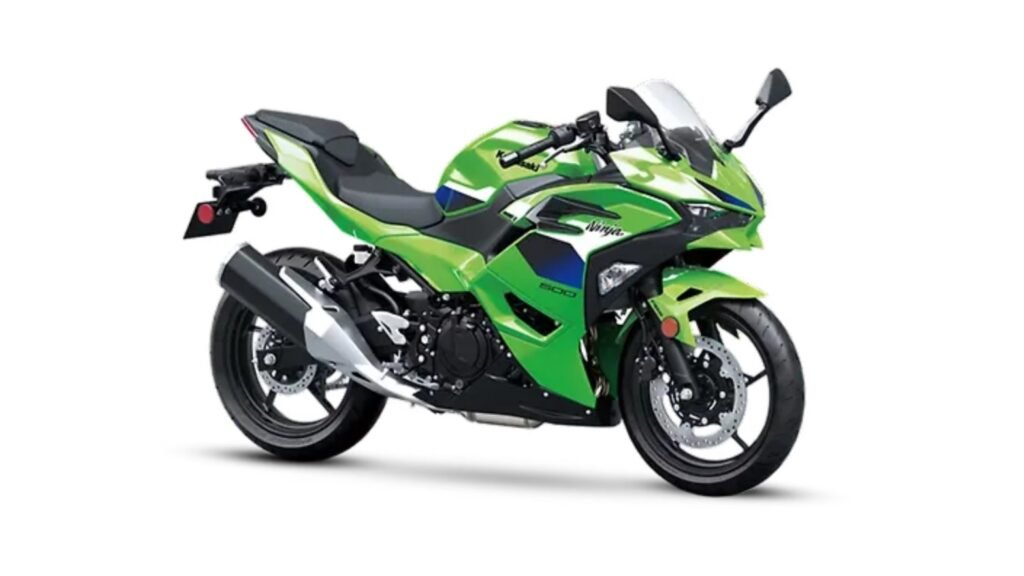
The Ninja 500 keeps its familiar, sharp Ninja design language — twin LED headlights up front, a slim, compact tail section, and a side-mounted exhaust. What’s new is purely the paint: this year’s Lime Green scheme pairs Kawasaki’s signature green with contrasting white and blue graphics, giving the bike the classic, unmistakable “Ninja” look that’s closely associated with the brand’s racing heritage.
Worth knowing if you were hoping for more choice: international markets get a second colour option, but Indian buyers are limited to this single Lime Green scheme for the 2027 model year.
Away from the paint, Kawasaki has kept the bike’s rider-friendly ergonomics intact — a relaxed riding triangle, a slightly elevated handlebar position, foot-forward pegs, and a thick, cushioned seat. This isn’t a bike built purely around an aggressive track-day crouch; it’s genuinely tuned to stay comfortable on longer rides too, which is a meaningful part of its appeal in this segment.
Correcting the Record: LCD, Not TFT
Here’s something worth clearing up directly, since we found conflicting information while researching this piece. An older listing page we came across describes the Ninja 500 as having a “5-inch TFT display.” Every current source covering this 2027 launch — BikeDekho, DriveSpark, Motoroids, and BikeWale — consistently describes it as an LCD instrument console, not a TFT screen.
Our best explanation: that older reference likely predates the Ninja 500’s actual India launch, possibly describing an earlier expectation or an international-spec detail that didn’t carry over. Whatever the reason, the current, correct answer is that the 2027 Ninja 500 uses a high-contrast LCD console with Rideology app smartphone connectivity for call alerts and notifications — not a colour TFT screen. If you were specifically expecting a TFT display based on older research, it’s worth resetting that expectation before you visit a dealership.
How the Price Has Changed Since 2024
Since a genuinely useful way to judge a “same price as last year” launch is to zoom out a bit further, here’s the fuller picture. The Ninja 500 nameplate first launched in India back in February 2024, replacing the older Ninja 400, at an introductory price of Rs 5.24 lakh. Since then, the price has crept up to today’s Rs 5.76 lakh — a genuine increase of roughly Rs 52,000 over about two and a half years, even though this year’s specific update brought zero price change on its own.
How It Compares to Rivals
The Ninja 500 continues to compete most directly with the Aprilia RS 457, and is also commonly cross-shopped against the Yamaha R3 and KTM RC 390 in this segment.
| Bike | Price (approx.) | Engine |
|---|---|---|
| Kawasaki Ninja 500 | Rs 5.76 lakh | 451cc, parallel-twin |
| Aprilia RS 457 | Rs 5.80 lakh | 457cc, parallel-twin |
| Yamaha R3 | Rs 5.59 lakh | 321cc, parallel-twin |
| KTM RC 390 | Rs 3.17 lakh | 399cc, single-cylinder |
At Rs 5.76 lakh, the Ninja 500 sits close to the Aprilia RS 457 on price, while offering meaningfully more displacement than the Yamaha R3. The KTM RC 390 remains a significantly cheaper alternative, though it trades the Ninja’s smoother twin-cylinder character for a punchier, single-cylinder engine.
Should You Buy Now or Wait?
Given that this update is genuinely just a colour change, the decision here is fairly simple. If you like the new Lime Green scheme and were already planning to buy a Ninja 500, there’s no reason to hold off — you’re getting the exact same proven motorcycle, just with fresh paint. If you already own a 2026 model, there’s nothing to gain from switching. And if you’re hoping a future update brings a TFT display or other meaningful upgrades, there’s no indication that’s coming anytime soon based on Kawasaki’s pattern here.
FAQs
1. What’s new in the 2027 Kawasaki Ninja 500?
Only the colour — it now comes in a new Lime Green scheme with white and blue graphics. The engine, chassis, brakes, and features are all unchanged from the 2026 model.
2. What is the price of the 2027 Ninja 500?
Rs 5.76 lakh, ex-showroom — exactly the same as the outgoing 2026 model.
3. Does the Ninja 500 have a TFT display?
No. Despite some older listings suggesting a 5-inch TFT screen, every current source confirms the 2027 model uses an LCD instrument console with Rideology app connectivity.
4. Why did Kawasaki launch a new model year so soon after the last one?
The 2026 model launched in June 2026, just over two months before this 2027 update. This unusually quick turnaround likely reflects Kawasaki aligning its India model-year naming with international markets, rather than any meaningful change to the bike itself.
5. What engine does the Ninja 500 use?
A 451cc, liquid-cooled, parallel-twin engine producing approximately 44.8-45.4 PS and 42.6 Nm of torque, paired with a 6-speed gearbox.
6. Is the Ninja 500 made in India?
No, it’s imported via the CBU (Completely Built Unit) route, not manufactured locally.
7. What is the Ninja 500’s main rival in India?
The Aprilia RS 457 is its closest direct competitor, with the Yamaha R3 and KTM RC 390 also frequently cross-shopped against it.
8. How much has the Ninja 500’s price increased since its original India launch?
It launched in February 2024 at Rs 5.24 lakh. Today’s Rs 5.76 lakh price reflects a total increase of roughly Rs 52,000 over about two and a half years.
Conclusion
The 2027 Kawasaki Ninja 500’s launch is a genuinely honest reminder that not every “new model year” badge means a meaningfully new motorcycle. This is the same well-regarded 451cc twin, the same chassis, and the same price as two months ago, wrapped in a fresh Lime Green colour. That’s not necessarily a bad thing — it means Kawasaki isn’t tinkering with a formula that’s clearly working, and buyers get a proven, well-sorted middleweight sportbike without paying a premium for change for change’s sake. If the new colour appeals to you, there’s no reason to wait any longer; if you already own last year’s model, there’s simply nothing here for you to chase.
Read Also –
Ather Konarc Launched at Rs 99,999: Ather’s Cheapest, Most Practical Scooter Yet
KTM 490 Duke Spied Testing in Europe: But Is It Really the 490 Duke?