
Introduction
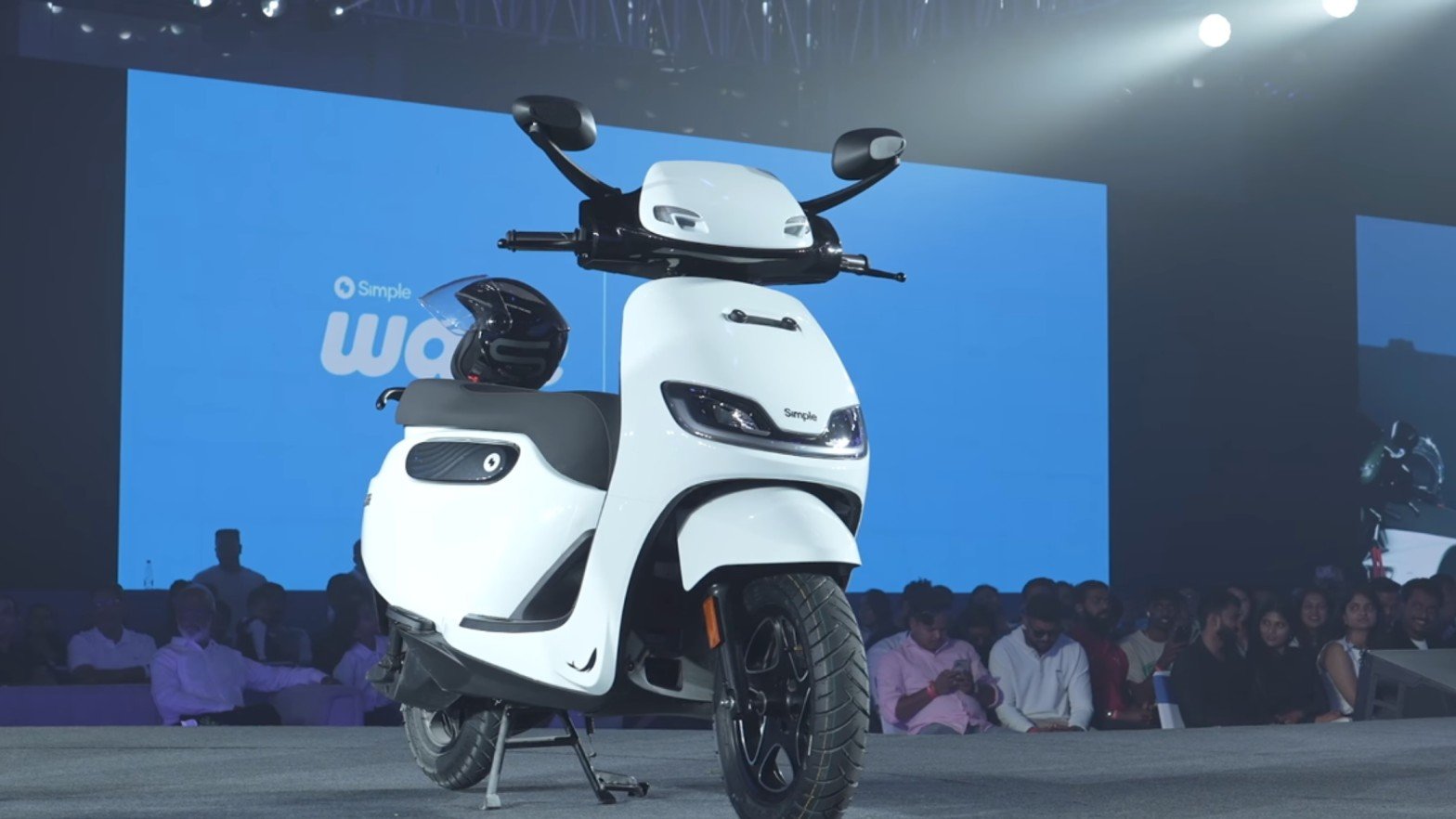
The scooter we’ve been tracking for weeks — first known by its internal codename, then confirmed as “Wave” back in August — has now officially launched. Simple Energy’s Wave is on sale in India starting at Rs 1,09,999, ex-showroom, and interestingly, that’s noticeably cheaper than several earlier industry estimates had suggested. If you’ve been holding off on an electric scooter purchase waiting for this one, here’s everything confirmed at launch.
This is a genuinely significant moment for Simple Energy too — until now, the company built its reputation entirely on sporty, range-chasing performance scooters like the Simple One. The Wave marks its first real step into the practical, everyday family-scooter segment, going up directly against some of India’s biggest EV sellers.
Key Highlights
- The Simple Wave Electric Scooter starts at Rs 1,09,999 (ex-showroom, Bengaluru) and goes up to Rs 1,89,999 for the top variant, across 6 total variants.
- Claimed range spans from 110 km up to a class-leading 243 km, depending on the battery you choose.
- It uses a new, third-generation 6.4kW motor that Simple says is built without heavy rare-earth materials, and is 15% smaller than the motor used on the Simple One.
- Top speed is 90 km/h, with 0-40km/h acceleration times of 3.3 seconds on the Wave and Wave+ variants, and 4.0 seconds on the base S variant.
- It offers a genuinely huge 70-litre underseat storage capacity, including a unique 4-litre “Pill” storage compartment, plus a large 920mm seat.
- Higher variants get a 7-inch TFT display, while lower variants use a simpler 5-inch EBN display.
- Deliveries begin September 25, 2026 — though it’s not yet confirmed whether this date applies to every variant.
- It directly rivals the Ather Konarc, TVS iQube, Bajaj Chetak, and Hero Vida VX2 — four brands that together account for 76% of all electric two-wheelers sold in India so far in 2026.
Table of Contents
Price and Variants: The Full Breakdown
Simple Energy has structured the Wave into six variants, giving buyers a genuinely wide spread of choice on both price and range.
Simple Wave — Variant-Wise Pricing
| Variant | Battery | Claimed IDC Range | Display |
|---|---|---|---|
| Wave S EBN 2.2 kWh | 2.2 kWh | 110 km | 5-inch EBN |
| Wave S EBN 2.7 kWh | 2.7 kWh | 132 km | 5-inch EBN |
| Wave S TFT 2.7 kWh | 2.7 kWh | 132 km | 7-inch TFT |
| Wave EBN 3.7 kWh | 3.7 kWh | 171 km | 5-inch EBN |
| Wave TFT 3.7 kWh | 3.7 kWh | 171 km | 7-inch TFT |
| Wave+ 5 kWh | 5 kWh | 243 km | 7-inch TFT |
Prices start at Rs 1,09,999 for the base variant and go up to Rs 1,89,999 for the top Wave+ — but individual pricing for each of the six variants in between hasn’t been fully detailed in launch coverage yet. If a specific variant’s exact price matters to your decision, it’s worth confirming directly with a Simple Energy dealer.
Read Also – New Royal Enfield Himalayan 440 Spotted at Dealership: 443cc Engine, Tripper Navigation & More
Range and Battery: Why There Are So Many Options
The Wave’s biggest selling point is genuinely its range flexibility — six variants means you can pick exactly how much range you’re willing to pay for, rather than being stuck with a single battery size. The base 2.2kWh pack claims 110km, scaling up through 2.7kWh (132km) and 3.7kWh (171km), all the way to the top 5kWh pack, which claims a genuinely strong 243km — enough to lead its segment on outright range.
There’s also a real technical difference underneath, not just capacity: the 2.2kWh and 2.7kWh batteries use LFP (Lithium Iron Phosphate) chemistry, generally valued for safety and long-term durability, while the top 5kWh pack switches to NCA (Nickel Cobalt Aluminium) chemistry, which offers higher energy density — useful for packing more range into a similarly sized battery.
The New Motor: What’s Actually Different
Underneath the Wave is a genuinely new 6.4kW electric motor, and Simple Energy has made a specific point of highlighting that it’s built without heavy rare-earth materials — a detail that speaks to both cost and supply-chain considerations, since rare-earth magnets have become a genuinely contentious, expensive part of EV manufacturing globally. This is also the third generation of Simple’s motor and battery management system, and the motor itself has been made 15% smaller than the one used in the original Simple One.
In terms of real-world performance, the motor delivers a 90km/h top speed, with 0-40km/h acceleration coming in at 3.3 seconds on the Wave and Wave+ variants, and a slightly more modest 4.0 seconds on the base S variant — still genuinely brisk for a scooter in this price bracket.
Design and Practicality
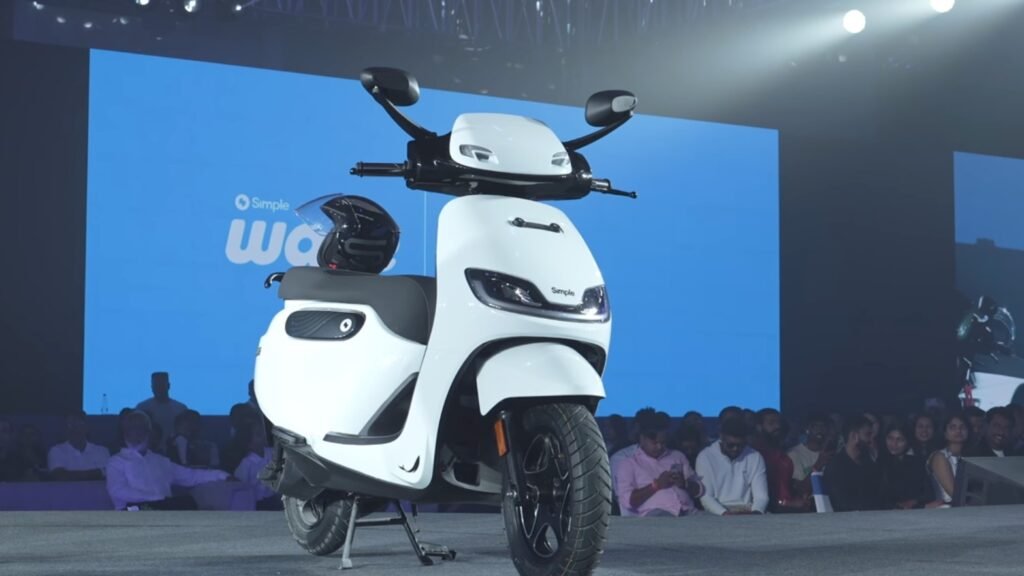
The Wave’s design is a deliberate departure from Simple Energy’s usual playbook. Where the Simple One and Ultra lean sharp and sporty, the Wave takes on a boxy, practical shape, clearly built around everyday family use rather than outright performance appeal. A flat floorboard and a genuinely large 920mm seat make it easy to carry a passenger or extra luggage comfortably.
Storage is a real standout here — the Wave offers 70 litres of underseat space, one of the largest capacities in its segment, plus a couple of additional storage compartments built into the body panels and an apron cubby hole for smaller items like gloves. There’s also a unique, specifically named 4-litre “Pill” storage unit — a small but genuinely thoughtful practical touch.
Features and Technology
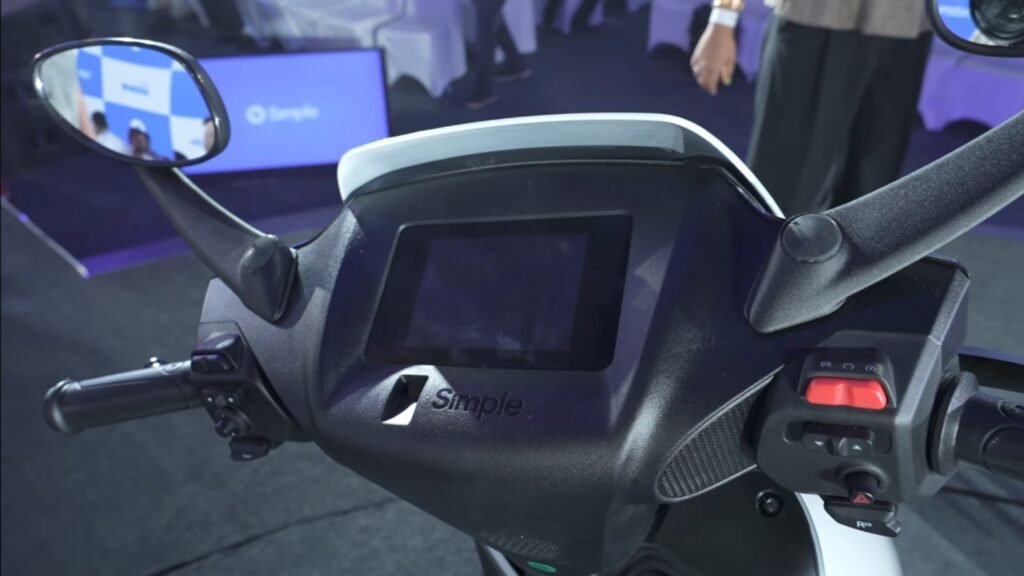
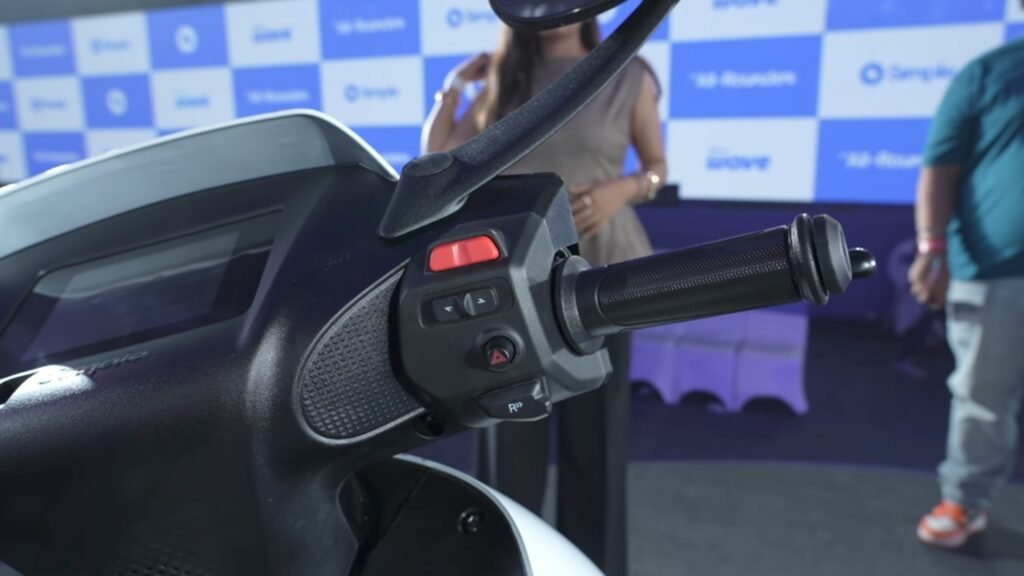
For a scooter starting under Rs 1.1 lakh, the Wave’s feature list is genuinely comprehensive. It includes Bluetooth connectivity, turn-by-turn navigation, GPS tracking, call and music controls, USB charging, over-the-air (OTA) software updates, traction control, regenerative braking, all-LED lighting, hill-hold assist, reverse mode, and crawl mode. On the safety side, it adds geo-fencing and time-fencing, along with theft and tow alerts — genuinely useful peace-of-mind features for a family scooter that might be parked in varied, less-secure locations.
Ride modes are also included across the board — Ride, Eco, and ECOX come as standard on every variant, while the higher-spec models add an additional Sport mode for quicker, more spirited riding when you want it.
Read Also – Top 8 Best Bikes Under ₹2 Lakh for Highway Riding in 2026: Performance & Comfort
How It Compares to the Simple One
Since Simple Energy’s reputation was built on the Simple One, it’s worth understanding how the Wave’s underlying tech stacks up. The One uses a larger 5kWh battery paired with an 8.8kW motor, claiming up to 265km of range. The One S uses a 3.7kWh battery and the same 6.4kW motor size class as the Wave, claiming 190km. There’s also a flagship One Ultra, with a bigger 6.5kWh battery and 8.8kW motor.
The honest takeaway: the Wave isn’t simply a rebadged One with a different shell. It uses a newer, third-generation, smaller motor, and its whole design philosophy — practicality and storage over outright performance — genuinely sets it apart from the sportier One range, rather than just being a cheaper way to get the same scooter.
Rivals: A Genuinely Crowded Segment
The Wave enters a segment that’s already dominated by a handful of major players. It goes up directly against the Ather Konarc (which launched just days earlier), the TVS iQube, the Bajaj Chetak, and the Hero Vida VX2. According to Autocar India’s reporting, these four brands together account for a genuinely dominant 76% of all electric two-wheelers sold in India so far in 2026 — meaning the Wave has a real, uphill battle to carve out meaningful market share, even with a genuinely competitive price and class-leading range on its side.
Availability: What’s Confirmed and What Isn’t
Simple Energy has confirmed that deliveries will begin on September 25, 2026. One important, honest caveat worth knowing: it’s not yet clear whether this delivery date applies to all six variants, or just an initial subset — similar to how some competitors have staggered their own rollouts by variant and region. If you’re specifically interested in a particular configuration, it’s worth checking directly with Simple Energy on that variant’s specific delivery timeline before you book.
FAQs
1. What is the price of the Simple Wave?
It starts at Rs 1,09,999 (ex-showroom, Bengaluru) for the base variant and goes up to Rs 1,89,999 for the top Wave+ variant.
2. What is the range of the Simple Wave?
Claimed IDC range spans from 110 km on the base 2.2kWh variant up to 243 km on the top 5kWh Wave+ variant.
3. How many variants does the Simple Wave come in?
Six: Wave S EBN 2.2 kWh, Wave S EBN 2.7 kWh, Wave S TFT 2.7 kWh, Wave EBN 3.7 kWh, Wave TFT 3.7 kWh, and Wave+ 5 kWh.
4. When will the Simple Wave be delivered?
Simple Energy has confirmed deliveries starting September 25, 2026, though it’s not yet clear if this applies to every variant.
5. Does the Simple Wave’s motor use rare-earth materials?
No, Simple Energy has specifically stated the new 6.4kW motor is built without heavy rare-earth materials.
6. What’s the difference between the Simple Wave and the Simple One?
The Wave uses a newer, smaller, third-generation motor and battery management system, and is designed around practicality and storage rather than the One’s more performance-focused approach. The One offers a larger battery and motor, with up to 265km of claimed range.
7. Which scooters does the Simple Wave compete with?
It directly rivals the Ather Konarc, TVS iQube, Bajaj Chetak, and Hero Vida VX2 — four brands that together made up 76% of India’s electric two-wheeler sales so far in 2026.
8. What is the “Pill” storage unit on the Simple Wave?
It’s a dedicated 4-litre storage compartment, part of the scooter’s larger 70-litre total storage capacity.
Conclusion
Simple Energy’s Wave marks a genuine strategic shift for a company that’s spent years focused purely on performance-oriented scooters, and the numbers back up the ambition — a starting price of Rs 1,09,999, a class-leading 243km top-end range, and a feature list that punches well above its price bracket. Whether that’s enough to meaningfully dent a segment currently dominated by four established players remains the real open question. If you’re in the market for a practical, family-focused electric scooter and value genuine range flexibility across six variants, the Wave now stands as one of the most compelling new options — deliveries begin September 25, so the wait, at least, isn’t a long one.