
Introduction
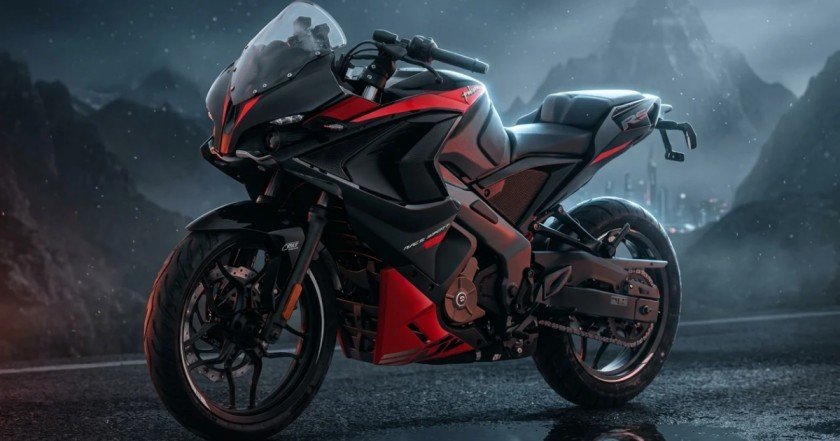
I’ll be honest with you before we get into the specs: writing this Bajaj Pulsar RS200 review was harder than most, because the RS200 genuinely splits opinion. For every owner who calls it the best bike they’ve ever ridden, there’s another describing a genuinely rough ownership experience. That’s not a knock against the bike so much as it’s the real picture — and I’d rather give you that real picture than a polished sales pitch.
Here’s what’s not in dispute: the RS200 is still the only fully-faired motorcycle in Bajaj’s entire line-up, it’s had a genuine 2025 refresh (new ride modes, better fit and finish, dual-channel ABS), and it remains priced around Rs 1.80–1.81 lakh ex-showroom. Whether that adds up to a bike worth buying depends a lot on what you’re looking for — so let’s walk through it properly.
Key Highlights
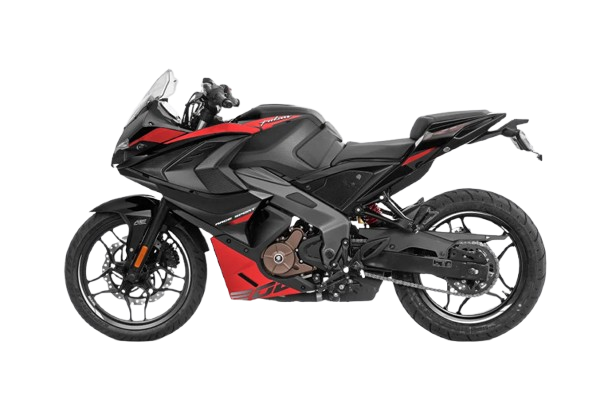
- The RS200’s 199.5cc engine makes 24.5 PS at 9,750rpm and 18.7 Nm at 8,000rpm — genuinely strong numbers for this segment, especially once you’re above 4,000rpm.
- The 2025 refresh brought a reworked tail light, a new Bluetooth-enabled instrument console, three switchable ABS modes (Rain, Road, Off-Road), and a slip-and-assist clutch as standard.
- It’s currently priced around Rs 1,80,528–1,80,863 (ex-showroom), having gone up modestly a few times through 2026, most recently with a July 2026 colour update.
- Real owner reviews are genuinely split — plenty of glowing, high-mileage ownership stories, but also a real number of serious reliability complaints worth taking seriously.
- Two things almost every source agrees on: low-end power is weak below 4,000rpm, and the stock tyres and brake feel are limiting factors if you ride it hard.
- All Bajaj bikes made in the last decade, including the RS200, are now confirmed E20 fuel-compatible, according to a July 2026 company statement.
Bajaj Pulsar RS200 Price in 2026
The Bajaj Pulsar RS200 currently sits at Rs 1,80,528–1,80,863 (ex-showroom), depending on the source, with the on-road price in Delhi landing around Rs 2,06,696–2,09,798. It’s had a couple of small bumps through 2026 — a modest Rs 720 increase in January, and a slightly larger hike in late July alongside new colour options. None of these have been dramatic, but they add up, and it’s worth checking the current figure with your dealer since Bajaj has revised pricing across its whole Pulsar range more than once this year.
Bajaj Pulsar RS200 Price — At a Glance
| Detail | Information |
|---|---|
| Ex-Showroom Price | Rs 1,80,528–1,80,863 |
| On-Road Price (Delhi, approx.) | Rs 2,06,696–2,09,798 |
| Variants | 1 (Standard) |
| Recent Price Changes | Small increases in Jan 2026 and July 2026 |
Design: Still the Prettiest Pulsar?
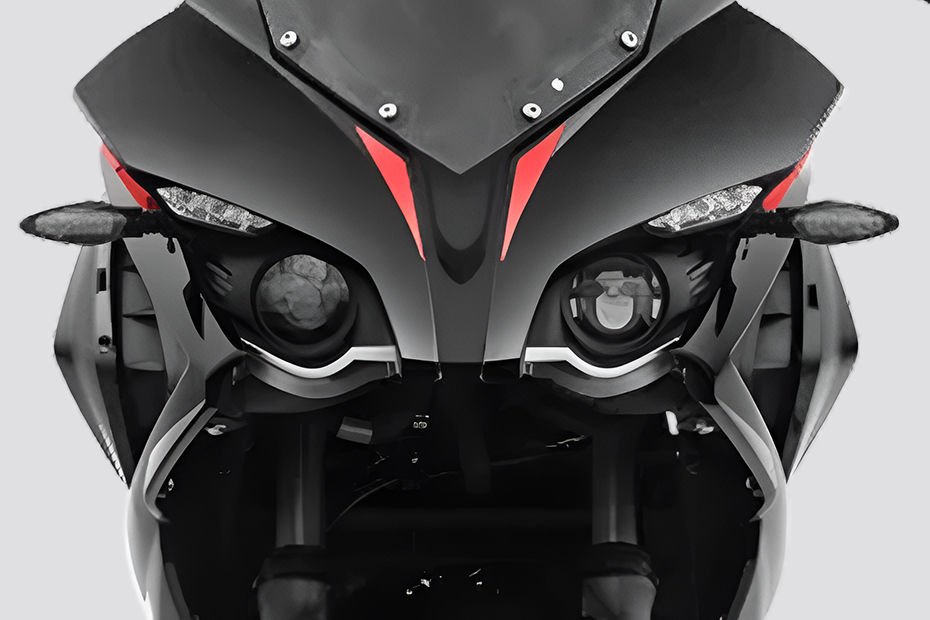
I genuinely think this is the RS200’s strongest card. One reviewer who spent two weeks with the 2025 model described the front fairing as looking like it “wants to eat the road,” and honestly, that’s a fair description — the sharp creases, twin projector headlamps, and layered bodywork still make it stand out on the street, even years after its original launch. It’s a design that clearly took real thought, not just a facelift bolted onto an older platform.
Colour choice matters more than people admit on a bike like this. The RS200 comes in Racing Red, Pearl Metallic White, Caribbean Blue, and Brooklyn Black, and reviewers consistently note that Red and White let the sculpted bodywork catch light and shadow in a way that really sells the design, while Black is the more understated option if you’d rather the lines speak for themselves without shouting. Build quality has also genuinely improved with the 2025 refresh — tighter panel gaps, better switches, and cleaner pillion mounts. It doesn’t suddenly feel like a premium motorcycle, but it no longer feels like corners were cut, either.
What Changed in the 2025 Refresh
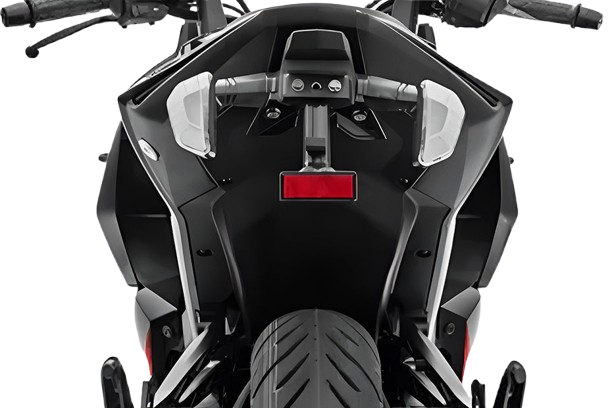
If you’re comparing this to an older RS200 you might remember, here’s what’s actually different now. Bajaj added a reworked tail light, a Bluetooth-enabled instrument cluster with turn-by-turn navigation and call/SMS alerts, backlit switchgear across the board, and — most importantly — upgraded from the old single-channel ABS to a proper dual-channel system with three switchable ride modes: Rain, Road, and Off-Road. A slip-and-assist clutch also comes standard now, which genuinely reduces lever effort in traffic and makes aggressive downshifts less likely to unsettle the bike.
These aren’t flashy changes, but they’re the kind of things you actually notice in your first week of ownership rather than on a spec sheet — and that matters more, in my opinion, than a bike that only looks different on paper.
Engine and Performance: The Real Story
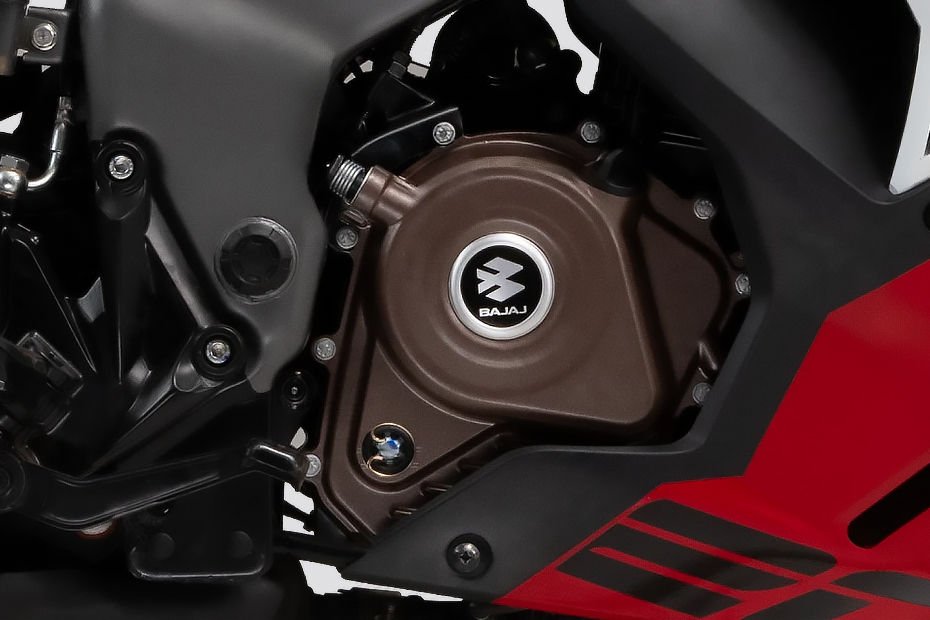
The RS200 runs a 199.5cc, liquid-cooled, single-cylinder engine making 24.5 PS at 9,750rpm and 18.7 Nm at 8,000rpm, paired with a 6-speed gearbox. On paper, that’s a genuinely strong output for this segment. In practice, it’s an engine with a clear personality — and that personality isn’t for everyone.
Here’s the honest bit: low-end torque is weak. Below roughly 4,000rpm, the engine feels flat, and more than one reviewer has admitted to stalling it at low speed in first gear because it simply doesn’t want to pull from idle the way a torquier engine would. But push past 4,000rpm, and the character completely changes — the engine becomes eager, revvy, and genuinely rewarding, especially on an open highway where it settles into 100 km/h cruising with real confidence and enough in reserve for a punchy overtake. It’s an engine that asks you to work the gearbox rather than lazily roll on the throttle, and if that sounds appealing rather than annoying, you’ll likely enjoy this bike a lot.
Bajaj Pulsar RS200 Engine — At a Glance
| Detail | Information |
|---|---|
| Engine Type | 199.5cc, liquid-cooled, single-cylinder, 4-valve |
| Power | 24.5 PS @ 9,750 rpm |
| Torque | 18.7 Nm @ 8,000 rpm |
| Gearbox | 6-speed |
| Clutch | Wet multiplate, slip and assist |
| Claimed Top Speed | ~141 km/h |
| Mileage (claimed) | 35 kmpl |
Handling, Brakes, and Where the Chassis Wants More
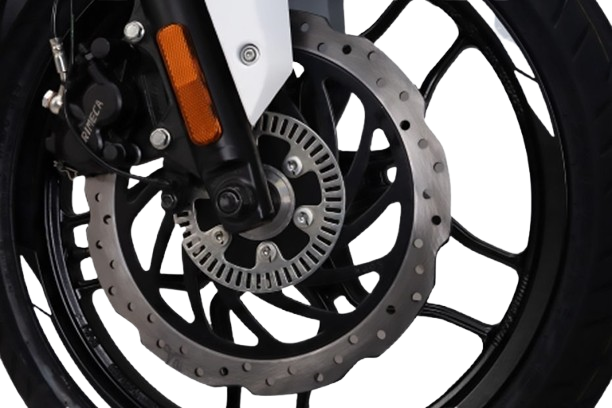
The RS200 rides on a pressed-steel perimeter frame, which gives it real lateral rigidity — you feel it most under hard braking and at speed, where the bike stays composed rather than feeling nervous. City handling is genuinely easy: the steering is quick without feeling twitchy, and the bike slots into traffic gaps without drama. On the highway, it stays planted at triple-digit speeds and doesn’t pitch around when you get on the throttle, which is a genuinely mature trait for a bike in this price range.
Where it comes up short, honestly, is the contact patch. The stock tyres are the limiting factor if you push the chassis hard — lean too far into an aggressive corner and the rear can start to lose traction sooner than the chassis itself would allow. Braking tells a similar story: the 300mm front and 230mm rear discs with dual-channel ABS are progressive and confidence-inspiring in normal use, but multiple owner reviews specifically flag weak brake bite and feedback as a real issue, particularly under harder or emergency braking. If you’re planning to ride this bike enthusiastically, budgeting for a tyre upgrade is a genuinely sensible move, not an overreaction.
What Real Owners Are Saying (The Good and the Genuinely Bad)
This is where I want to be straight with you, because glossing over this wouldn’t be fair. Across a large number of verified owner reviews, the RS200 gets an overall rating around 4.6–4.7 out of 5, and the majority of feedback is genuinely glowing — riders describing over a lakh kilometres of trouble-free use, strong mileage even after years of ownership, and real pride in how the bike looks and sounds.
But there’s a real minority of reviews describing serious problems: battery failures within months, gearbox damage, repeated breakdowns, cracked tank panels, and self-start issues. One owner described five breakdowns in just over a year of ownership. These aren’t one-off complaints scattered randomly — they show up often enough across a large review sample that I think they deserve to be taken seriously rather than dismissed as bad luck. My honest read: this looks like a bike where build consistency may vary, so a thorough pre-delivery inspection and keeping a close eye on the first few months of ownership seems like a genuinely sensible precaution.
On the more common, smaller complaints: several owners mention the seat isn’t great for rides over 100km, low ground clearance means the exhaust can clip speed breakers, and the semi-digital console feels dated to riders who want a fully digital display.
Bajaj Pulsar RS200 Review: Our Honest Take
Pulling this all together, my honest verdict is this: the RS200 remains a genuinely characterful, good-looking, fun-to-ride motorcycle with a real identity of its own — and for the majority of owners, it delivers exactly that experience reliably. The 2025 refresh’s practical upgrades (dual-channel ABS, ride modes, better console, slip clutch) are real, meaningful improvements rather than cosmetic dressing.
But I don’t think it’s fair to recommend this bike without also being upfront about the reliability complaints showing up in owner reviews, or the fact that the engine’s weak low-end and the stock tyres’ limitations are real trade-offs you’ll live with daily. If you buy one, my honest advice is simple: inspect it thoroughly at delivery, keep a close eye on it during the first service cycle, and budget mentally for a tyre upgrade if you plan to ride it with any enthusiasm. Do that, and there’s a genuinely good chance you’ll end up in the “loves this bike” camp rather than the other one.
How It Compares to Rivals
| Specification | Pulsar RS200 | Yamaha R15 V4 | KTM RC 200 | TVS Apache RTR 200 4V |
|---|---|---|---|---|
| Price (approx.) | Rs 1.80 lakh | Rs 1.73–1.98 lakh | Rs 1.92–2.32 lakh | Rs 1.42 lakh |
| Engine | 199.5cc | 155cc | 199.5cc | 197.75cc |
| Power | 24.5 PS | 18.4 PS | 24.67 PS | 20.82 PS |
| Torque | 18.7 Nm | 14.2 Nm | 19.2 Nm | 17.25 Nm |
| Mileage (claimed) | 35 kmpl | 45–56.87 kmpl | 35 kmpl | 37 kmpl |
| Kerb Weight | 159.5–167 kg | 141 kg | ~160 kg | 151 kg |
The RS200 clearly wins on raw torque and power for the price against the R15 and the Apache, while the KTM RC 200 remains its closest true rival on paper — similar displacement, similar power, sharper track-focused hardware, but at a noticeably higher price. What the RS200 offers that none of these fully match is presence — it’s genuinely one of the most visually striking bikes in this price bracket, and for a lot of buyers, that counts for a great deal.
Who Should Buy the Bajaj Pulsar RS200?
- Riders who want maximum street presence for the money: This is genuinely the RS200’s strongest case — few bikes at this price turn as many heads.
- Riders who enjoy revving an engine out on the highway: The RS200’s character rewards this riding style specifically; if you prefer relaxed, low-rev cruising, look elsewhere.
- Budget-conscious riders who value low maintenance costs: Multiple long-term owners specifically praise how affordable parts and servicing are, when the bike behaves.
- First-time buyers who want an upright, comfortable riding stance with sportbike looks: The raised clip-ons genuinely make this more comfortable than fully committed sportbikes like the R15 or RC 200.
- Riders planning frequent, aggressive cornering or track days: Budget in a tyre upgrade from day one, or consider the KTM RC 200 instead if that’s a non-negotiable priority.
FAQs
1. What is the price of the Bajaj Pulsar RS200 in 2026?
It’s priced around Rs 1,80,528–1,80,863 (ex-showroom), with the on-road price in Delhi landing around Rs 2,06,696–2,09,798. Prices have risen modestly a couple of times through 2026.
2. Is the Bajaj Pulsar RS200 reliable?
Most owner reviews are positive, with several describing well over a lakh kilometres of trouble-free riding. However, a genuine minority of reviews report serious issues like battery failures and gearbox problems, so a thorough pre-delivery check is a sensible precaution.
3. What’s new in the 2025 Bajaj Pulsar RS200 refresh?
A reworked tail light, a Bluetooth-enabled instrument console with navigation, backlit switchgear, dual-channel ABS with three ride modes (Rain, Road, Off-Road), and a standard slip-and-assist clutch.
4. What is the mileage of the Bajaj Pulsar RS200?
The ARAI-claimed mileage is 35 kmpl. Real owner-reported figures typically range from around 25 to 33 kmpl depending on riding style.
5. Does the Bajaj Pulsar RS200 have weak low-end power?
Yes, this is a widely reported and genuine characteristic of the engine — it feels flat below roughly 4,000rpm but becomes noticeably more responsive and fun above that mark.
6. How does the Pulsar RS200 compare to the KTM RC 200?
They’re closely matched on displacement and power, with the RC 200 offering sharper, more track-focused hardware at a higher price. The RS200 offers a more comfortable riding stance and stronger street presence for less money.
7. Are Bajaj Pulsar RS200 tyres and brakes good enough for spirited riding?
Not ideally, according to most sources. The stock tyres are commonly cited as the limiting factor when cornering hard, and several owners report weak brake bite under emergency braking — a tyre and possibly brake pad upgrade is a sensible consideration for enthusiastic riders.
8. Is the Bajaj Pulsar RS200 E20 fuel compatible?
Yes. Bajaj confirmed in July 2026 that all its motorcycles built over the past decade, including the RS200, are compatible with E20 fuel.
Conclusion
My honest Bajaj Pulsar RS200 review conclusion is this: it’s a genuinely striking, characterful motorcycle that most owners end up loving, backed by real, practical improvements from its 2025 refresh. But it’s not a bike without real trade-offs — the weak low-end power, limiting stock tyres, and a real minority of serious reliability complaints in owner reviews all deserve honest consideration before you commit. If the RS200’s design, engine character, and price genuinely fit what you’re after, and you go in with eyes open about a thorough pre-delivery inspection, there’s a strong chance you’ll end up as one of its many loyal, high-mileage owners rather than one of its cautionary tales.
Read also
KTM 160 Duke Review: The Most Powerful Bike in Its Class? Here’s the Honest Truth
Best New Electric Scooters Under Rs 1 Lakh in India (2026): Full Comparison
1 thought on “Bajaj Pulsar RS200 Review: Still the Loudest Pulsar in the Room, For Better and Worse”