
Introduction
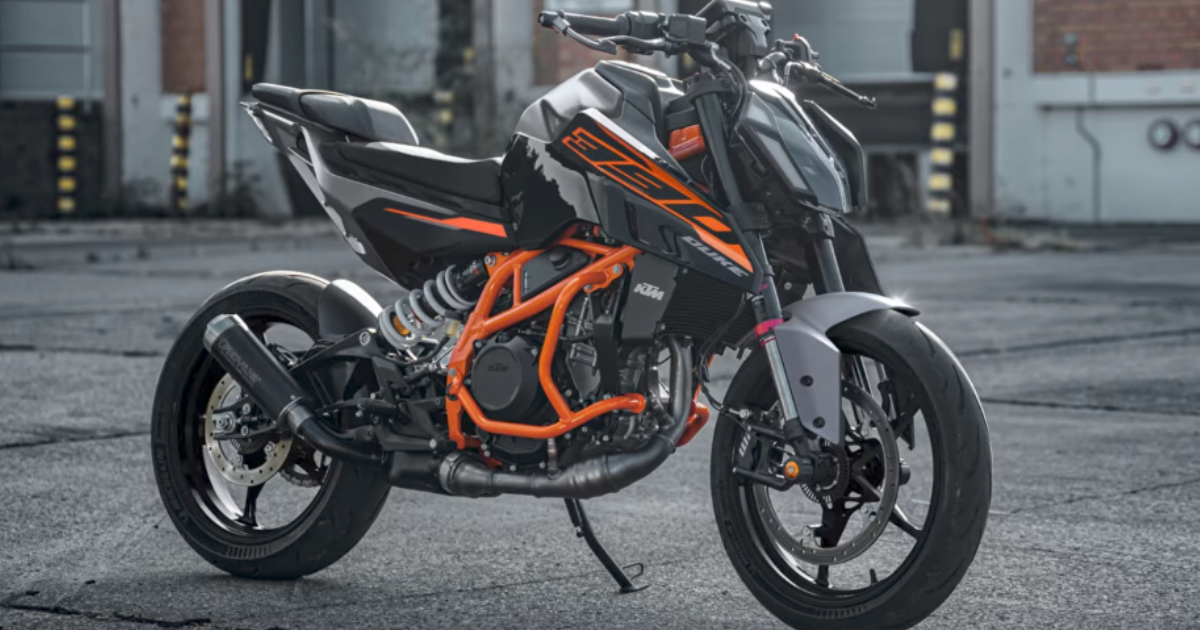
If you’ve been eyeing a KTM 390 Duke this year, you’ve probably noticed something confusing — there are now two of them. Walk into a KTM showroom today and you’ll find the standard 390 Duke sitting right next to the 390 Duke R, and at first glance, they look identical. Same headlight, same trellis frame, same aggressive stance. So what’s actually different, and more importantly, which one should you spend your money on?
That’s exactly what this review sets out to answer. We spent time going through detailed test data, real owner experiences, and official KTM specifications to figure out whether this smaller-engined 2026 Duke is a genuinely smart, sensible choice — or whether it takes away too much of what made the Duke special in the first place. By the end of this review, you’ll know exactly where you stand. In this article, we are going to review 2026 KTM 390 Duke.
Review Summary
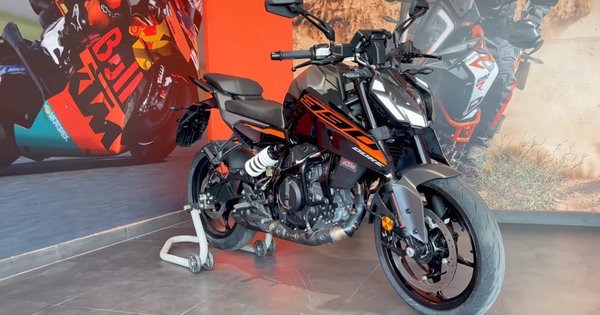
The 2026 KTM 390 Duke isn’t really a “new” motorcycle in the usual sense — it’s the same Gen-3 Duke you already know, just fitted with a smaller, 349cc engine instead of the previous 399cc unit. KTM did this to take advantage of India’s new GST rules, which tax bikes under 350cc at a lower rate. The old 399cc engine hasn’t disappeared either — it now lives on in a new model called the 390 Duke R.
So what does this mean for you as a buyer? In short: you get almost the exact same bike — same sharp handling, same brakes, same tech — for around Rs 62,000-71,000 less than the Duke R, but with a noticeably calmer, less aggressive engine. Whether that’s a good trade depends entirely on what kind of rider you are, and we’ll walk you through exactly that in this review.
Quick Specifications
| Specification | Detail |
|---|---|
| Price (ex-showroom, Delhi) | Rs 2,84,116 (as of July 2026) |
| Engine | 349.32cc, liquid-cooled, single-cylinder |
| Power | 40.9-41.5 PS @ 8,600 rpm |
| Torque | 33.5 Nm @ 7,000 rpm |
| Gearbox | 6-speed, with quickshifter |
| Top Speed | 160 kmph |
| Mileage (real-world, owner reported) | 23-32 kmpl |
| Kerb Weight | 168.3 kg |
| Seat Height | 800 mm (820 mm optional seat available) |
| Fuel Tank | 15 litres |
| Front Brake | 320mm disc, radial caliper, Brembo sintered pads |
| Rear Brake | 240mm disc |
| Front Suspension | 43mm WP Apex USD fork, adjustable |
| Rear Suspension | WP Apex monoshock, adjustable |
| Colours | Atlantic Blue, Gun Metal Grey, Black |
Design & Styling
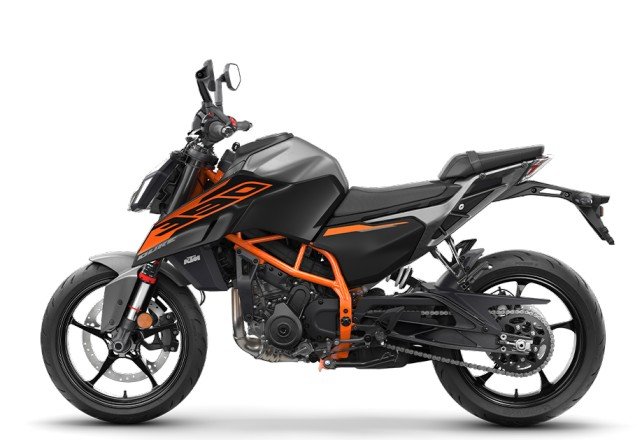
Let’s be clear about one thing right away: nothing has changed visually compared to the bigger-engined Duke R. And honestly, that’s a good thing, because this remains one of the sharpest-looking bikes in its class. The split LED headlamp with built-in daytime running lights, the sharp tank extensions, and the exposed trellis frame all still look genuinely aggressive and purposeful.
The underbelly exhaust keeps the side profile clean, and the exposed subframe is still one of the coolest visual touches on the bike — it really stands out on the Atlantic Blue and Gun Metal Grey colour options. Here’s a fun detail most people miss: the 350cc Duke gets an all-black frame, while the bigger 399cc Duke R gets an orange frame — it’s the easiest way to tell the two apart at a glance if you’re shopping in person.
Build Quality
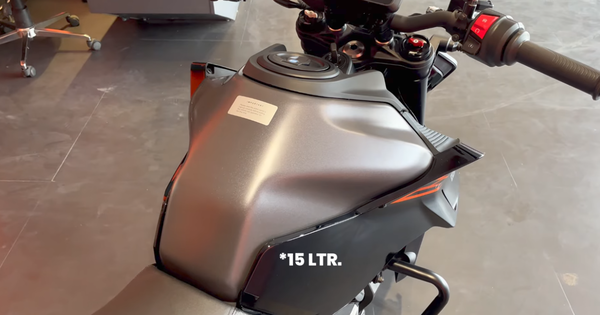
Overall, the bike feels properly put together and solid, not cheap in any way. That said, testers did notice a couple of small things worth knowing about. Panel gaps around the tank shrouds could be a little tighter, and one review mentioned the turn indicator switch occasionally acting up on their test unit — not something to be alarmed about, but worth checking carefully when you test ride or take delivery of your own bike. Paint quality on the chassis and wheels was also described as slightly below what you’d expect at this price, though nothing that feels seriously wrong with the bike.
Riding Position & Comfort
The riding position strikes a fair balance between sporty and usable. At 800mm, the seat height is accessible for most riders, and the seat itself is long enough to let you shift your position on longer rides. If you’re on the taller side, KTM also sells an optional 820mm seat as a spare part, which relaxes your leg position slightly.
That said, this isn’t a plush touring bike. The seat foam is firm, and while it supports you reasonably well over distance, taller riders may find the rear-set footpegs get a bit cramped after a few hours in the saddle. The handlebar also sits close to you, which feels a little tight at first — but most riders say they grow to actually enjoy this more attack-focused stance once they get used to it.
Pillion comfort is a genuine compromise here. The rear seat is lower and a bit wider than you’d expect, which helps, but it’s still not the most comfortable pillion setup out there. Footpeg placement for your passenger is sensible, at least, so their knees won’t feel awkwardly folded.
Engine & Performance
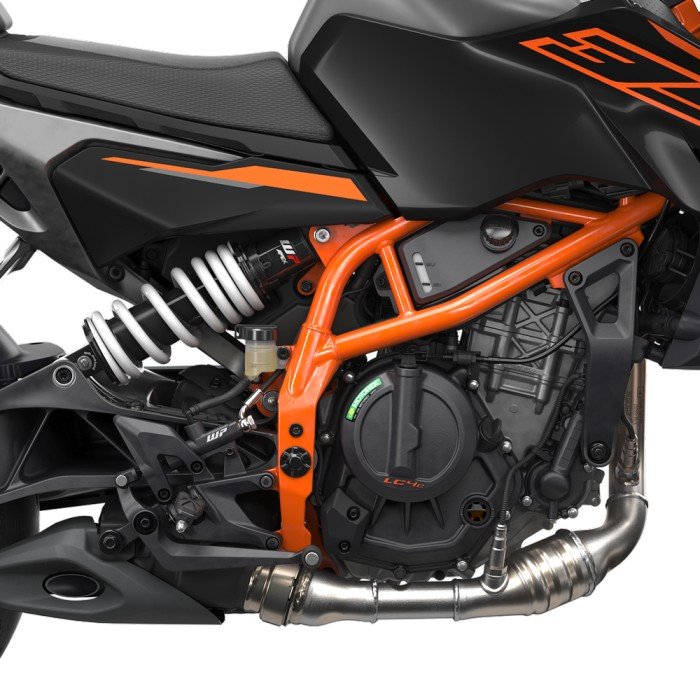
This is the real story of the 2026 Duke, so let’s slow down here. KTM shortened the engine’s stroke from 64mm to 56.15mm (bore size stays the same at 89mm), which brought displacement down from 399cc to 349.32cc. The result is 40.9-41.5 PS of power and 33.5 Nm of torque — around 4.5 PS and 5.5 Nm less than the Duke R.
On paper, that gap looks small. In real riding, it’s genuinely noticeable, especially in the mid-range. Between roughly 3,000 and 5,000rpm, the engine feels fairly flat and undramatic — this is exactly the zone where the bigger 399cc engine used to feel most exciting. It’s only once you cross around 7,000rpm that this engine properly wakes up and delivers the sharp, thrilling top-end rush that KTM Dukes are known for.
The upside: this engine is noticeably smoother than before. Vibrations through the handlebar and footpegs, which used to be a common complaint on older Dukes, are much better controlled here — even during long stretches at highway speed.
Acceleration
Numbers tell this story best, and BikeDekho actually timed both bikes back to back. Here’s exactly how the smaller-engined 2026 Duke compares to the bigger 390 Duke R:
Acceleration Comparison — 350cc Duke vs 399cc Duke R
| Test | 2026 KTM 390 Duke (350cc) | KTM 390 Duke R (399cc) | Difference |
|---|---|---|---|
| 0-60 kmph | 3.40 seconds | 2.80 seconds | 0.60 sec slower |
| 0-80 kmph | 5.23 seconds | 4.37 seconds | 0.86 sec slower |
| 0-100 kmph | 7.73 seconds | 6.51 seconds | 1.22 sec slower |
| 30-70 kmph (3rd gear) | 5.40 seconds | 4.31 seconds | 0.99 sec slower |
| 40-80 kmph (4th gear) | 7.98 seconds | 5.75 seconds | 2.23 sec slower |
The pattern here is clear: the gap widens the most during in-gear, roll-on acceleration (like overtaking without downshifting), which lines up exactly with what riders feel as “missing mid-range.” If quick, lazy overtakes without shifting down matter to you, this is the number to pay attention to.
Mileage
Here’s where we want to be upfront about some mixed figures. Owner-reported real-world mileage across genuine reviews mostly falls between 23 and 32 kmpl, depending on riding style — more aggressive, high-rev riding naturally brings this number down. Some listing pages show a higher claimed figure around 35 kmpl, which likely reflects a more careful, steady-speed test rather than typical daily riding.
One thing worth flagging honestly: we came across one single owner review claiming 120 kmpl, which is almost certainly a typo or data-entry mistake — that figure isn’t realistic for a 40+ PS performance naked bike, so we’ve left it out of our calculations rather than repeat it as fact.
Handling
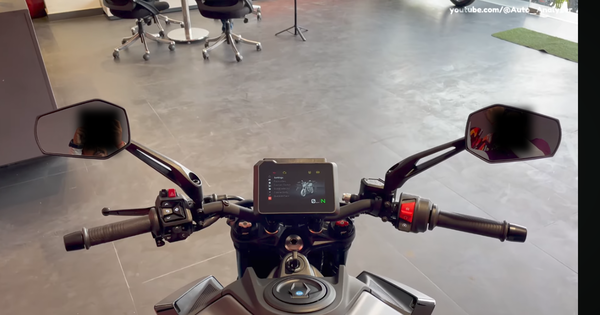
This remains the 2026 Duke’s biggest strength, and every source we checked agrees on this without hesitation. The chassis and suspension setup carry over completely unchanged from the Duke R, and at 168kg, the bike still feels light, agile, and eager to change direction. Tipping into corners takes very little effort, and the bike holds its line with real precision once leaned over.
The only real downside connects back to the smaller engine: without the Duke R’s extra torque doing the work for you mid-corner, you need to keep the engine spinning higher to get a strong exit out of a corner. It’s not a deal breaker, just something to keep in mind if you ride enthusiastically on twisty roads.
Suspension & Ride Quality
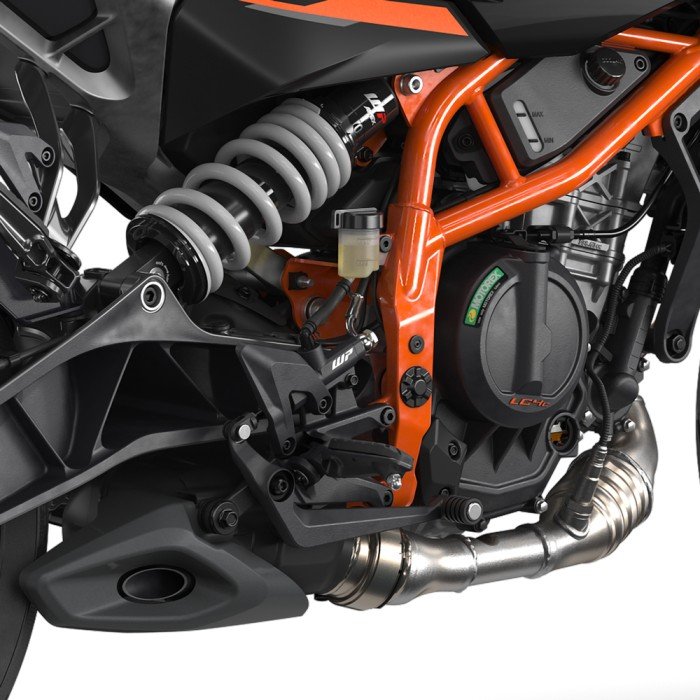
Suspension is fully adjustable — a genuinely rare feature at this price — using WP Apex components at both ends: a 43mm inverted fork up front and a monoshock at the rear, both with 5-step damping adjustment. Straight out of the box, the setup leans slightly firm, especially over broken city roads, where you’ll feel smaller bumps and imperfections come through the chassis. It never feels harsh or unsettled, though, and even larger potholes are absorbed with reasonable composure.
The big advantage here is that you’re not stuck with the factory setting — riders can adjust the suspension to suit their own weight and riding style, which is unusual to get as standard at this price point.
Braking
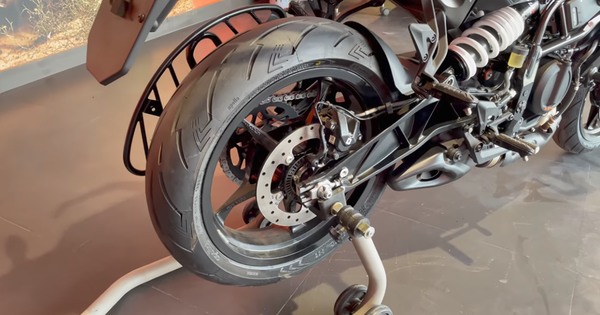
Braking hardware is genuinely strong for this class: a 320mm front disc with a radial caliper and Brembo sintered pads, paired with a 240mm rear disc. Brake feel is sharp, progressive, and easy to modulate — exactly what you want on a bike this quick. The cornering ABS system works quietly in the background without feeling intrusive, and SuperMoto ABS (which lets you brake harder into corners on loose surfaces by adjusting rear ABS sensitivity) adds a genuinely fun, confidence-building extra layer for more experienced riders.
Practicality
Day to day, the Duke is a fairly practical machine for what it is. The 15-litre fuel tank gives you a reasonable range for commuting and weekend rides, the 5-inch TFT display is bright and easy to read, and features like a USB charging port, multiple trip meters, and a clear fuel gauge all help with everyday use. Storage is limited, as expected on a naked streetfighter — there’s no underseat space to speak of, so you’ll need a backpack or tail bag for anything beyond the essentials.
Highway Test
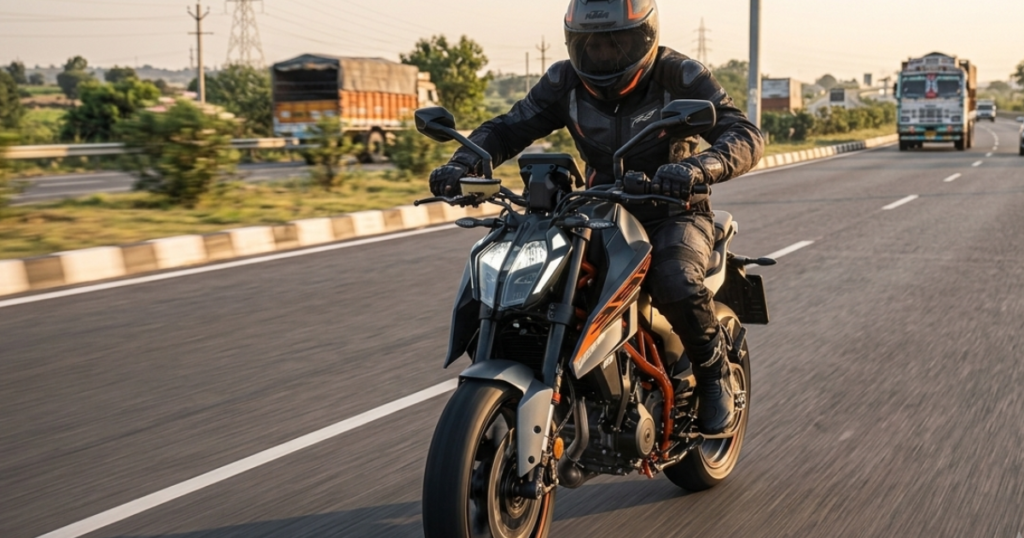
Out on the open highway, the smaller engine genuinely shines in ways you might not expect. Whether cruising at steady triple-digit speeds or revving hard through the gears, vibrations are impressively well controlled — a clear improvement over older Dukes, which always had a noticeable buzz through the bars and pegs on long rides. Even after extended highway stretches, the bike doesn’t feel tiring from a vibration standpoint.
Where the smaller engine shows its limits is during overtakes. Because the mid-range punch is softer than before, you’ll often need to downshift and keep the engine spinning higher to get a quick burst of acceleration, rather than simply rolling on the throttle in a higher gear the way you could on the 399cc bike.
City Test
In city traffic, the 2026 Duke feels genuinely calmer and easier to live with than its more aggressive sibling. Low-end response is smooth and manageable, and the softer overall power delivery makes stop-and-go riding noticeably less tiring — the throttle doesn’t feel as jerky or sudden at low speeds as it used to. The compact size and light weight also make filtering through traffic and tight U-turns feel effortless.
The trade-off shows up between 3,000 and 5,000rpm, where acceleration feels a bit flat rather than exciting. This means overtaking slower traffic sometimes needs a touch more planning, especially if you’re already in a higher gear at lower speed.
Pros & Cons
| Pros | Cons |
|---|---|
| Sharp, confidence-inspiring handling, unchanged from the Duke R | Noticeably weaker mid-range than the 399cc Duke R |
| Fully adjustable suspension as standard — rare at this price | Firm suspension transmits sharp bumps on broken roads |
| Strong brakes with cornering ABS, reassuring even when pushed | Rear seat and pillion comfort remain a genuine compromise |
| Genuinely smoother, less buzzy engine than older Dukes | Some panel gaps and switchgear quality could be tighter |
| Feature-loaded — TFT, cruise control, quickshifter, ride modes | Price gap to the Duke R has widened after recent hikes |
| Around Rs 62,000-71,000 cheaper than the Duke R | Engine can get noticeably hot when stuck in traffic |
Competitors
| Bike | Price (approx.) | Engine | Power | What It Offers Instead |
|---|---|---|---|---|
| KTM 390 Duke R | Rs 3,45,294+ | 398.63cc | 45-46 PS | Stronger mid-range, more raw KTM character |
| Triumph Tracker 400 | Rs 2.46 lakh | 349cc | Similar to Duke | More affordable, retro looks, fewer features |
| Royal Enfield Guerrilla 450 | Rs 2.49 lakh | 452cc | Similar power, more torque | Stronger mid-range grunt, neo-retro styling |
| TVS Apache RTR 310 | Rs 2.23 lakh | 312.12cc | 35.6 PS | Nearly as feature-loaded, lower price, less power |
| Husqvarna Svartpilen 401 | Rs 2.99 lakh | 398.63cc | 45.3 PS | Same engine as Duke R, different styling identity |
| Bajaj Dominar 400 | Rs 2.08 lakh | 349.13cc | 40.04 PS | Cheaper, more touring-focused, similar power |
If your main priority is outright performance for the price, the TVS Apache RTR 310 and Bajaj Dominar 400 are worth cross-shopping. If you specifically want the raw excitement the Duke name is known for, the 390 Duke R remains the more complete answer, provided you can stretch your budget.
Ownership & Maintenance
KTM backs the 390 Duke with a 2-year or 30,000km warranty, which is fairly standard for the segment. The bike includes a proper service reminder indicator on the dashboard, and the liquid-cooled engine means keeping an eye on coolant levels is part of routine upkeep, alongside the usual oil and filter checks.
Real owner feedback on running costs is mostly positive, though it’s worth noting that KTM, as a premium performance brand, generally comes with somewhat higher parts and servicing costs compared to mass-market commuter brands — a fair trade-off most buyers in this segment already expect. One consistent theme in owner reviews is genuine frustration over the pricing strategy itself — several buyers have voiced disappointment that a smaller-engined bike still carries the “390” name at a price not far below the original, larger-engined bike. This is a fair, honest concern worth being aware of before you buy, separate from how the bike actually performs on the road.
Who Should Buy It
- Daily commuters who want sharp handling without harsh vibrations: The smoother engine and light weight make this a genuinely enjoyable daily companion.
- Riders upgrading from a smaller bike, with no prior 399cc Duke experience: You’re very unlikely to feel like anything is “missing,” since you have nothing to directly compare it to.
- Budget-conscious KTM fans: Saving Rs 62,000-71,000 over the Duke R while keeping nearly identical handling, brakes, and features is a genuinely strong value proposition.
- Enthusiasts who’ve ridden the 399cc Duke R back-to-back: You may find this version noticeably tamer, and might prefer stretching your budget for the R instead.
- Riders planning frequent two-up highway trips: The pillion comfort compromise is real — consider this carefully if you’ll regularly carry a passenger long distances.
Final Verdict
The 2026 KTM 390 Duke is, in the words of BikeDekho’s own reviewer, “the 390 Duke that you can actually live with every day.” It keeps everything that made the Duke special — the sharp handling, strong brakes, and genuinely excellent feature list — while trading some raw mid-range punch for a smoother, more manageable engine and a real price saving over the Duke R.
Whether that trade is worth it comes down to one honest question: have you ridden the 399cc Duke R before? If you haven’t, there’s a strong chance you’ll find this bike thrilling and satisfying exactly as it is. If you have, you may notice — and miss — the extra punch, especially during in-gear overtakes on the highway.
Final Score
7.9 / 10
| Category | Score |
|---|---|
| Design & Styling | 8.5/10 |
| Build Quality | 7.5/10 |
| Comfort | 7/10 |
| Engine & Performance | 7/10 |
| Handling & Ride Quality | 9/10 |
| Features & Technology | 9.5/10 |
| Value for Money | 8/10 |
Score reflects a blended read of BikeDekho’s expert rating (4.1/5) and BikeWale’s aggregated real owner ratings (4.6/5), adjusted to reflect the genuine, repeated concerns raised around mid-range performance and the widening price gap to the Duke R.
FAQs
1. What is the price of the 2026 KTM 390 Duke?
It’s priced at Rs 2,84,116 (ex-showroom, Delhi) as of the July 2026 price revision, with on-road prices starting around Rs 3,20,000 depending on your city.
2. How is the 2026 390 Duke different from the 390 Duke R?
The 2026 Duke uses a smaller 349.32cc engine (down from 399cc), producing about 4.5 PS and 5.5 Nm less power and torque. Everything else — chassis, brakes, suspension, and features — remains identical.
3. What is the real-world mileage of the 2026 KTM 390 Duke?
Genuine owner-reported figures mostly fall between 23 and 32 kmpl, depending on riding style.
4. Is the 2026 390 Duke slower than the Duke R?
Yes, measurably so. Instrumented testing shows it’s about 1.22 seconds slower from 0-100 kmph, with the biggest gap showing up during in-gear roll-on acceleration.
5. Does the 2026 390 Duke have adjustable suspension?
Yes, both the front WP Apex fork and rear monoshock are adjustable as standard — a genuinely rare feature at this price point.
6. Is the 2026 390 Duke good for daily commuting?
Yes, its lighter weight, smoother engine, and easy manoeuvrability make it a genuinely practical daily bike, especially compared to the punchier, more demanding Duke R.
7. What is the biggest complaint about the 2026 390 Duke?
The most consistent complaints are the noticeably weaker mid-range compared to the Duke R, and some owner frustration over pricing — buying a smaller-engined bike that still carries the “390” name.
8. How does the 2026 390 Duke compare to the TVS Apache RTR 310?
The Apache RTR 310 is cheaper and nearly as feature-loaded, but offers meaningfully less power. The Duke wins on outright performance and handling sharpness, while the Apache offers stronger value for the price.
Conclusion
The 2026 KTM 390 Duke is a slightly different kind of Duke. It is smoother, easier to ride every day, and more affordable than the 390 Duke R, while still keeping the sharp handling, strong brakes, useful features, and aggressive styling that make the Duke special.
The smaller 349cc engine does mean you lose some of the exciting mid-range punch of the 399cc motor. You will notice it most during highway overtakes and hard acceleration in higher gears. However, for daily riding, city traffic, weekend rides, and riders upgrading from a smaller motorcycle, the smoother power delivery can actually be a big advantage.
So, is the 2026 KTM 390 Duke worth buying? Yes, especially if you want a fun, lightweight, feature-packed street bike that is easier to live with every day. But if maximum performance and the full KTM Duke experience are your priorities, spending extra on the 390 Duke R makes more sense.
Overall, the 2026 KTM 390 Duke is not the fastest Duke in the lineup, but it may be one of the easiest to live with. For everyday riders who want performance without too much aggression, it remains a very strong choice.
Read Also – KTM 160 Duke Review: The Most Powerful Bike in Its Class? Here’s the Honest Truth
. Bajaj Pulsar RS200 Review: Still the Loudest Pulsar in the Room, For Better and Worse