
Introduction
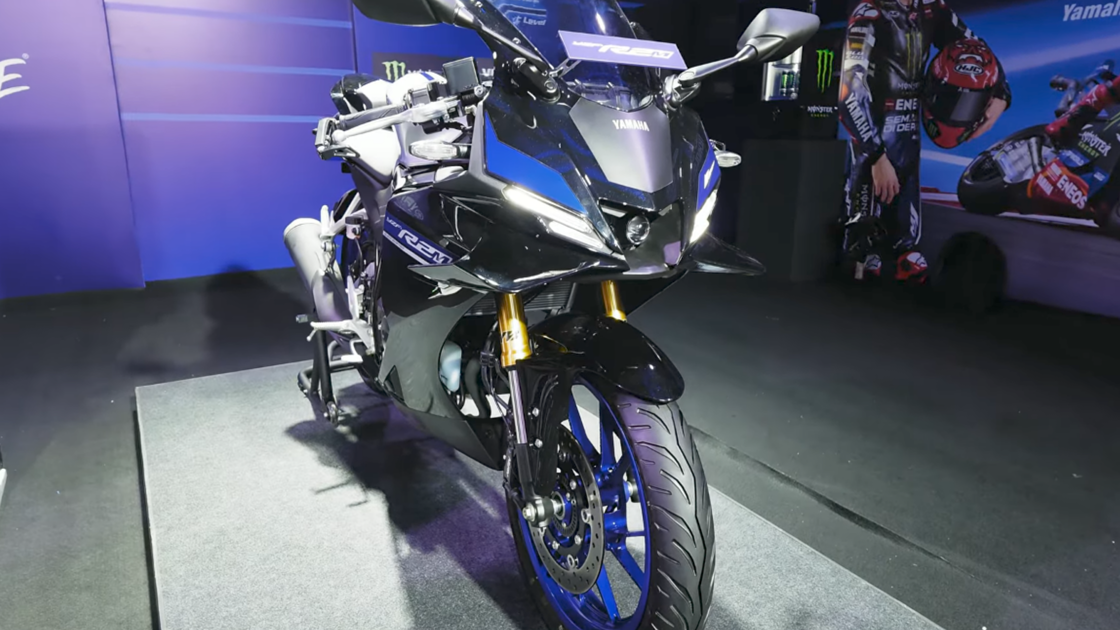
Yamaha fans in India have been asking for this bike for a long time, whether they realised it or not. The R15 has been brilliant for years, but it’s always had one obvious limitation: it’s a 155cc bike wearing a supersport costume. If you outgrew it, your only real option was jumping straight to the R3 — a genuinely big, genuinely expensive leap. The Yamaha YZF-R2 finally fills that gap, and in this review, we’re going to walk you through exactly what you’re getting for your money, what’s genuinely new under the skin, and whether it’s actually worth choosing over the R15 you might already own.
Yamaha R2 Price & Variants
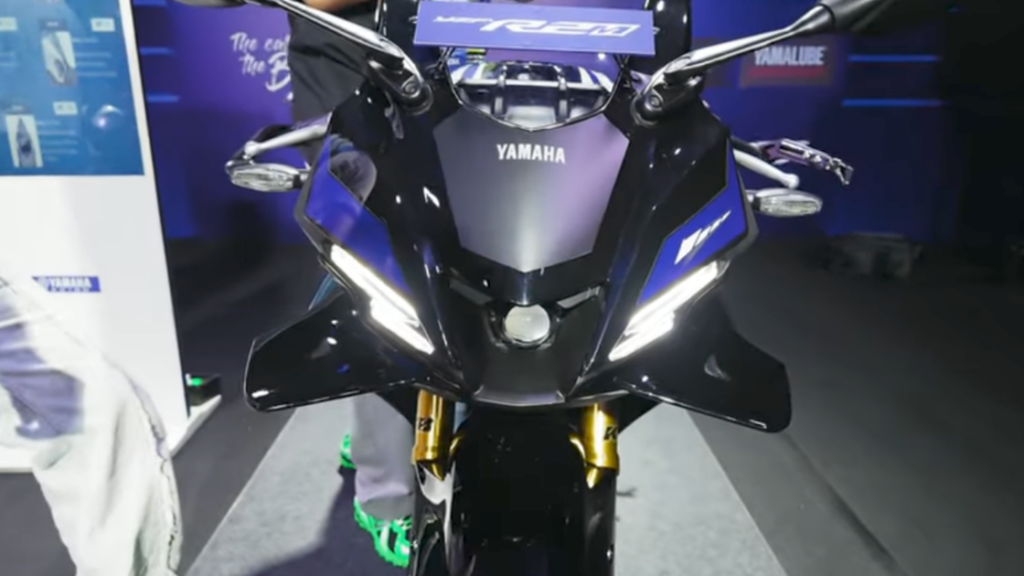
The R2 comes in three variants, spread across a fairly tight price band, which makes the decision less about budget and more about which features actually matter to you.
Yamaha R2 — Price & Variants
| Variant | Ex-Showroom Price (Delhi) | Key Difference |
|---|---|---|
| R2 (Base) | Rs 2,30,500 | Core spec: ride modes, TFT, ABS, USD forks |
| R2 (with Quickshifter) | Rs 2,39,500 | Adds bi-directional quickshifter, coloured alloys |
| R2 M | Rs 2,53,000 | Adds adjustable suspension, keyless system, faux-suede seat |
Each variant is tied to its own set colours too — the base comes in Metallic Black or Dark Bluish Gray, the middle variant in Matte White Pearl or Racing Blue, and the top R2 M is offered only in Metallic Gray. So picking a colour and picking a spec level end up being the same decision.
Yamaha R2 Specifications
Here’s the full spec sheet in one place, pulled directly from Yamaha’s official launch details:
| Specification | Detail |
|---|---|
| Engine | 204cc, liquid-cooled, DOHC, 4-valve, single-cylinder |
| Power | 26.1-26.5 bhp @ 10,000 rpm |
| Torque | 19.1-19.3 Nm @ 8,000 rpm |
| Gearbox | 6-speed, with Assist & Slipper clutch |
| Frame | Steel-tube diamond frame, 14kg, 4-point engine mounting |
| Kerb Weight | 149 kg (base), 150 kg (mid and top variants) |
| Front Suspension | 37mm USD (inverted) fork |
| Rear Suspension | Monoshock |
| Front Brake | 282mm disc, Nissin 4-piston caliper |
| Rear Brake | 220mm disc, ByBre single-piston caliper |
| ABS | Dual-channel |
| Wheels | 17-inch, both ends |
| Display | 5-inch TFT with smartphone connectivity |
| Ride Modes | 3 (Street, Sport, Rain) via Yamaha Ride Control (YRC) |
You’ll notice the power and torque figures show a small range rather than one fixed number — that’s because BikeWale and Team-BHP reported 26.1 bhp and 19.1 Nm, while Autocar India and ZigWheels reported 26.5 bhp and 19.1-19.3 Nm. This is almost certainly a rounding difference between sources rather than a real inconsistency, but we’d rather show you the honest spread than pretend we have one perfectly precise number.
Design & Looks
The Yamaha YZF R2 is clearly part of the same visual family as the R15, but Yamaha hasn’t just stretched the same design over a bigger tank. It gets a sharper, more aggressive headlight section, twin projector-style units that give it a more purposeful face than the R15’s, and a muscular fuel tank that looks genuinely larger and more sculpted in photos from the launch event.
The tail section is where the R2 really separates itself — it’s narrower, with a stepped seat that clearly divides rider and pillion space, giving the bike a proper single-seater silhouette when you look at it side-on. Early public reaction has been genuinely enthusiastic here; several comments on launch coverage specifically called out the aerodynamic styling and said it looks noticeably sportier than the outgoing R15 generation.
Engine & Performance
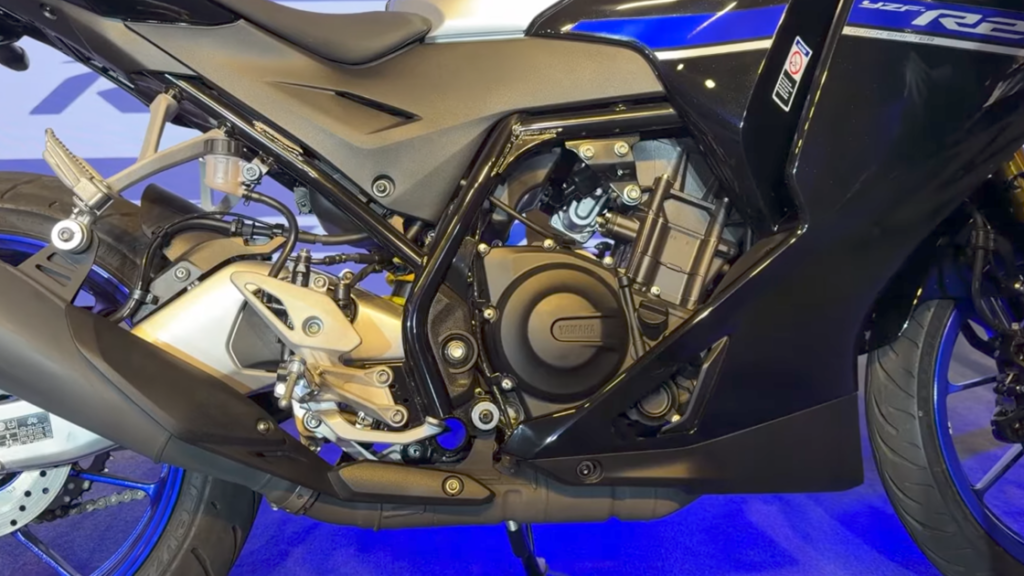
The R2’s engine is a genuinely new unit, not a bored-out R15 motor. It’s a 204cc, DOHC, four-valve single-cylinder, and this is worth explaining properly: the R15 uses a SOHC layout with Yamaha’s clever VVA (Variable Valve Actuation) system, which helps it stay flexible across a wide rev range. The R2 switches to DOHC instead, and does not get VVA — a genuine engineering trade-off. DOHC generally allows an engine to breathe more freely and rev harder at the top, but without VVA, the R2 has to rely on more conventional tuning to stay usable lower down.
On paper, that trade-off works in the R2’s favour against its most direct rival: Yamaha’s own figures put it at roughly 26.1-26.5 bhp and 19.1-19.3 Nm, compared to the KTM RC 200’s 25 PS and 19.2 Nm — a genuine, if narrow, edge in outright power. The engine also uses a semi-dry sump lubrication system and electronically controlled throttle body, both of which support the bike’s three ride modes, and its valves are coated with DLC (diamond-like carbon) — a detail borrowed from Yamaha’s flagship R1 superbike, and a genuinely unusual thing to see on a bike at this price.
Riding Experience
Here’s where we need to be completely upfront with you: nobody has properly ridden this bike yet in any meaningful, tested way — it launched only hours before this article was written. So rather than invent riding impressions we don’t actually have, let’s talk honestly about what the specifications suggest, and what Yamaha itself is promising.
Yamaha’s own marketing language describes “instant throttle response with confident, agile handling” and a “tuned induction sound” designed to make every throttle input feel more engaging — the kind of language you’d expect from any manufacturer at launch, so take it as intent rather than proof. What we can say with more confidence, based on the hardware: a 149kg kerb weight, a stiff new frame, and rear-set footpegs with low clip-on handlebars all point toward a genuinely committed, sporty riding position, closer to a proper supersport stance than a relaxed commuter. BikeDekho’s early assessment specifically noted the R2 should feel “exciting to ride in the city” while also being “a good handler when attacking corners,” though this too is an informed expectation, not a confirmed test result.
We’d recommend waiting for proper first-ride reviews from published test rides before treating any specific claim about how this bike feels on the road as settled fact — including ours.
Suspension & Comfort
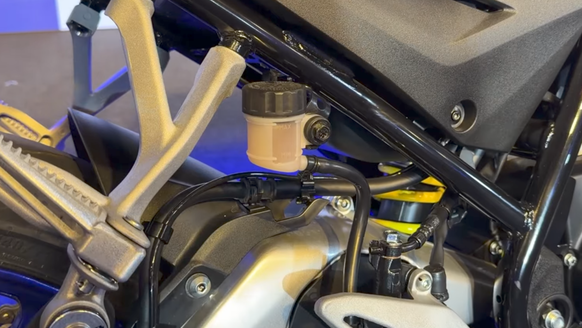
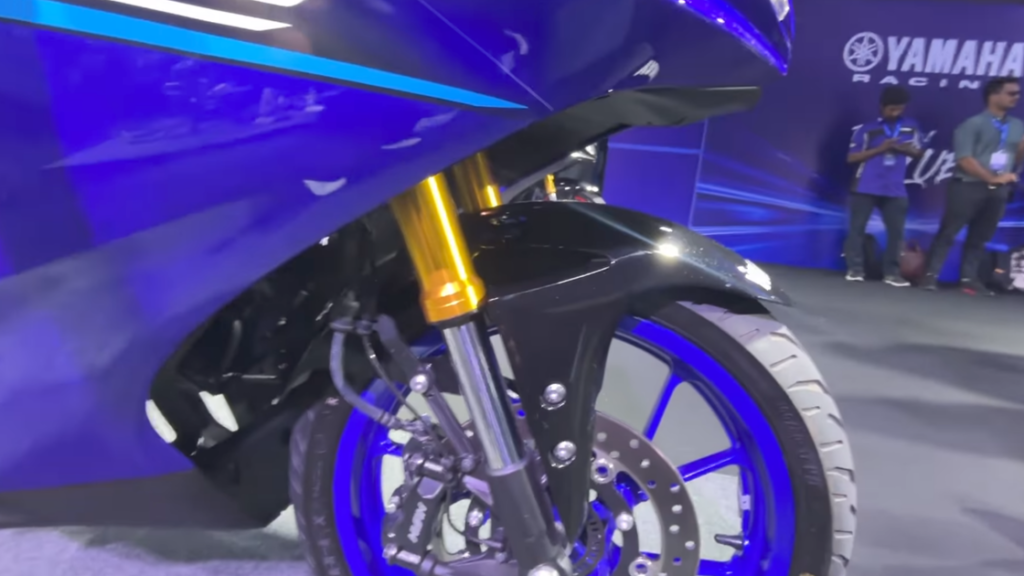
The R2 uses a 37mm USD (upside-down) front fork and a rear monoshock, hardware that’s a genuine step up from a basic telescopic setup and should, on paper, offer sharper front-end feel and better composure under hard braking. The top R2 M variant adds preload-adjustable suspension at both ends, letting more experienced or heavier riders fine-tune the setup to their weight and riding style.
On comfort, the honest expectation — shared across multiple sources covering the launch — is that this is a bike built primarily for spirited riding, not long-distance comfort. BikeDekho specifically flagged that the R2 shouldn’t be expected to be “the most comfortable bike on bad roads,” especially given its aggressive riding posture, and noted the pillion seat is fairly high without a proper grab handle, making it suitable for short trips rather than long two-up rides.
Features
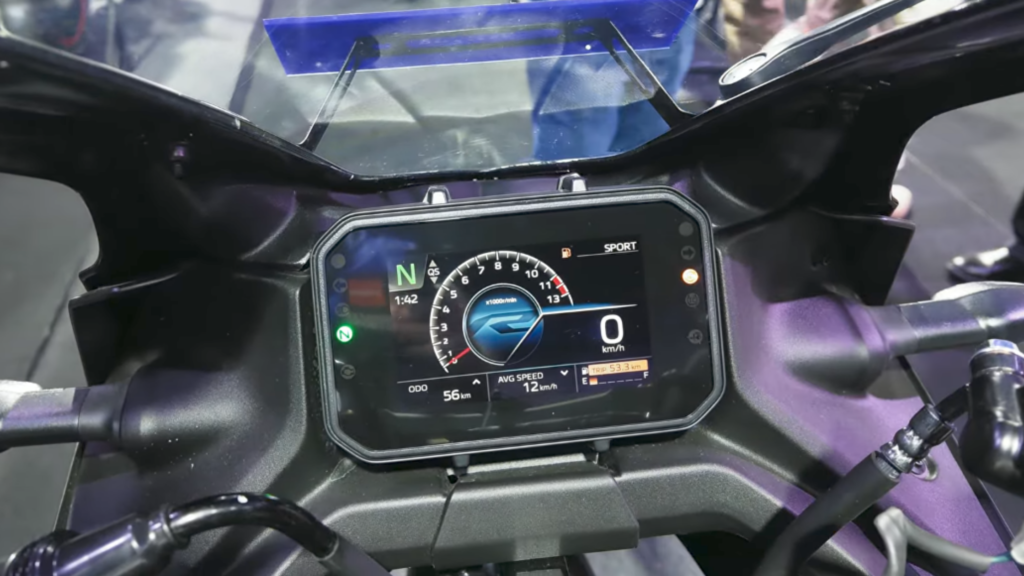
For a bike at this price, the R2’s feature list is genuinely strong. Every variant gets a 5-inch TFT display with smartphone connectivity and navigation support, three ride modes (Street, Sport, and Rain) through Yamaha’s Ride Control system, traction control, and dual-channel ABS as standard.
Step up to the middle variant and you gain a bi-directional quickshifter — Yamaha is calling this a segment-first feature, and in practical terms, it lets you shift both up and down without touching the clutch lever, which genuinely speeds up and smooths out aggressive riding. The top R2 M adds a Smart Key System for keyless ignition, along with adjustable levers and that preload-adjustable suspension mentioned earlier.
Mileage & Range
We want to be genuinely honest here rather than make up a number: there’s no real-world mileage data available yet, since the bike has literally just gone on sale and no owners have had the chance to report anything. Several listing pages we checked simply show blank or “not available” fields for this exact reason.
Based on the engine’s displacement and tuning, a reasonable expectation would put real-world mileage somewhere in a similar bracket to other 200cc-class performance singles — but until Yamaha publishes an official ARAI figure or genuine owner data starts coming in, treat any specific number you see quoted elsewhere as a guess, not a fact. We’ll update this section as soon as reliable figures become available.
Braking & Handling
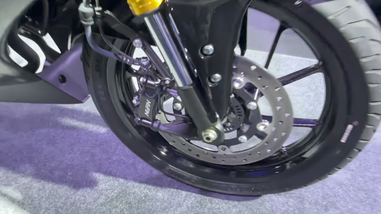
Braking hardware is genuinely solid for this segment: a 282mm front disc paired with a Nissin 4-piston caliper, and a 220mm rear disc with a ByBre single-piston caliper, backed by dual-channel ABS as standard across all variants. On paper, this should translate into strong, predictable stopping power with good lever feel — Nissin calipers in particular have a strong reputation in this price bracket.
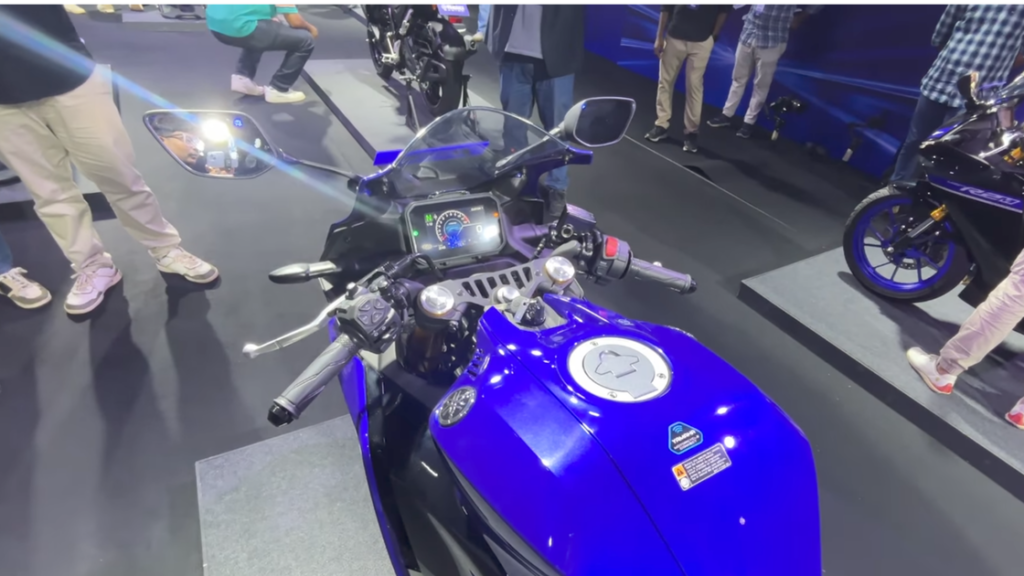
On handling, the combination of a light 149kg kerb weight, a genuinely stiff new diamond frame, and 17-inch wheels at both ends points toward a bike that should feel agile and eager to change direction — exactly what you’d want from something wearing the “R” badge. As with the riding experience section above, this remains an informed expectation based on the hardware, not a confirmed result from an actual test ride.
R2 vs R15
Since the R15 continues to be sold right alongside the R2, this is probably the single most useful comparison for existing Yamaha fans trying to decide where to put their money.
| Specification | Yamaha R15 (V4/M) | Yamaha YZF-R2 |
|---|---|---|
| Engine | 155cc, SOHC, with VVA | 204cc, DOHC, no VVA |
| Power | ~18.4 PS | ~26.1-26.5 bhp |
| Frame | Deltabox | Diamond-type steel, 14kg |
| Kerb Weight | 141 kg | 149-150 kg |
| Starting Price | ~Rs 1.75 lakh | Rs 2.30 lakh |
| Quickshifter | Upshift-only, top variant | Bi-directional, mid and top variants |
The honest takeaway: the R2 isn’t here to make the R15 obsolete. It’s a genuine step up for riders who’ve outgrown the R15’s performance ceiling but don’t want to jump straight to something as expensive as the R3 was. Yamaha keeping the R15 on sale, alongside the MT-15 and XSR155, confirms this is about building out the family, not replacing anything.
R2 vs Competitors
The R2 lands right in the middle of a genuinely competitive segment, going up against the KTM RC 200, the Hero Karizma XMR 210, and — as BikeDekho also pointed out — the Bajaj Pulsar RS 200.
| Bike | Price (approx.) | Power | Kerb Weight |
|---|---|---|---|
| Yamaha YZF-R2 | Rs 2.30-2.53 lakh | ~26.1-26.5 bhp | 149-150 kg |
| KTM RC 200 | ~Rs 2.10 lakh | 25 PS | 160 kg |
| Hero Karizma XMR 210 | ~Rs 2.20 lakh | ~24.6 PS | 163.5 kg |
| Bajaj Pulsar RS 200 | ~Rs 1.80 lakh | 24.5 PS | 167 kg |
On paper, the R2 wins on both outright power and kerb weight against every one of these direct rivals — genuinely the lightest bike in its segment, according to multiple sources covering the launch. Whether that translates into being the best bike to actually live with day to day will come down to real-world factors a spec sheet can’t settle: long-term reliability, how the DOHC-without-VVA engine actually feels in traffic, and Yamaha’s Blue Square-only dealership network, which means it’s not available at every regular Yamaha showroom.
Who Should Buy the Yamaha R2?
- Existing R15 owners who’ve outgrown it: This is genuinely the bike Yamaha built for you — more power, a lighter frame, and a proper step up without the R3’s old price tag.
- Riders cross-shopping the KTM RC 200: The R2’s power and weight advantage on paper make it a genuinely strong alternative worth test riding before you commit to the KTM.
- Buyers who want the most features without overspending: The base variant already includes ride modes, TFT, and dual-channel ABS — genuinely enough bike for most riders.
- Enthusiasts who ride aggressively or want quickshifter convenience: The mid-spec variant’s bi-directional quickshifter is worth the extra Rs 9,000 if you shift gears often and hard.
- Riders who prioritise long-distance comfort or regular pillion use: Worth reconsidering — the aggressive riding position and limited pillion setup suggest this bike is built for spirited solo riding first.
FAQs
1. What is the price of the Yamaha YZF-R2?
It starts at Rs 2,30,500 (ex-showroom, Delhi) for the base variant, going up to Rs 2,39,500 with a quickshifter, and Rs 2,53,000 for the top R2 M variant.
2. What engine does the Yamaha R2 use?
A new 204cc, liquid-cooled, DOHC, single-cylinder engine, producing approximately 26.1-26.5 bhp and 19.1-19.3 Nm of torque.
3. Is the Yamaha R2 more powerful than the KTM RC 200?
Yes, narrowly. The R2 makes around 26.1-26.5 bhp compared to the RC 200’s 25 PS, and the R2 is also lighter at 149kg versus the RC 200’s 160kg.
4. Does the Yamaha R2 have real-world mileage figures yet?
No. The bike has only just launched, so no genuine owner-reported mileage data exists yet. Treat any specific number you see elsewhere as an estimate, not a confirmed figure.
5. Is the Yamaha R2 replacing the R15?
No. Yamaha is continuing to sell the R15 alongside the R2, positioning the R2 as a step above it rather than a replacement.
6. What’s the difference between the R2 variants?
The base variant covers the essentials. The middle variant adds a bi-directional quickshifter and coloured alloy wheels. The top R2 M adds adjustable suspension, a keyless system, adjustable levers, and a faux-suede seat.
7. Where can I buy the Yamaha R2?
It’s sold exclusively through Yamaha’s Blue Square dealership network, not every standard Yamaha showroom.
8. Is the Yamaha R2 comfortable for pillion riders?
Based on early assessments, the pillion seat is fairly high and lacks a proper grab handle, making it better suited to short rides than long two-up journeys.
Conclusion
Our honest take on the Yamaha YZF-R2 is that it looks like exactly the bike Yamaha’s fans have been waiting for — a genuine, well-engineered step up from the R15, not a lazy reskin. A new DOHC engine, a lighter and stiffer frame borrowed in spirit from Yamaha’s superbike know-how, and a sensible three-variant lineup that doesn’t force you into features you don’t need all point toward a bike built with real intent. That said, since this is launch-day information rather than a properly road-tested review, our honest advice is to treat this as a strong first impression, not a final verdict — wait for genuine first-ride reviews and early owner feedback before making your final call, and we’ll be updating this review as that real-world experience starts coming in.
Read Also
Bajaj Pulsar RS200 Review: Still the Loudest Pulsar in the Room, For Better and Worse
Bajaj Pulsar 125 & 150 Launched: Prices Start at ₹92,990, Get TFT, Ride Modes & More Tech
2026 KTM 390 Adventure Launched in New Arctic Flare Colour: Check Price & Details