
Introduction
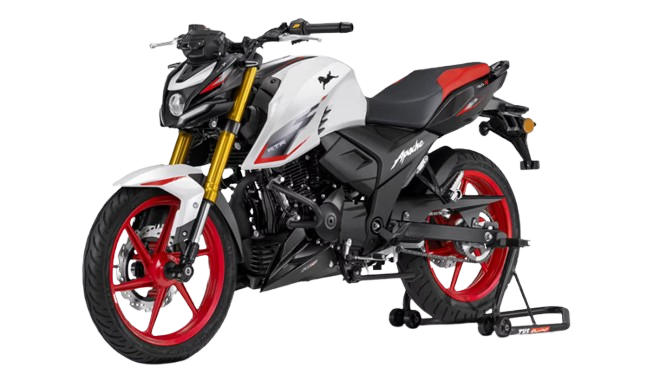
The TVS Apache RTR 160 4V Dual Channel ABS with USD variant sits right in the sweet spot of TVS’s Apache 160 line-up — not the cheapest option, not the most expensive, but arguably the one that makes the most sense for most buyers. It adds two genuinely meaningful upgrades over the base bike — dual-channel ABS and upside-down front forks — without pushing you all the way up to the top TFT variant’s price.
This review covers everything from how it looks and feels to actual city and highway testing, real ownership costs, and where it genuinely falls short — so you can decide with your eyes open, not just based on a spec sheet.TVS Apache RTR 160 4V Dual Channel ABS With USD Variant
Review Summary
This variant delivers exactly what its name promises: real, functional safety and handling upgrades over the base Apache RTR 160 4V, at a price that still undercuts the range-topping TFT version by a meaningful margin. The engine, shared across every variant, remains eager and refined for a single-cylinder 160cc unit, and TVS’s claimed mileage figure holds up well against real-world testing. The trade-offs are honest ones: a firmer ride over rough city roads, a quirky side-stand design, and a spread of owner reviews that range from genuinely glowing to genuinely frustrated over service experiences. Overall, it remains one of the strongest value picks in the 160cc naked bike segment — provided you go in aware of both sides of the ownership story.
Quick Specifications
| Specification | Detail |
|---|---|
| Ex-Showroom Price | Rs 1.31 lakh (approx.) |
| On-Road Price (approx.) | Rs 1.47 lakh |
| Engine | 159.7cc, single-cylinder, oil-cooled, 4-valve |
| Power | 17.31-17.55 PS @ 9,250 rpm |
| Torque | 14.73 Nm @ 7,250 rpm |
| Gearbox | 5-speed |
| Mileage (ARAI claimed) | 41.4 kmpl |
| Mileage (expert-tested) | ~41 kmpl |
| Kerb Weight | 144-145 kg |
| Ground Clearance | 180 mm |
| Braking | Dual-channel ABS |
| Front Suspension | Upside-down (USD) forks |
| Colours | Granite Grey, Matte Black, Pearl White |
| Ride Modes | Sport, Urban, Rain |
| Warranty | 5 years or 60,000 km (standard) |
Design & Styling
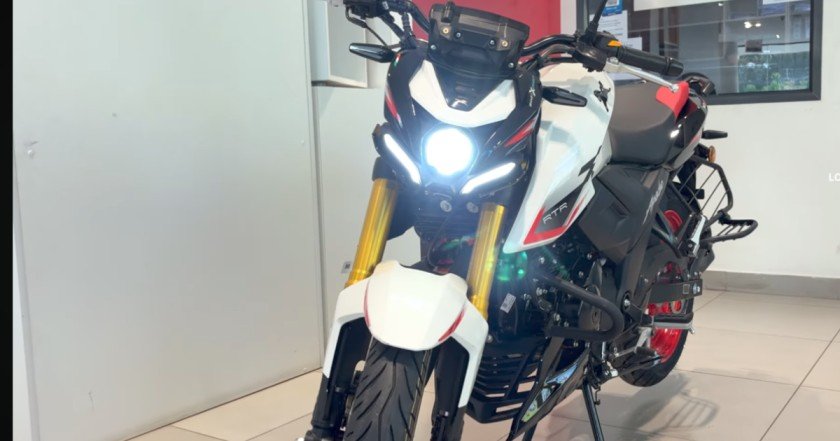
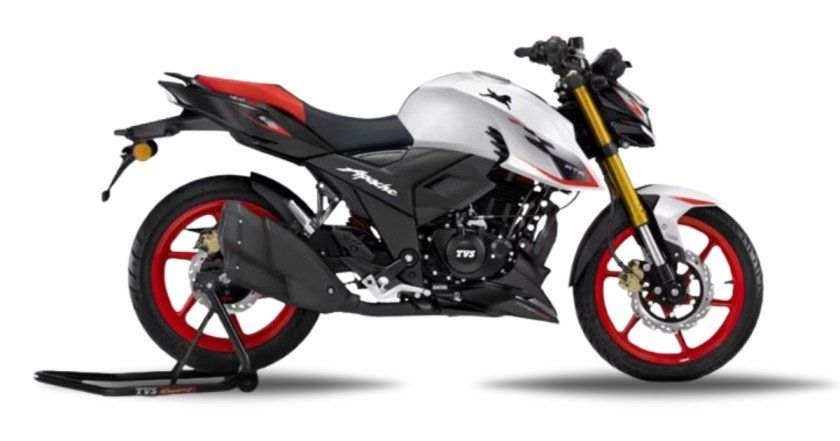
TVS has stuck with the Apache RTR 160 4V’s aggressive, race-inspired look, and this variant adds a few genuine visual upgrades over the base bike. You get a Class-D projector headlamp with integrated LED daytime running lights, LED turn signal lamps, colour-coded alloy wheels, and a dual-tone seat that ties the whole design together. The exposed USD front forks also add real visual presence — this is a bike that looks noticeably sportier standing next to the base Single Channel ABS variant, not just on a spec sheet.
One small design quirk worth knowing about: reviewers have noted that the LED DRL design isn’t the most efficient, with some light leaking toward the rider’s eyeline in low-light conditions — a minor but real annoyance during night rides.
Read Also – 2026 KTM 390 Duke Review: Price, Specs, Features, Performance & Verdict
Build Quality
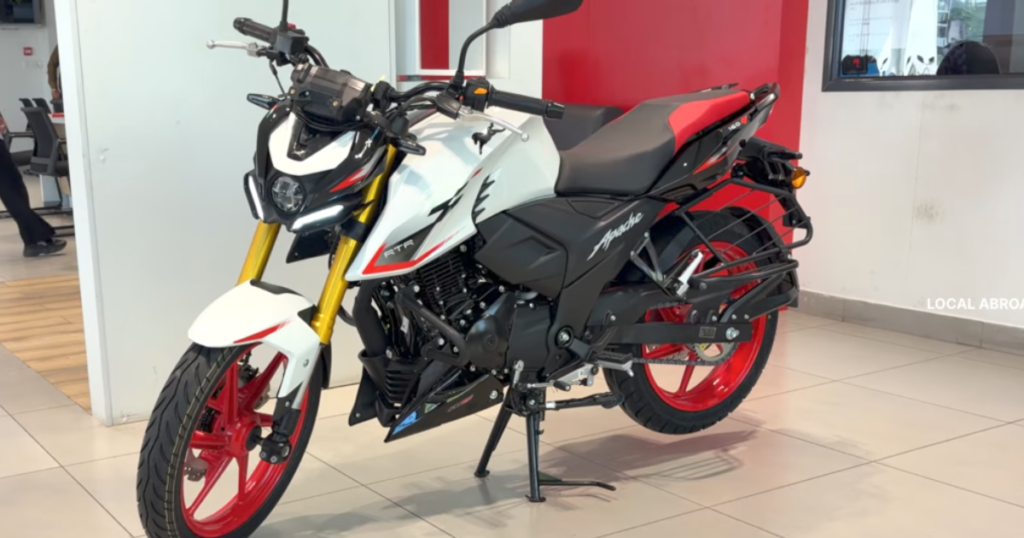
TVS’s long-running reputation with the Apache RTR 160 4V nameplate is generally strong here — reviewers consistently describe the plastics, switchgear, and paint finish as solid, giving the impression the bike is built to last. That said, real owner feedback paints a more mixed picture on this specific point than the polished expert reviews suggest. While many owners report zero issues, a genuine minority describe switches or sensors failing, and at least one owner reported a lengthy, frustrating wait for a spare part with the bike sitting unused at the dealership for months. This kind of inconsistency is worth being aware of — it doesn’t mean every unit will have problems, but it’s honest to say build consistency isn’t universally praised across every single review.
Riding Position & Comfort
The Apache RTR 160 4V’s riding position strikes a fairly natural, commuter-friendly balance rather than an aggressive, track-focused stance. The seat has been consistently praised in owner reviews as comfortable for both rider and pillion, and the overall ergonomics suit daily commuting as well as occasional longer rides without feeling like a compromise either way.
Engine & Performance
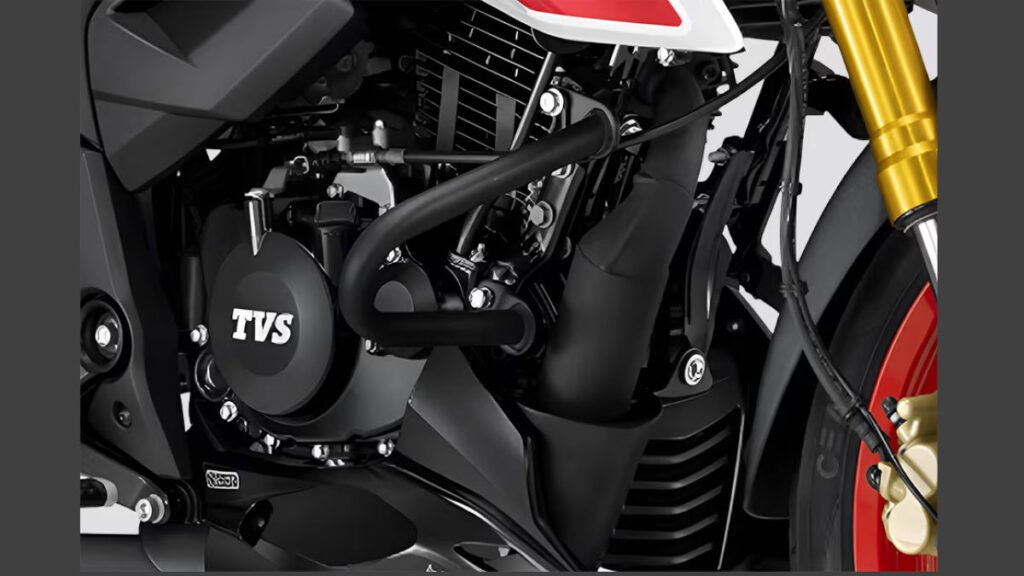
The engine is identical across every Apache RTR 160 4V variant, including this one — a 159.7cc, oil-cooled, 4-valve single-cylinder unit producing 17.31-17.55 PS at 9,250 rpm and 14.73 Nm of torque at 7,250 rpm. So while this variant adds real braking and suspension upgrades, don’t expect any extra straight-line performance over the cheaper versions — you’re paying for handling and safety, not more power.
BikeDekho’s long-term coverage describes the recent engine tune as making the bike “more exciting than before without compromising on refinement” — a fair description of an engine that feels eager without being harsh or buzzy, and one that owners consistently praise for smoothness in daily use.
Read Also – Best Bikes for Short Riders Under ₹1.5 Lakh: Top 5 Low-Seat-Height Picks in 2026
Acceleration
According to one dedicated service-cost tracking source, the Apache RTR 160 4V’s 0-60 kmph time comes in at around 5.42 seconds, with 0-100 kmph at approximately 15.08 seconds. We want to be upfront that this figure comes from a single, less-established source rather than a verified, official instrumented test from a major publication — so treat it as a reasonable estimate of what to expect, not a precisely confirmed number. Real owner feedback broadly supports the idea that the bike offers genuinely peppy, confident acceleration for its class, particularly appreciated for quick overtakes in city traffic.
Mileage
TVS claims an ARAI-rated mileage of 41.4 kmpl, and encouragingly, BikeDekho’s own expert-tested figure for this exact Dual Channel ABS with USD variant came in very close, at around 41 kmpl overall. That’s a genuinely small gap between claimed and real-world figures — a good sign, since claimed mileage numbers often turn out to be optimistic on many bikes. Some owner reviews report a wider range, from around 41 up to 50 kmpl depending on riding style, which is a healthy real-world spread for this segment.
Handling
This is where the USD forks genuinely earn their keep. BikeDekho’s long-running coverage of the RTR 160 4V calls it “one of the best-handling motorcycles under Rs 1.5 lakh,” and this variant’s sharper front end only reinforces that reputation. Cornering feels confident and precise, and the bike responds quickly to rider input without feeling twitchy or nervous — a genuine strength that owners repeatedly bring up unprompted.
Suspension & Ride Quality
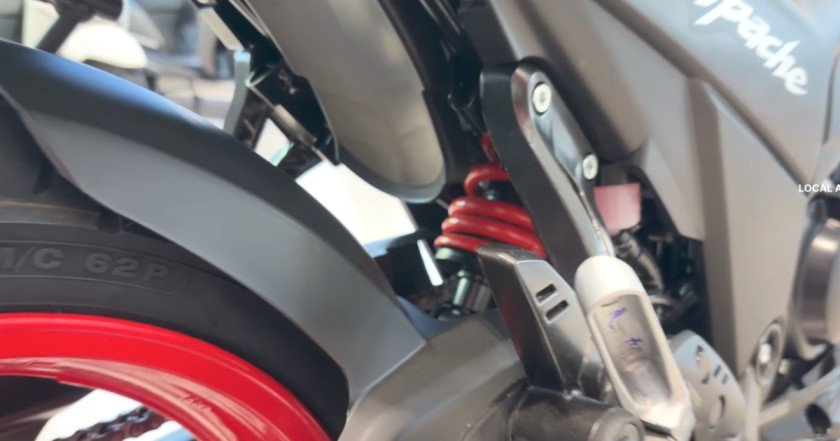
The USD front forks deliver noticeably sharper front-end feel and more precise steering feedback than the standard telescopic setup on cheaper variants. On smooth roads and highways, this translates into a composed, confidence-inspiring ride. The honest trade-off shows up in the city: more than one review — both expert and owner — mentions the suspension feeling a little stiff over rough patches and broken roads, which is worth test-riding on your specific daily route before committing, especially if your commute involves a lot of potholes or speed breakers.
Braking
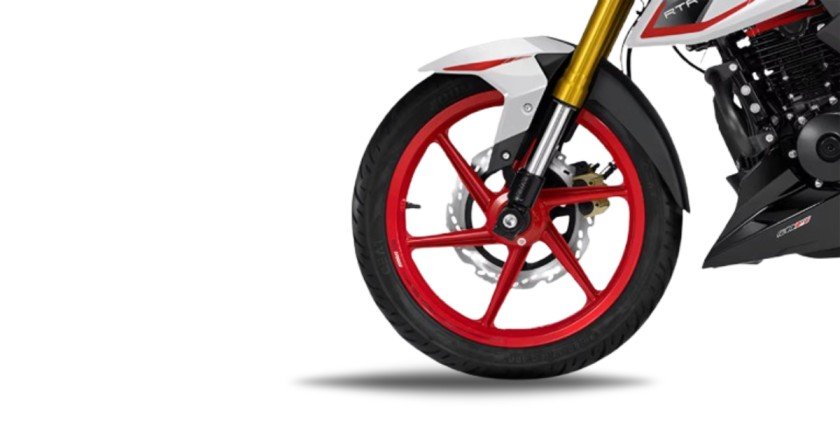
Braking is the other headline upgrade on this variant. Dual-channel ABS means both wheels get anti-lock protection, not just the front, which genuinely improves control during emergency braking. TVS also includes rear-wheel lift-off protection on this variant — a feature that prevents the back wheel from lifting during hard braking, usually reserved for bigger, pricier motorcycles. In real-world use, brake feel is progressive and confidence-inspiring, and this is a clear, tangible upgrade over the base Single Channel ABS variant, not just a marketing checkbox.
Practicality
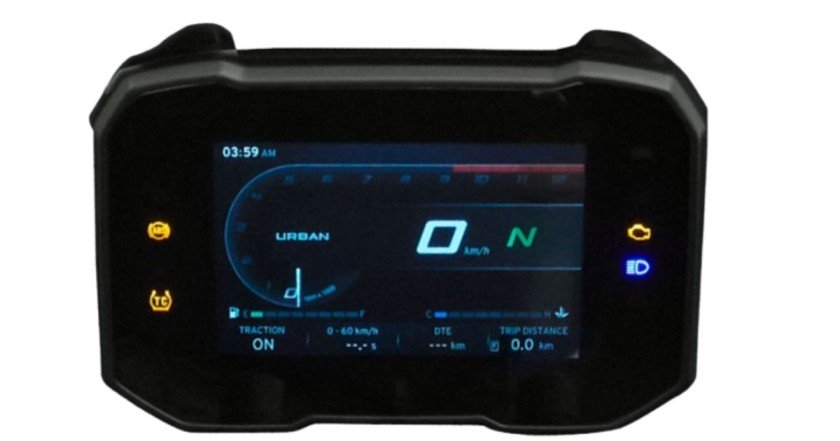
Day to day, the Apache RTR 160 4V remains a genuinely practical motorcycle. The digital console covers the essentials clearly, Bluetooth connectivity lets you stay connected to TVS’s SmartXonnect app, and the adjustable brake and clutch levers — a genuinely rare inclusion at this price — let you fine-tune the controls to your hand size without needing tools. One small critique from owner reviews: some of the app’s recorded metrics, like the 0-60 timer and lap timer, are seen as more gimmicky than genuinely useful for everyday riders, while some owners wish for more practical inclusions like an average fuel economy or distance-to-empty indicator.
Highway Test
On the highway, this variant’s strengths come through clearly. The USD forks keep the front end planted and composed at speed, and the engine settles into a smooth, confident cruise without feeling strained. Owner feedback consistently describes highway riding as smooth and comfortable, with sharp, responsive handling that inspires confidence even at higher speeds — exactly the kind of feedback you’d hope for from a bike wearing “RTR” (Racing Throttle Response) badging.
City Test
City riding tells a more mixed, honest story. The bike remains nimble and easy to manoeuvre through traffic, and the engine’s low-end response makes stop-and-go riding manageable without constant gear shifting. But this is exactly where the firmer suspension setup shows its limits — multiple owners and reviewers specifically note the ride feeling stiffer over city potholes and rough patches compared to the smoother highway experience. It’s not harsh enough to be a dealbreaker, but it’s a genuine, repeated piece of feedback worth taking seriously if your daily commute is mostly on rough urban roads.
Pros & Cons
| Pros | Cons |
|---|---|
| Dual-channel ABS genuinely improves emergency braking safety | Same engine and power as cheaper variants — no extra performance |
| USD forks noticeably sharpen handling and front-end feel | Suspension feels stiff over rough city roads |
| Real-world mileage closely matches the claimed ARAI figure | No TFT display — you’ll need the top variant for that |
| Adjustable brake and clutch levers are a rare, thoughtful touch | Side stand design can cause excessive lean on uneven ground |
| Long 5-year/60,000km standard warranty | Build quality and service experience feedback is genuinely mixed |
| Rear-wheel lift-off protection adds a real safety layer | Some owners report parts availability delays at certain dealerships |
Competitors
| Bike | Price (approx.) | Engine | Power | ABS |
|---|---|---|---|---|
| TVS Apache RTR 160 4V (this variant) | Rs 1.31 lakh | 159.7cc | 17.31-17.55 PS | Dual-channel |
| Bajaj Pulsar N160 | Rs 1.20-1.30 lakh | 164.82cc | 17.2 PS | Single/Dual (variant-dependent) |
| Honda Hornet 2.0 | Rs 1.40 lakh+ | 184.4cc | 17.03 PS | Single-channel |
| Yamaha FZ-S Fi V4 | Rs 1.30 lakh+ | 149cc | 12.4 PS | Single-channel |
Against the Bajaj Pulsar N160, this variant holds its own closely on both price and power, with the USD forks giving the Apache a slight edge on outright handling sharpness. The Honda Hornet 2.0 offers a bigger engine but typically costs more and doesn’t match this variant’s dual-channel ABS as standard. The Apache remains a genuinely strong pick if sharp handling and braking confidence matter more to you than outright displacement.
Ownership & Maintenance
TVS backs the Apache RTR 160 4V with a genuinely generous 5-year or 60,000km standard warranty — one of the stronger warranty periods in this segment. Routine service costs are reasonable, typically running Rs 300 to Rs 1,400 per visit depending on what’s due, with a full service schedule stretching across roughly nine visits over two years. Estimated total annual maintenance cost sits around Rs 3,000-5,000 for typical use, which is genuinely pocket-friendly for this class of motorcycle.
That said, it’s worth knowing about the more common long-term issues real owners report: clutch plates can start slipping around the 22,000-28,000 km mark, a straightforward and relatively inexpensive fix, and the fuel-injected engine occasionally shows throttle hesitation at low revs, usually traced back to a dirty throttle body or low-quality fuel rather than a deeper mechanical fault. On the more concerning end, we came across at least one owner review describing a warranty claim being refused for an engine noise issue within the first year and a half of ownership — a reminder to keep your service records thorough and raise any concerns promptly and in writing if you ever need to lean on your warranty.
Who Should Buy It
- Riders who want genuine safety upgrades without paying top-variant prices: Dual-channel ABS and rear-wheel lift-off protection are real, meaningful safety features at a reasonable premium over the base bike.
- Enthusiasts who care about handling and cornering feel: The USD forks make a real, noticeable difference here.
- Daily commuters on mostly smooth roads: You’ll get the most out of this variant’s sharper suspension without feeling the city-road stiffness as much.
- Riders who don’t specifically need a TFT display: If Bluetooth and a solid digital console are enough for you, this variant lets you skip paying extra for the top-spec screen.
- Buyers with genuinely rough daily commutes: Consider test-riding this variant specifically on your usual route first, given the consistent feedback about stiffer low-speed ride quality.
Final Verdict
The TVS Apache RTR 160 4V Dual Channel ABS with USD variant is a genuinely smart middle-ground choice in a range that now spans four clearly differentiated options. You get real, functional upgrades — safer braking and sharper handling — without paying for a TFT screen you might not need, backed by a strong warranty and reasonable running costs. The honest trade-offs are a firmer city ride, a quirky side-stand design, and a spread of ownership experiences that isn’t universally glowing. For most riders who value how a bike handles and stops just as much as how it looks, this remains one of the strongest value picks in the 160cc naked bike segment — just go in with realistic expectations on both the ride comfort and the service experience.
Final Score
8.1 / 10
| Category | Score |
|---|---|
| Design & Styling | 8.5/10 |
| Build Quality | 7/10 |
| Comfort | 8/10 |
| Engine & Performance | 8/10 |
| Handling & Ride Quality | 8.5/10 |
| Braking | 9/10 |
| Features & Practicality | 8/10 |
| Ownership & Value | 7.5/10 |
Score reflects a blended read of expert testing (handling, mileage accuracy, braking) and genuine owner feedback (build quality inconsistency, city ride comfort, and service experience variability).
FAQs
1. What is the price of the TVS Apache RTR 160 4V Dual Channel ABS with USD variant?
It’s priced at approximately Rs 1.31 lakh (ex-showroom), with on-road prices around Rs 1.47 lakh depending on your city.
2. What is the 0-60 kmph acceleration time of the Apache RTR 160 4V?
One source reports approximately 5.42 seconds, though this figure isn’t from a major publication’s verified instrumented test, so treat it as an estimate.
3. What is the real-world mileage of this variant?
Expert testing recorded around 41 kmpl, closely matching the ARAI-claimed figure of 41.4 kmpl, with owner-reported figures ranging up to 50 kmpl depending on riding style.
4. What warranty does the Apache RTR 160 4V come with?
A standard 5-year or 60,000 km warranty, which is genuinely generous for this segment.
5. Is the ride quality comfortable on bad roads?
It’s a mixed picture. The bike feels composed and smooth on highways, but multiple owners and expert reviewers note the suspension feels stiffer over rough city roads and speed breakers.
6. What are the most common long-term issues owners report?
Clutch plates slipping around 22,000-28,000 km, and occasional throttle hesitation at low revs, usually linked to fuel quality or a dirty throttle body.
7. Is build quality consistent across all units?
Mostly, according to expert reviews, but a genuine minority of owner reviews report switch or sensor issues and, in at least one case, a frustrating warranty claim experience — worth keeping thorough service records for peace of mind.
8. How does this variant compare to the Bajaj Pulsar N160?
They’re closely matched on price and power. This variant’s USD front forks give it a slight edge in handling sharpness, while both offer strong overall value in the segment.
Conclusion
If you’re shopping in the 160cc naked bike segment and safety and handling matter to you as much as looks, the TVS Apache RTR 160 4V Dual Channel ABS with USD variant makes a genuinely strong case for itself — backed by a long warranty, accurate real-world mileage, and genuinely sharper handling than the base bike. Just go in with realistic expectations: test ride it on your usual daily route given the honest feedback about firmer low-speed ride quality, and keep your service paperwork organised given the mixed ownership experiences some ATVS owners have reported. Weigh those honest trade-offs against the real upgrades on offer, and this remains one of the smarter picks in its class.