
Introduction
E3 Electric.AI is a name most Indian two-wheeler buyers had never heard of until a few weeks ago — and suddenly, this Bengaluru-based startup has launched its very first electric scooter with a genuinely bold pitch: an AI-powered, family-friendly scooter starting at just Rs 99,999. That’s an attention-grabbing price for a scooter this loaded with tech, so let’s dig into what the E3 Trion actually offers, honestly, across range, charging time, speed, and the rest of its spec sheet.
Since this scooter is brand new, we won’t pretend to have long-term ownership stories to share — nobody does yet. What we can give you is a clear, accurate picture of what E3 Electric is promising, based on official specifications, so you know exactly what you’d be signing up for.
Key Highlights
- The E3 Trion comes in three variants — C1, C1x, and C2 — priced at Rs 99,999, Rs 1,09,999, and Rs 1,19,999 respectively (introductory, ex-showroom Bengaluru).
- Claimed range varies by variant: 108 km on the C1, 160-165 km on the C1x, and 128 km on the C2.
- Top speed is 67 km/h on the C1 and C1x, and a quicker 82 km/h on the C2, which uses a more powerful motor tune.
- Charging time (0-80%) is 3 hours 30 minutes across the range, with the C1 additionally supporting fast charging in as little as 2 hours 40 minutes.
- The C1 uses a removable 2.3kWh battery you can carry indoors to charge, while the C1x and C2 use a larger, fixed 3kWh battery.
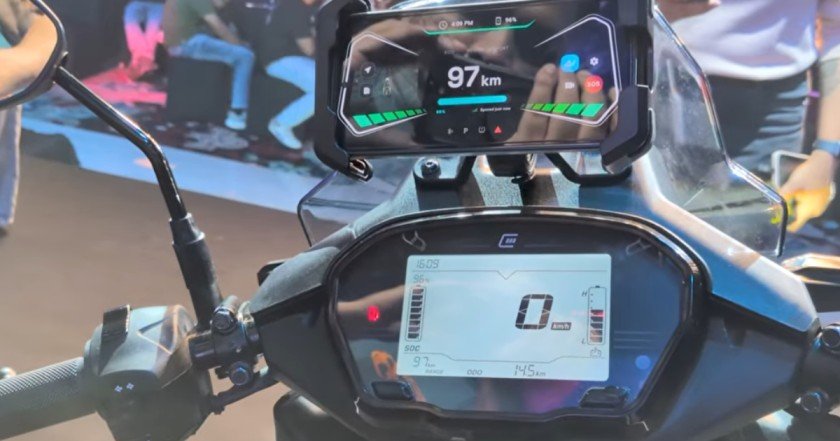
- It’s genuinely feature-rich for the price: a 5-inch touchscreen LCD, AI-powered connected features, cruise control, hill hold, and geo-fencing all come standard.
- The one clear compromise: it uses drum brakes on both wheels across all variants — no disc brake option, even on the top-spec C2.
E3 Trion Price and Variants
The Trion is offered in three clearly tiered variants, and the price gap between them tracks a genuine difference in battery size and motor output, not just badge changes.
E3 Trion Price — At a Glance
| Variant | Ex-Showroom Price (Bengaluru) | Battery | Claimed Range | Top Speed |
|---|---|---|---|---|
| C1 | Rs 99,999 | 2.3 kWh, removable | 108 km | 67 km/h |
| C1x | Rs 1,09,999 | 3 kWh, fixed | 160-165 km | 67 km/h |
| C2 | Rs 1,19,999 | 3 kWh, fixed | 128 km | 82 km/h |
These are introductory prices, and E3 Electric has been upfront that they may change once the scooter rolls out beyond Bengaluru to more cities.
E3 Trion Range: What to Actually Expect
Here’s where we want to slow down and give you the honest picture, not just the marketing number. E3 Electric claims 108 km on the C1, but on the official spec sheet, they’ve also listed a separate, more conservative claimed real-world range of 80 km for that same variant — which is a genuinely useful, honest touch most brands don’t bother including.
The C1x is the range champion here, claiming up to 165 km on its larger fixed 3kWh battery — a genuinely strong number for a scooter under Rs 1.1 lakh. Interestingly, the C2 claims a lower range (128 km) despite using the same size battery as the C1x — E3 attributes this to a sportier motor tune aimed at quicker acceleration and a higher top speed, which is a fair trade-off if performance matters more to you than range.
Since there are no owner reviews yet, we can’t tell you what real-world range actually looks like once you factor in traffic, rider weight, and Indian road conditions — treat the claimed numbers as a ceiling, not a guarantee, until independent test rides and real owner feedback start coming in.
E3 Trion Charging Time, Explained
Charging works a little differently depending on which variant you pick, so here’s the breakdown:
- C1 (removable battery): Takes 3 hours 30 minutes to reach 80% on a standard charger, or as little as 2 hours 40 minutes using fast charging. Since the battery is removable, you can also simply carry it indoors and plug it into any standard socket.
- C1x and C2 (fixed battery): Also take 3 hours 30 minutes to reach 80%, but since the battery is fixed, you’ll need to charge the whole scooter where it’s parked, using either a 500W or 750W charger depending on the variant.
E3 Trion Charging — At a Glance
| Variant | Charging Time (0-80%) | Full Charge (0-100%) | Battery Type |
|---|---|---|---|
| C1 | 3 hr 30 min (2 hr 40 min fast charge) | 4 hours | Removable |
| C1x | 3 hr 30 min | ~5 hr 15 min | Fixed |
| C2 | 3 hr 30 min | 4 hours | Fixed |
If you don’t have reliable home charging access, the C1’s removable battery is the more practical choice, since you’re not tied to charging the scooter itself in one fixed spot.
E3 Trion Top Speed and Performance
The C1 and C1x both top out at 67 km/h, which is a fairly typical, city-focused speed for this segment — perfectly usable for daily commuting, though not built for highway riding. The C2 stands apart with an 82 km/h top speed, thanks to its stronger 3.5kW motor producing 145Nm of wheel torque, compared to the 2.5kW and 120Nm on the C1 and C1x.
In terms of raw acceleration, E3 Electric claims a 0-40 km/h time of around 7 seconds — reasonably brisk for city riding, though not aimed at outright quickness the way some rivals are.
Design and Images: What It Looks Like
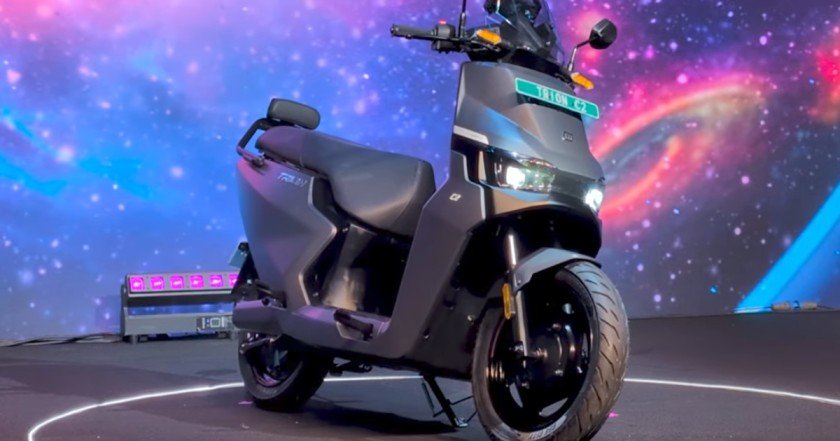
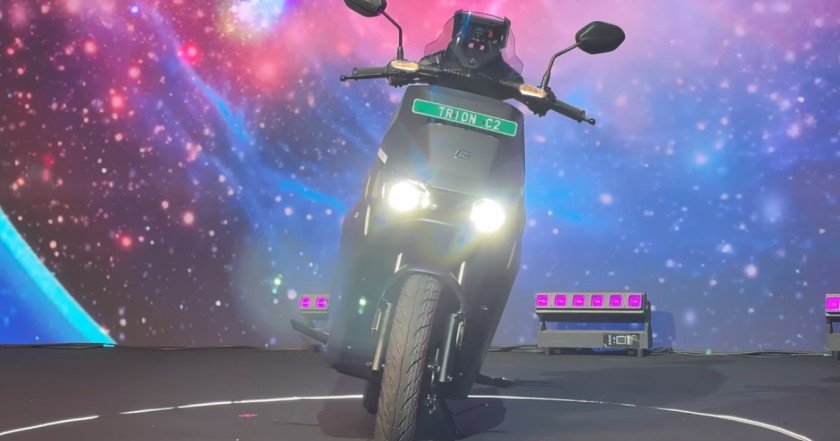
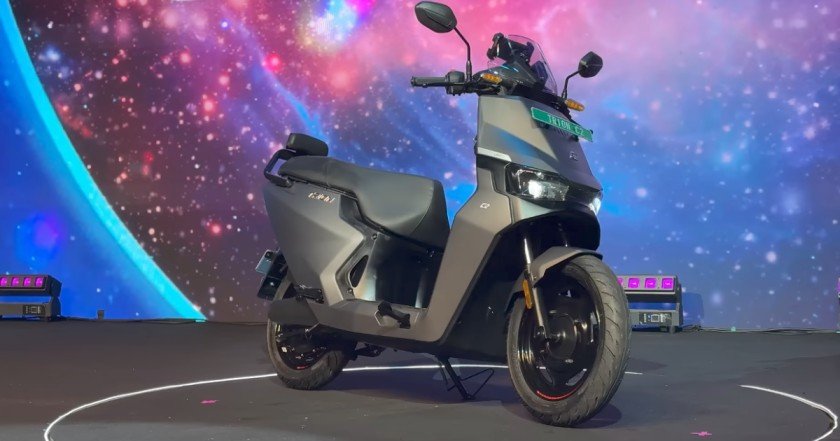
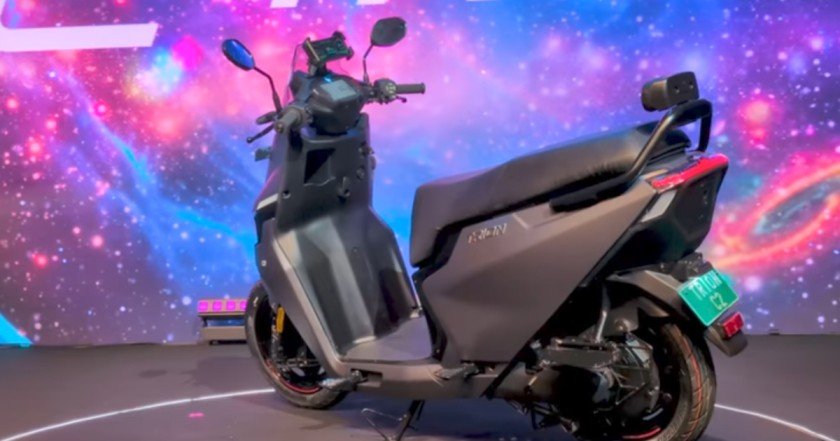
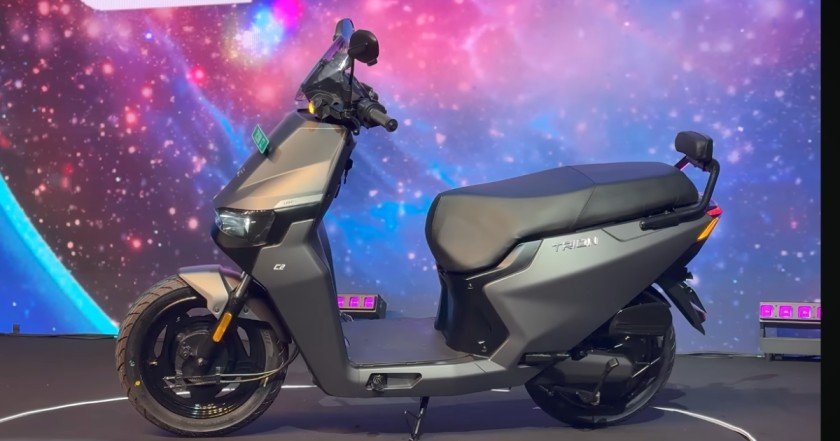
The Trion has a genuinely distinctive look for this price bracket — E3 describes the design as being inspired by a Mars Rover, and you can see that influence in the slightly boxy, futuristic apron shrouding the dual projector LED headlights. A sharp design line runs the full length of the side panels down to the LED tail light, giving it a more sculpted, premium feel than you’d expect at Rs 99,999.
It’s available in six launch colours: Solar Red, Misty Green, Graphite Grey, Nova Blue, Teal Blue, and Luna White — a genuinely wide palette for a debut product. The scooter sits on 14-inch alloy wheels front and rear, which should offer more stability over uneven roads compared to the smaller wheels common on many budget electric scooters.
Full Specifications
E3 Trion C1 — Full Spec Sheet
| Specification | Detail |
|---|---|
| Battery | 2.3 kWh, removable, LFP |
| Motor | PMSM hub motor, 2.5 kW, 120 Nm |
| Claimed Range | 108 km (80 km real-world claimed) |
| Top Speed | 67 km/h |
| Charging (0-80%) | 3 hr 30 min |
| Kerb Weight | 118 kg |
| Wheelbase | 1,275 mm |
| Ground Clearance | 165 mm |
| Seat Height | 775 mm |
| Brakes | Drum, front and rear |
| Wheels | 14-inch alloy, front and rear |
| Suspension | Telescopic front, 5-stage adjustable dual-shock rear |
| Display | 5-inch touchscreen LCD |
| Storage | 52 litres (combined underseat, glovebox, floorboard) |
| Vehicle Warranty | 3 years or 50,000 km |
| Battery Warranty | 5 years or 75,000 km |
| Extended Warranty | Up to 8 years or 1,00,000 km |
The C1x and C2 share most of this same core spec sheet, differing mainly in battery size (3kWh fixed vs 2.3kWh removable) and motor tuning, as covered in the sections above.
Features Worth Knowing About
For a debut product from a new brand, the Trion’s feature list is genuinely impressive:
- AI-powered connected features, including health diagnostics and predictive service alerts
- 5-inch touchscreen LCD with turn-by-turn navigation and a Smart Trip Planner with charger locator
- Geo-fencing, SOS assistance, fall alert, and anti-theft alert
- Cruise control and hill hold — genuinely uncommon at this price point
- Regenerative braking and a combined braking system
- IP67-rated battery and motor, offering strong water and dust resistance
- Reverse assist, useful for tight parking spots
It’s worth noting the company backs the battery with an unusually long warranty — up to 8 years or 1,00,000 km on the extended plan — which suggests genuine confidence in the battery’s durability, though only time and real owners will confirm whether that confidence is justified.
Where the Trion Falls Short
To keep this review balanced, here’s what we think buyers should know before getting swept up in the feature list:
- Drum brakes on both wheels, across all three variants — even the range-topping C2 doesn’t get a front disc brake, which feels like a genuine miss at this price point, especially for a variant capable of 82 km/h.
- No traction control on any variant, which is worth knowing if you ride in wet or slippery conditions often.
- Availability is currently limited to Bengaluru, with other cities expected to follow “in the coming months” — no confirmed timeline yet.
- Zero owner reviews exist at the time of writing, so there’s no real-world track record yet for reliability, service quality, or how accurate these claimed range figures actually are in daily use.
E3 Trion Review: Our First-Look Take
Based purely on what’s on paper, our E3 Trion review verdict is cautiously positive. E3 Electric has clearly thought hard about value — the feature list at Rs 99,999 genuinely rivals or beats scooters costing significantly more, and touches like the removable battery on the C1 and the unusually detailed, honest range disclosure (claimed vs real-world) suggest a company trying to build trust rather than just chase headline numbers.
That said, we’d genuinely encourage some patience here. This is a brand-new company with zero track record in India, the brakes are a real hardware compromise, and availability outside Bengaluru remains unclear. If you’re an early adopter comfortable with some uncertainty in exchange for strong value, the Trion is worth a serious look. If you’d rather buy from a brand with an established service network and years of real owner feedback, it’s reasonable to wait and watch how the Trion’s first few months in the real world go before committing.
Who Should Consider the E3 Trion?
- Bengaluru-based buyers on a tight budget who want maximum features per rupee: The C1 at Rs 99,999 is genuinely hard to beat on paper.
- Riders without reliable home charging: The C1’s removable battery is a real practical advantage.
- Buyers who want the longest possible range in this price bracket: The C1x’s claimed 160-165 km stands out clearly.
- Riders who want a bit more zip: The C2’s 82 km/h top speed and stronger motor suit slightly more spirited daily riding.
- Risk-averse buyers who prioritise a proven track record: Given this is E3 Electric’s first-ever product with zero owner history, it’s worth waiting for early reviews to come in before committing, if that matters to you.
FAQs
1. What is the range of the E3 Trion?
Claimed range is 108 km on the C1, 160-165 km on the C1x, and 128 km on the C2. The C1’s spec sheet also separately claims a more conservative 80 km real-world range.
2. How long does the E3 Trion take to charge?
All variants take around 3 hours 30 minutes to reach 80% charge. The C1 additionally supports fast charging in as little as 2 hours 40 minutes.
3. What is the top speed of the E3 Trion?
67 km/h on the C1 and C1x, and 82 km/h on the more powerful C2 variant.
4. What is the price of the E3 Trion?
The C1 starts at Rs 99,999, the C1x at Rs 1,09,999, and the C2 at Rs 1,19,999 — all introductory, ex-showroom Bengaluru prices.
5. Does the E3 Trion have disc brakes?
No. All three variants use drum brakes on both the front and rear wheels.
6. Is the E3 Trion available outside Bengaluru?
Not yet. Bookings and deliveries are currently limited to Bengaluru, with E3 Electric stating other cities will follow in the coming months, though no confirmed timeline has been announced.
7. Are there any owner reviews of the E3 Trion yet?
No. Since the scooter only launched on August 6, 2026, there are currently zero owner reviews on major review platforms — this article is based on official specifications and first-look coverage, not long-term ownership experience.
8. What’s the difference between the E3 Trion’s C1, C1x, and C2 variants?
The C1 uses a smaller, removable 2.3kWh battery. The C1x and C2 share a larger, fixed 3kWh battery, but the C2 gets a more powerful motor tune for higher top speed and quicker acceleration, at the cost of slightly lower claimed range.
Conclusion
Our honest E3 Trion review take is this: on paper, it’s a genuinely impressive debut — strong claimed range, a feature list that punches well above its price, and a battery warranty long enough to suggest real confidence from E3 Electric. But it’s still a first product from a brand-new company, with real hardware compromises like drum-only braking and currently limited to Bengaluru availability. If you’re comfortable being an early adopter, the value proposition here is hard to ignore. If you’d rather wait for real owner experiences and a wider service network to prove themselves first, that’s a reasonable, cautious call too — and we’ll update this review as genuine owner feedback starts coming in.
Also Read
Ather Konarc Spotted Testing in the Himalayas Ahead of Launch
Bajaj Pulsar RS200 Review: Still the Loudest Pulsar in the Room, For Better and Worse