
Introduction
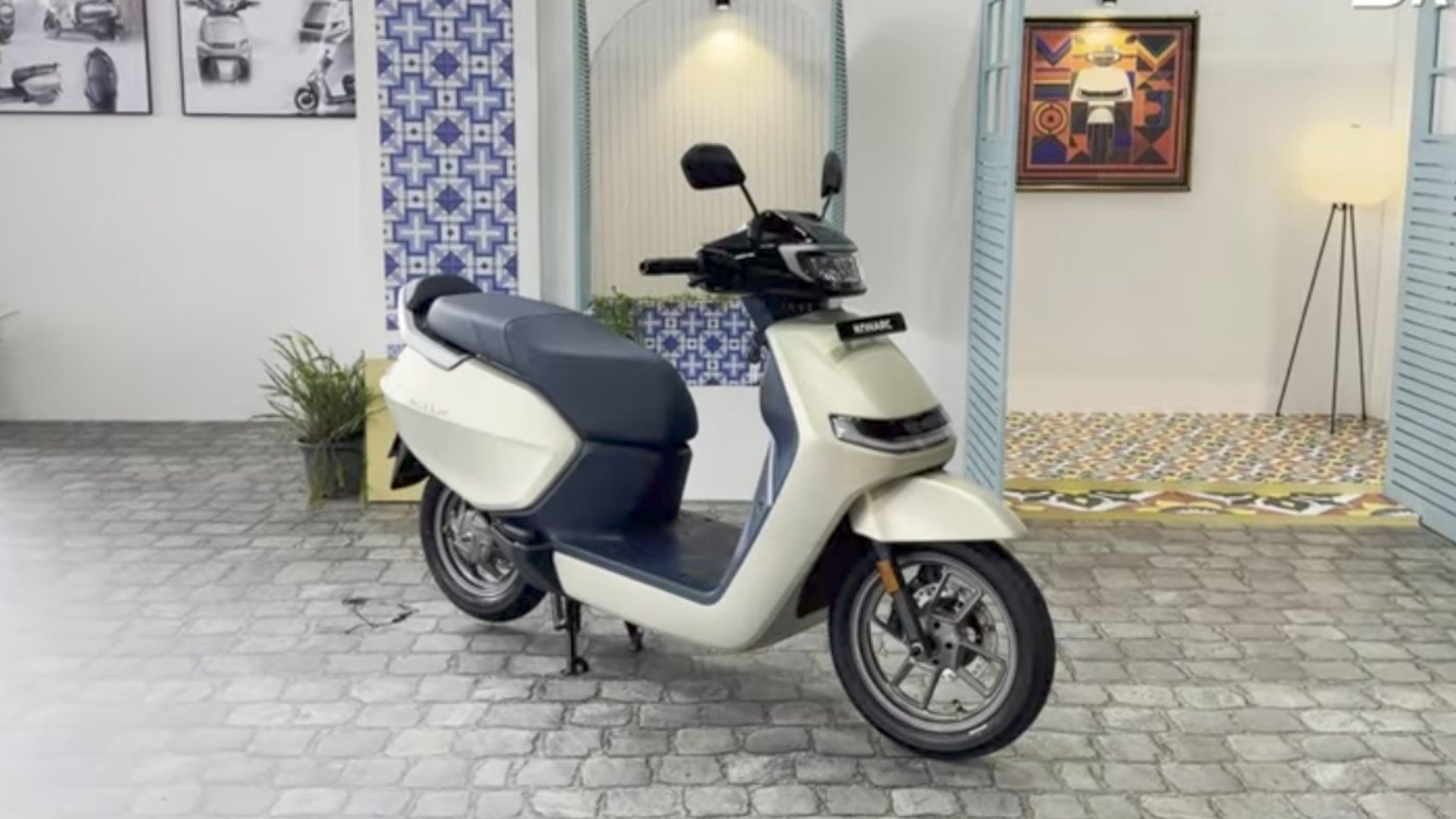
The scooter we’ve been tracking for weeks under different names — first “Arrive,” then confirmed as “Wave” for Simple Energy’s rival product, and rumoured for Ather under its EL01 codename — has finally arrived, and it has a name: the Ather Konarc. Unveiled today at Ather’s Annual Community Day in Bengaluru, it starts at just Rs 99,999, ex-showroom — making it comfortably the cheapest scooter Ather has ever sold.
If you’ve followed Ather mainly for its sportier 450 series, this is a genuinely different kind of scooter — built for daily family use, not weekend thrills. Here’s everything confirmed about pricing, range, and what makes this scooter tick.
Key Highlights
- The Ather Konarc starts at Rs 99,999 (ex-showroom, Bengaluru), making it Ather’s most affordable scooter to date.
- It’s the first production scooter built on Ather’s new EL platform, designed around lower costs, simpler servicing, and easier charging rather than outright performance.
- It comes in six variants across two families — the everyday-focused S-Line (four variants) and the more feature-rich Z-Line (two variants).
- Claimed IDC range spans from 100 km on the base variant up to 200 km on the top S-Line option.
- New features include AeBS (Advanced Electronic Braking System), MagicKey keyless entry, AutoPop hands-free storage access, and AirWalk, a motor-assisted mode that helps you push the scooter around by hand.
- The service interval has been doubled to 10,000 km — roughly once a year for most riders.
- Bookings and deliveries begin in mid-September 2026, rolling out in phases across select states, with only the S 125 and S 161 variants available initially.
Table of Contents
Price and Variants: The Full Breakdown
Ather has structured the Konarc into six total variants, split across two distinct product lines aimed at slightly different buyers.
Ather Konarc S-Line — Pricing
| Variant | Claimed IDC Range | Price (Ex-Showroom, Bengaluru) |
|---|---|---|
| S 100 | 100 km | Rs 99,999 |
| S 125 | 125 km | Rs 1,21,999 |
| S 161 | 161 km | Rs 1,44,999 |
| S 200 | 200 km | Not yet detailed |
Ather Konarc Z-Line
| Variant | Claimed IDC Range | Price |
|---|---|---|
| Z 125 | 125 km | Not yet detailed |
| Z 161 | 161 km | Not yet detailed |
A few practical things worth knowing here: pricing for the S 200 and both Z-Line variants hadn’t been detailed in initial launch coverage at the time of writing, so we’d recommend checking directly with Ather or your local dealer for those specific figures. Also worth noting — these prices are specifically ex-showroom Bengaluru, and typically shift a little in other cities once local taxes are factored in.
What Is the EL Platform, and Why Does It Matter?
This is genuinely the most important thing to understand about the Konarc, because it explains almost every decision Ather has made with this scooter. The EL platform is a brand-new foundation for Ather, built with a very different philosophy than the sportier 450 series. Instead of chasing outright performance, it’s designed around lower manufacturing costs, simpler servicing, and easier day-to-day charging.
In plain terms: this is Ather deliberately building a scooter to compete on price and practicality, not on speed or flashy performance numbers. That’s a genuinely significant shift for a brand that built its early reputation on sporty, tech-forward scooters — and it puts the Konarc in direct competition with practical family scooters like the TVS iQube and Bajaj Chetak, rather than performance-focused electric scooters.
Range and Battery: S-Line vs Z-Line
Here’s where the two product lines genuinely diverge, and it’s worth understanding before you pick one.
The S 100 uses a 2.1kWh battery, producing 4kW of power and 16Nm of torque, with a claimed 100km IDC range — though Ather’s own, more conservative TrueRange figure is 80km, which is a genuinely useful, honest number to plan your charging around instead of the optimistic IDC figure. The S 125 and S 161 step up to larger 2.7kWh and 3.5kWh batteries respectively, both producing a slightly stronger 4.7kW and 16Nm, with TrueRange figures of 100km and 130km. All three confirmed S-Line variants share a 70km/h top speed.
The Z-Line takes a different approach entirely — it trades some outright range for a higher 80km/h top speed, positioning it as the choice for riders who want a bit more everyday punch rather than maximum range. The Z-Line also gets exclusive tech features not offered on the S-Line, covered in the next section.
Ather Konarc — Range & Performance at a Glance
| Variant | Battery | Power/Torque | Claimed IDC Range | TrueRange | Top Speed |
|---|---|---|---|---|---|
| S 100 | 2.1 kWh | 4kW / 16Nm | 100 km | 80 km | 70 km/h |
| S 125 | 2.7 kWh | 4.7kW / 16Nm | 125 km | 100 km | 70 km/h |
| S 161 | 3.5 kWh | 4.7kW / 16Nm | 161 km | 130 km | 70 km/h |
| Z 125 | Not detailed | Not detailed | 125 km | Not detailed | 80 km/h |
| Z 161 | Not detailed | Not detailed | 161 km | Not detailed | 80 km/h |
New Features Worth Knowing About
Ather has packed the Konarc with a handful of genuinely thoughtful, practical features rather than just chasing a longer spec sheet:
- AeBS (Advanced Electronic Braking System): This dynamically adjusts how braking force is split between the front and rear wheel based on road conditions, using the scooter’s existing motor controller and sensors rather than extra hardware — a genuinely clever, software-driven safety feature.
- MagicKey: Lets you unlock the scooter automatically as you approach, and locks it again automatically once you walk away — no fumbling for a key or app.
- AutoPop: Gives you hands-free access to the underseat storage, useful when your hands are full with grocery bags or a helmet.
- AirWalk: Uses the motor to assist you when manually pushing the scooter around, like backing it out of a tight parking spot — a small feature, but one that’ll be genuinely appreciated by anyone who’s struggled to reverse a heavier scooter by hand.
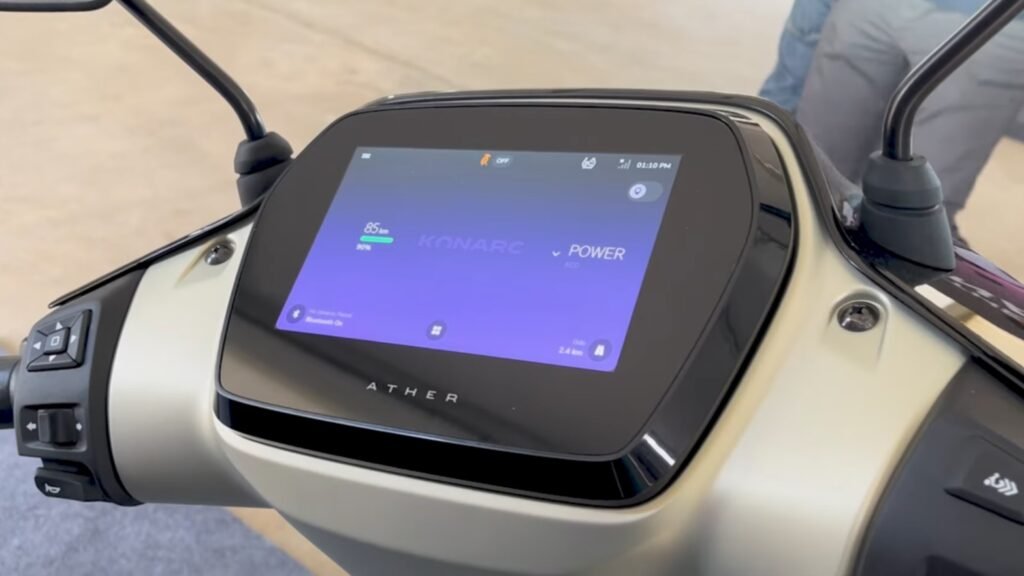
- Ather Connect: Bundles theft and tow alerts, ride statistics, a “Find My Scooter” function, remote charging-status monitoring, and over-the-air (OTA) software updates.
The Z-Line adds its own exclusive tech on top of all this — a dashboard that can display Google Maps and WhatsApp, plus, in a genuinely fun touch, live cricket scores when the scooter is parked and stationary.
Charging: How Fast Can You Top Up?
The Konarc comes with a 450W onboard charger as standard. Ather is also offering an optional additional 450W charger, which combined gives you 900W of total fast-charging capability — using both together, Ather claims you can go from 0 to 80% in around 2 hours, a genuinely quick turnaround for a scooter in this price bracket.
Design and Colours
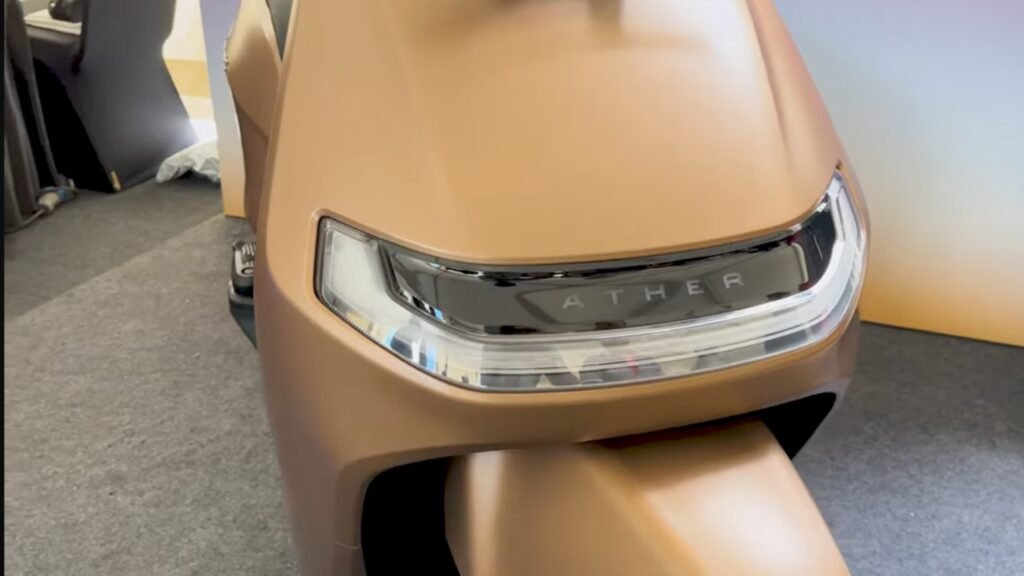
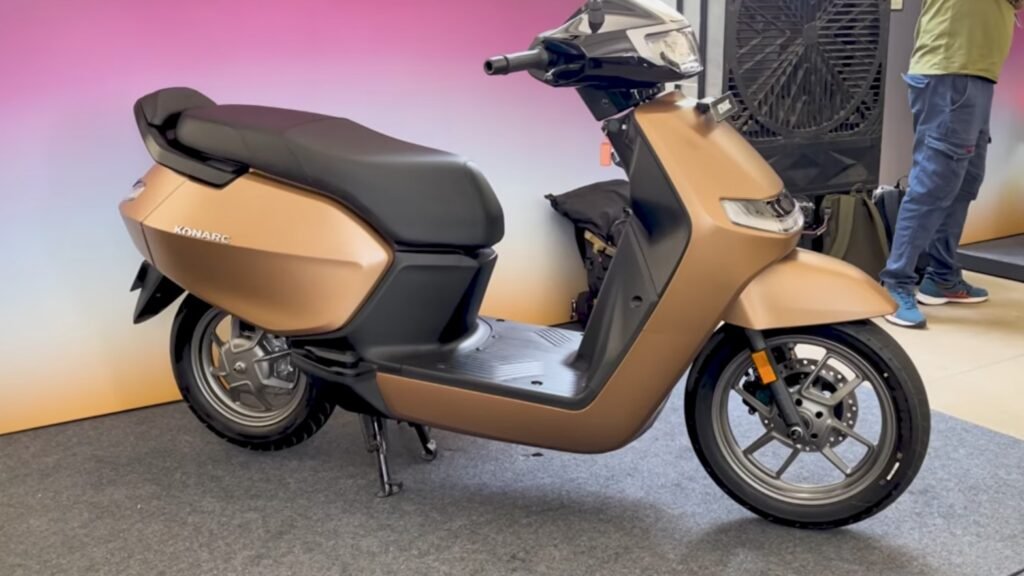
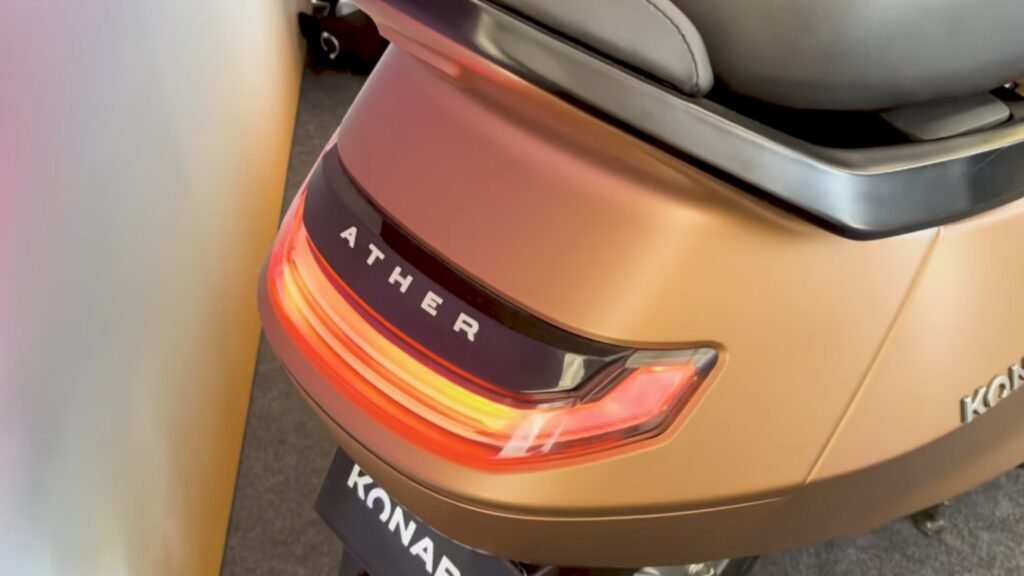
Visually, the Konarc leans into a clean, minimalist, family-friendly look, deliberately distancing itself from the sharper, sportier styling of Ather’s 450 series. It’s built around a 14-inch front wheel and gets a handlebar cowl-mounted headlight, with LED daytime running lights positioned on the front apron, and sharp creases along the side panels for a bit of visual interest without straying from its overall subtle, mature design language.
It’s available in four colour options: Quartz White/Blue, Majestic Grey/Black, Celestial Gold/Blue, and Lumen Copper/Black — all chosen specifically to complement the scooter’s calmer, family-oriented positioning rather than the bolder shades typically associated with Ather’s performance models.
What’s Different From Ather’s 450 Range
If you’re an Ather fan used to the 450X or 450S, the Konarc represents a genuinely deliberate shift in priorities. Where the 450 series is built around sporty performance, sharp handling, and a premium feel, the Konarc is built around everyday practicality — a longer seat, more storage space, a doubled service interval, and simpler, cheaper long-term ownership. It’s not a “lesser” Ather so much as a different kind of Ather, built for buyers who care more about a comfortable daily commute and low running costs than outright speed or sporty handling.
Availability: What You Can Actually Buy Right Now
Here’s a genuinely important practical detail: not every variant is available immediately. According to Ather, only the S 125 and S 161 variants will be available initially, with bookings and deliveries beginning in mid-September 2026, rolling out in a phased manner across select states rather than nationwide all at once. If you’re specifically interested in the base S 100 or either Z-Line variant, you may need to wait a little longer for those to become available in your region.
FAQs
1. What is the price of the Ather Konarc?
It starts at Rs 99,999 (ex-showroom, Bengaluru) for the base S 100 variant, going up to Rs 1,44,999 for the S 161 variant. Pricing for the S 200 and both Z-Line variants hadn’t been detailed at the time of writing.
2. What is the range of the Ather Konarc?
Claimed IDC range spans from 100 km on the base variant up to 200 km on the top S-Line variant. Ather’s more realistic TrueRange figures are somewhat lower — 80 km, 100 km, and 130 km across the three confirmed S-Line variants.
3. What is the EL platform?
It’s Ather’s brand-new scooter platform, and the Konarc is the first production model built on it. Unlike Ather’s performance-focused 450 series, the EL platform is designed around lower costs, simpler servicing, and easier charging.
4. What’s the difference between the S-Line and Z-Line?
The S-Line focuses on maximizing range with a 70km/h top speed, while the Z-Line trades some range for a higher 80km/h top speed and exclusive tech features like Google Maps and WhatsApp on the dashboard.
5. When can I actually buy the Ather Konarc?
Bookings and deliveries begin in mid-September 2026, rolling out in phases across select states. Only the S 125 and S 161 variants will be available initially.
6. What is MagicKey on the Ather Konarc?
It’s a keyless entry feature that automatically unlocks the scooter as you approach and locks it again once you walk away.
7. How long does the Ather Konarc take to charge?
Using the standard 450W charger plus the optional additional 450W fast charger (900W combined), Ather claims a 0-80% charge in around 2 hours.
8. How often does the Ather Konarc need servicing?
Ather has doubled the service interval to 10,000 km, which the company says works out to roughly once a year for most riders.
Conclusion
The Ather Konarc marks a genuinely significant shift in direction for a brand that’s spent years building its reputation on sporty, performance-first electric scooters. At Rs 99,999, this is Ather’s clearest attempt yet to compete directly in the crowded, high-volume family-scooter segment against the likes of the TVS iQube and Bajaj Chetak — and thoughtful, practical touches like AeBS, MagicKey, and a doubled service interval suggest this isn’t a stripped-down, budget afterthought, but a scooter genuinely built around what daily riders actually want. If you’re specifically interested in the base S 100 variant or either Z-Line option, you’ll need a little patience given the phased rollout — but for buyers eyeing the S 125 or S 161, deliveries are only a few weeks away.