
Introduction
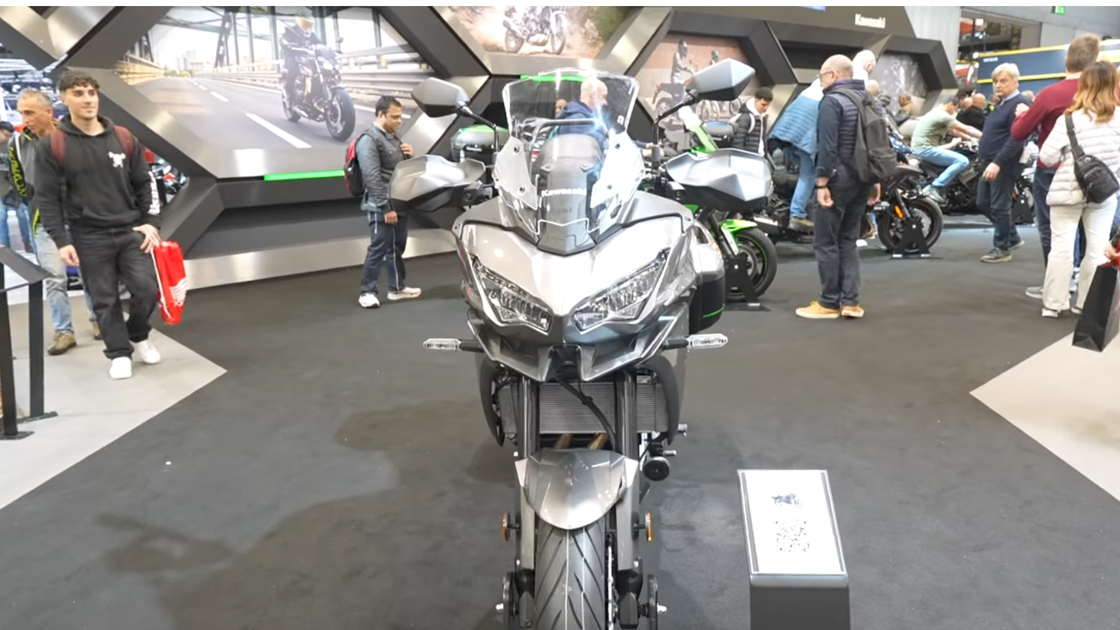
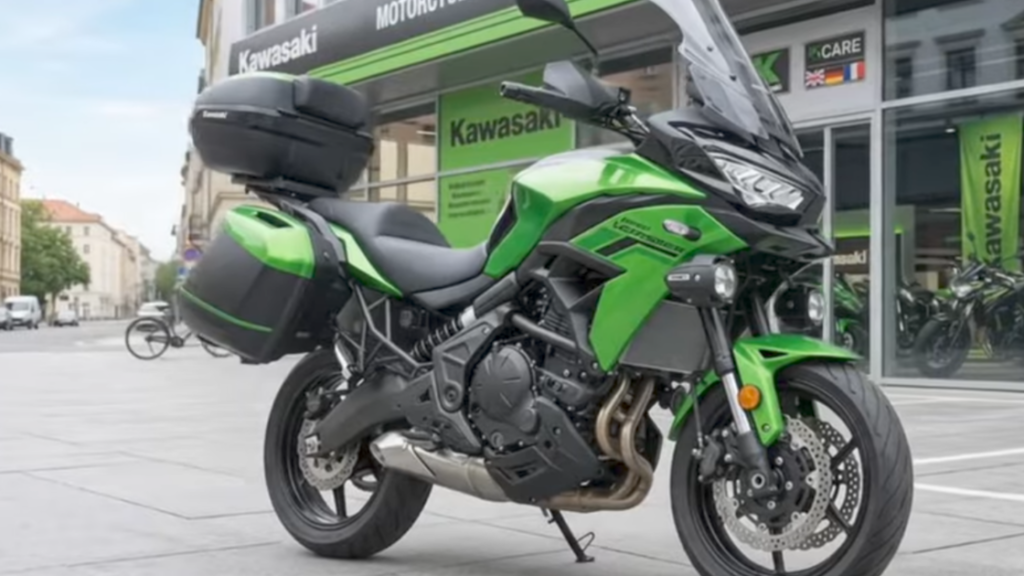
If you’ve been eyeing the Kawasaki Versys 650 for a while, you’ll want to pay attention to this one. Kawasaki has just rolled out the 2027 model year Versys 650 in India, and the headline change is a colour that’s been a long time coming: Candy Lime Green. It’s priced at Rs 8.63 lakh (ex-showroom) — exactly the same as last year’s model — so this is purely about how the bike looks, not what it costs or how it performs.
But here’s what makes this update genuinely worth a proper look, rather than just a one-line news mention: this is actually the third year in a row Kawasaki has updated the 2027 Kawasaki Versys 650 with little more than a fresh colour. Once you see that pattern laid out, this year’s change makes a lot more sense — and there’s a fun story behind why lime green specifically is showing up now.
Quick Facts: What’s New in the 2027 Versys 650
- The 2027 (MY27) Versys 650 is priced at Rs 8.63 lakh, ex-showroom — unchanged from the 2026 model.
- It’s now available in a single Candy Lime Green colour, replacing last year’s Metallic Graphite Grey/Metallic Spark Black scheme.
- No mechanical, feature, or performance changes have been made — this is a colour-only update.
- The engine remains a 649cc, liquid-cooled parallel-twin, producing 67hp at 8,500rpm and 61Nm at 7,000rpm.
- Deliveries are expected to have already started, with Kawasaki previously stating they’d begin by the end of August.
- Its closest rival on price is the Honda NX500 at Rs 7.44 lakh, while the Triumph Tiger Sport 660 sits above it at Rs 9.45 lakh.
The Real Story: Kawasaki’s Colour-Only Update Pattern
Here’s something that becomes obvious once you look back at the last three years of Kawasaki Versys 650 updates in India, and it’s worth knowing before you decide whether to wait for next year’s version or buy now.
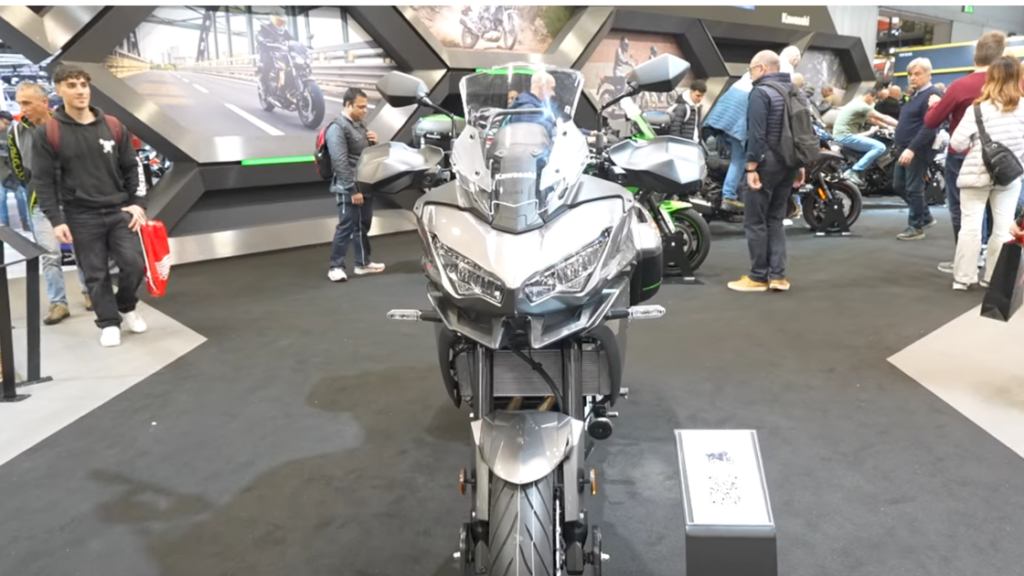
- The 2025 model launched in August 2025 at Rs 7.93 lakh, with its only change being a switch to a Metallic Matte Graphene Steel Gray colour with green accents.
- The 2026 model launched in December 2025 at Rs 8.63 lakh (a genuine price increase of around Rs 15,000-16,000), adding a Metallic Graphite Grey/Spark Black colour scheme and making the engine E20 fuel-compliant — the only real functional change across all three years.
- The 2027 model, launched now, keeps the exact same price as 2026 and simply swaps in the new Candy Lime Green colour.
Versys 650: Three Years of Updates, Side by Side
| Model Year | Launch Date | Price | Colour | Real Change |
|---|---|---|---|---|
| 2025 | August 2025 | Rs 7.93 lakh | Matte Graphene Steel Gray | Colour only |
| 2026 | December 2025 | Rs 8.63 lakh | Graphite Grey/Spark Black | Colour + E20 compliance |
| 2027 | August 2026 | Rs 8.63 lakh | Candy Lime Green | Colour only |
The pattern is clear: if you’re hoping for a bigger mechanical update — more power, updated electronics, a new frame — this isn’t that year, and honestly, based on this history, it might not be next year either. Kawasaki seems content to keep the Versys 650’s proven formula exactly as it is, and simply refresh its wardrobe annually.
Why Lime Green, and Why Now?
This is a genuinely fun detail that most coverage of this launch won’t mention, because it requires looking at what people were actually saying about last year’s colour. When the 2026 Versys 650 launched in its grey and black scheme, BikeWale’s own review at the time noted the colour felt a little too subtle, and specifically said they’d hoped Kawasaki would offer something flashier — “like a full lime green colour scheme, similar to the one available on the recently launched 2026 Ninja 650.”
Fast forward to this year, and that’s exactly what’s happened. Candy Lime Green is Kawasaki’s signature colour, closely associated with its sportier Ninja lineup, and bringing it to the more touring-focused Versys 650 is a genuine styling shift. It won’t be to everyone’s taste — some riders specifically buy adventure-tourers for a more understated look — but if you’ve always thought the Versys 650 looked a bit too plain, this is likely the version you’ve been waiting for.
Full Specifications: What You’re Actually Buying
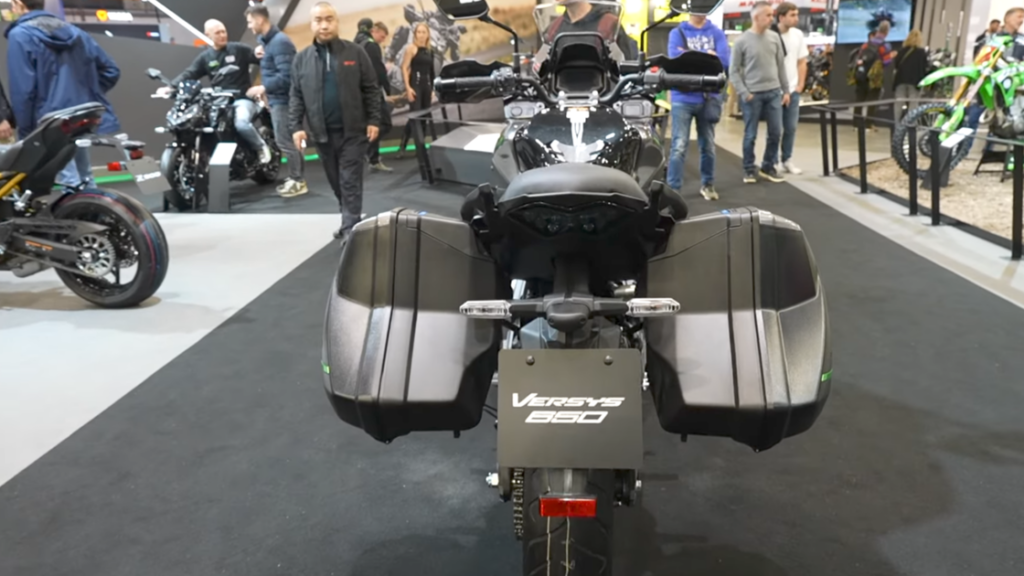
Since the mechanical package hasn’t changed, here’s everything the 2027 Versys 650 offers, regardless of the fact that only the colour is new:
| Specification | Detail |
|---|---|
| Ex-Showroom Price | Rs 8.63 lakh |
| Engine | 649cc, liquid-cooled, parallel-twin |
| Power | 67hp @ 8,500rpm |
| Torque | 61Nm @ 7,000rpm |
| Gearbox | 6-speed, with assist-and-slipper clutch |
| Frame | Tubular diamond frame |
| Front Suspension | 41mm telescopic fork, 150mm travel |
| Rear Suspension | Monoshock, remote preload adjustable, 145mm travel |
| Front Brake | Dual 300mm discs |
| Rear Brake | Single 250mm disc |
| Fuel Tank | 21 litres |
| Kerb Weight | 220kg (wet, tank full) |
| Seat Height | 845mm |
| Ground Clearance | 170mm |
| Display | 4.3-inch digital console with smartphone connectivity |
| Safety | ABS, switchable traction control |
| Colour | Candy Lime Green (single option) |
Engine and Performance
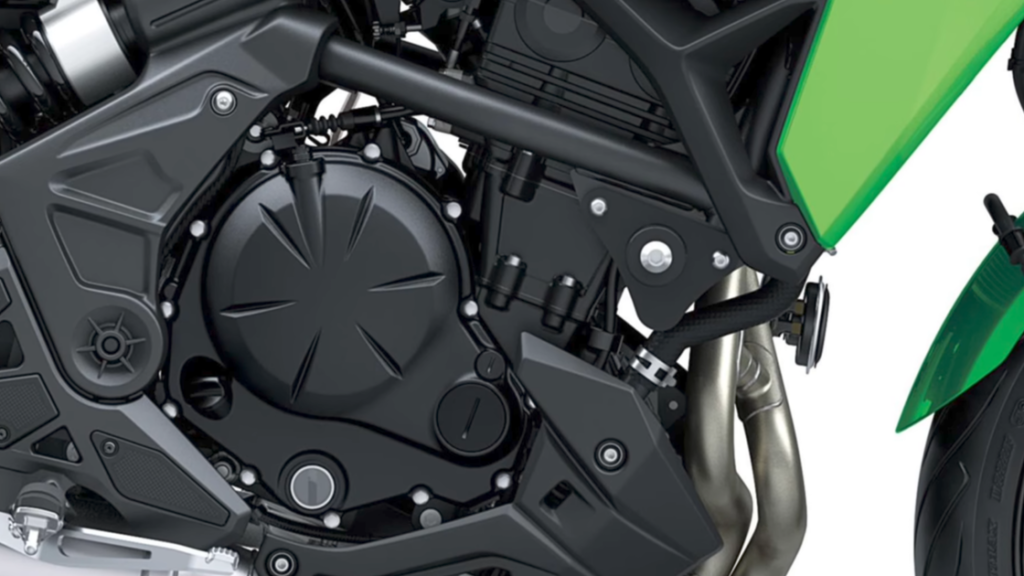
At the heart of the Versys 650 is a 649cc, liquid-cooled parallel-twin engine, a unit Kawasaki has refined over many years across multiple models. It produces 67hp at 8,500rpm and 61Nm of torque at 7,000rpm, paired with a 6-speed gearbox and an assist-and-slipper clutch, which makes clutch action lighter in traffic and helps prevent rear-wheel hop during aggressive downshifts.
This engine has built a genuinely strong reputation over the years for its smooth power delivery, good low-end torque for real-world riding, and well-managed heat output — a detail that matters more than people realise on a bike you might ride through Indian summer traffic for extended periods. Since the 2026 update, the engine has also been made E20 fuel-compliant, meaning it’s built to run cleanly on India’s ethanol-blended petrol without the performance or longevity concerns that worried some owners of older, non-compliant engines.
Chassis, Suspension, and Brakes
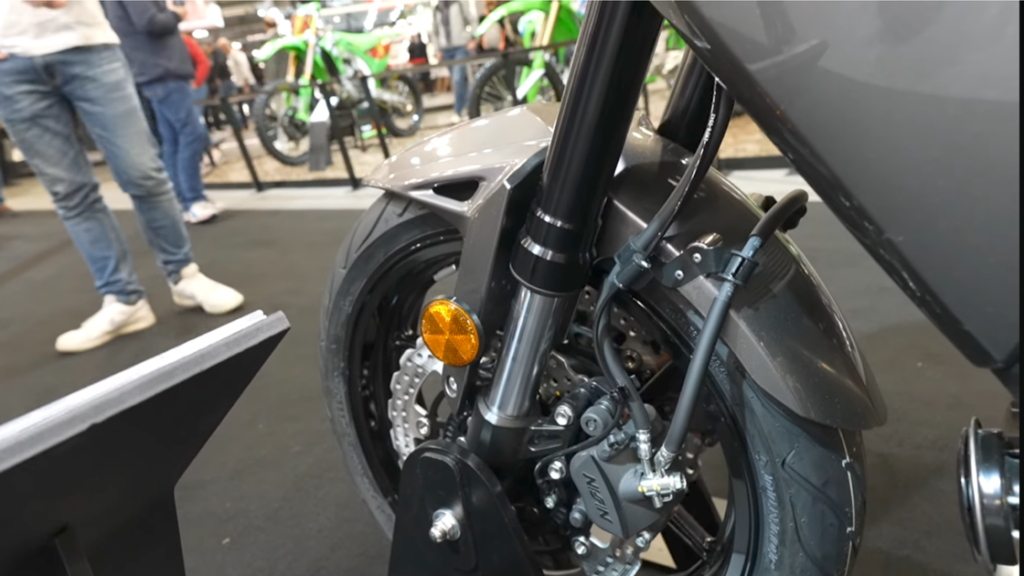
The Versys 650 rides on a tubular diamond frame, paired with a 41mm telescopic front fork offering 150mm of travel and a rear monoshock with remote preload adjustability and 145mm of travel. In practical terms, that remote preload adjuster is a genuinely useful touch for touring riders — it lets you quickly firm up the rear suspension when carrying a passenger or luggage, without needing tools.
Braking comes from dual 300mm discs at the front and a single 250mm disc at the rear, backed by standard ABS. At 845mm, the seat height is fairly tall, and combined with a 220kg kerb weight (with a full 21-litre tank), this is a bike that rewards riders who are already comfortable managing a substantial, adventure-touring-sized motorcycle — not a beginner-friendly option.
Features and Technology
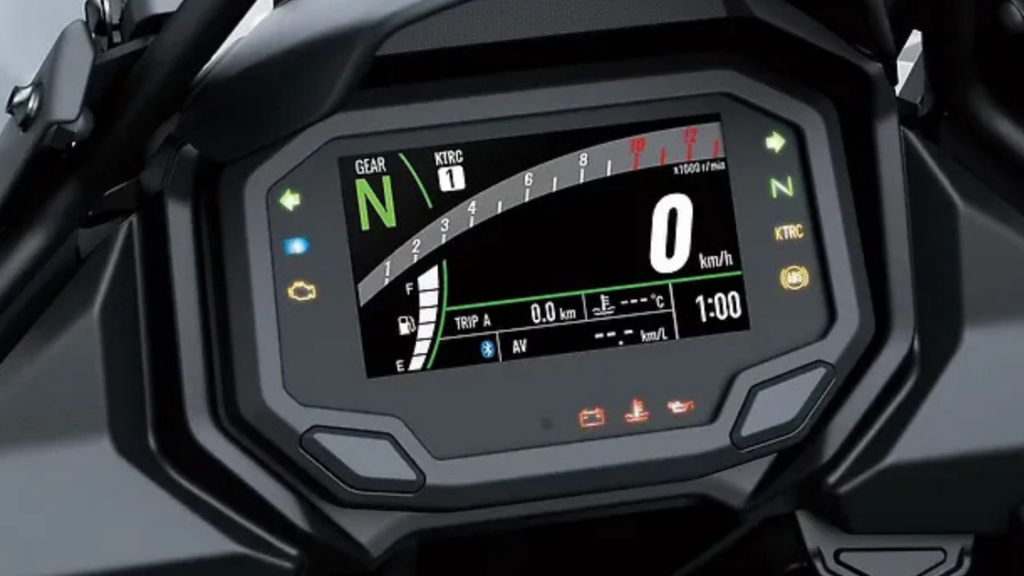
The Versys 650 keeps things relatively simple on the tech front compared to some newer rivals, with a 4.3-inch digital instrument console offering smartphone connectivity, an adjustable windscreen for tuning wind protection to your height and riding position, a USB charging port, and switchable traction control alongside standard ABS.
It’s worth being upfront that this isn’t a bike loaded with the latest TFT displays or multiple riding modes you’ll find on some newer competitors — Kawasaki has prioritised a proven, reliable core experience over chasing the latest tech trends, which fits the Versys 650’s identity as a dependable, no-drama all-rounder rather than a flashy showpiece.
Mileage: Claimed vs Real-World
Here’s some genuinely good news if you’re worried about running costs on a 650cc twin: the ARAI-claimed mileage is 19 kmpl, and expert-reported real-world testing came back at 19.4 kmpl — actually slightly better than the claimed figure, which is refreshingly rare. Most bikes see real-world mileage fall short of their claimed numbers, so this small, positive gap is a genuinely reassuring sign for anyone planning to use this bike for regular touring or daily commuting.
How It Compares to Rivals
The Versys 650 occupies a fairly unique spot in the Indian market — there simply aren’t many direct 650cc parallel-twin adventure-tourers to cross-shop it against.
| Bike | Price (approx.) | Engine | Power | Kerb Weight |
|---|---|---|---|---|
| Kawasaki Versys 650 (2027) | Rs 8.63 lakh | 649cc | 67hp | 220kg |
| Honda NX500 | Rs 7.44 lakh | 471cc | 47.6hp | 197kg |
| Triumph Tiger Sport 660 | Rs 9.45 lakh | 660cc | 80hp | 206kg |
According to Autocar India’s own coverage, the Honda NX500 is currently considered the Versys 650’s closest rival on price, though it gives up a meaningful amount of displacement and power in exchange for being noticeably cheaper and lighter. At the other end, the Triumph Tiger Sport 660 costs more but offers considerably more power, making it the choice for riders who prioritise outright performance over the Versys 650’s more relaxed, torque-focused character.
Is the 2027 Versys 650 Worth Buying?
If you already own a 2025 or 2026 Versys 650, there’s genuinely no mechanical reason to upgrade — you’re not missing out on any performance, safety, or feature improvements by sticking with what you have. This update exists purely for buyers who like the new Candy Lime Green colour more than the outgoing grey-and-black scheme.
If you’re a new buyer deciding whether to purchase now or wait, the honest answer is: buy whenever the colour and price work for you, since based on the last three years of updates, meaningful mechanical changes don’t appear to be part of Kawasaki’s near-term plans for this bike. The Versys 650 remains a genuinely well-sorted, dependable adventure-tourer with a strong reputation for engine refinement and real-world usability — this year’s update simply lets you have that same trusted formula in a colour that finally matches Kawasaki’s more energetic Ninja identity.
FAQs
1. What’s new in the 2027 Kawasaki Versys 650?
Only the colour has changed — it now comes in a single Candy Lime Green option, replacing last year’s Graphite Grey/Spark Black scheme. There are no mechanical, feature, or price changes.
2. What is the price of the 2027 Versys 650?
Rs 8.63 lakh, ex-showroom — exactly the same as the outgoing 2026 model.
3. Has the engine changed on the 2027 model?
No. It continues with the same 649cc, liquid-cooled parallel-twin engine producing 67hp and 61Nm, first made E20-compliant with the 2026 update.
4. Is the Versys 650’s mileage good for a 650cc bike?
Yes, genuinely. ARAI claims 19 kmpl, and expert real-world testing recorded 19.4 kmpl — slightly better than claimed, which is unusual and a good sign for running costs.
5. What is the Versys 650’s closest rival in India?
According to Autocar India, the Honda NX500, priced at Rs 7.44 lakh, is currently its closest price competitor, though it’s a smaller-displacement, less powerful motorcycle.
6. Why did Kawasaki choose Candy Lime Green for this update?
It’s Kawasaki’s signature colour, closely associated with its Ninja range. Riders had specifically asked for a lime green Versys 650 after the colour proved popular on the 2026 Ninja 650, and this update delivers exactly that.
7. Should I wait for a bigger update before buying a Versys 650?
Based on the pattern of the last three model years, Kawasaki has focused only on colour updates (with one exception for E20 compliance), so there’s no strong indication a major mechanical overhaul is imminent. Buying now is a reasonable decision if the current package suits your needs.
8. What is the seat height and kerb weight of the Versys 650?
The seat height is 845mm, and kerb weight is 220kg with a full 21-litre fuel tank — figures that suit taller, more experienced riders better than newcomers.
Conclusion
The 2027 Kawasaki Versys 650’s update is a simple one on paper — a new Candy Lime Green colour, nothing else — but understanding the last three years of near-identical updates gives you the full picture: this is a bike Kawasaki considers essentially complete, refreshing its look annually rather than chasing spec-sheet changes. If the grey-and-black scheme never quite excited you, this year’s genuinely striking lime green option might finally be the version that does. And if you’re simply looking for a dependable, well-proven 650cc adventure-tourer with real-world mileage that actually beats its claimed figure, nothing about this update changes the fundamentally solid case the Versys 650 has been making for itself for years.
Read Also
Yamaha YZF-R2 : Performance, Mileage, Features, Comfort & Verdict
New Yamaha R2 Launched in India: Price, 204cc Engine, Features & Full Details
KTM 160 Duke Review: The Most Powerful Bike in Its Class? Here’s the Honest Truth