
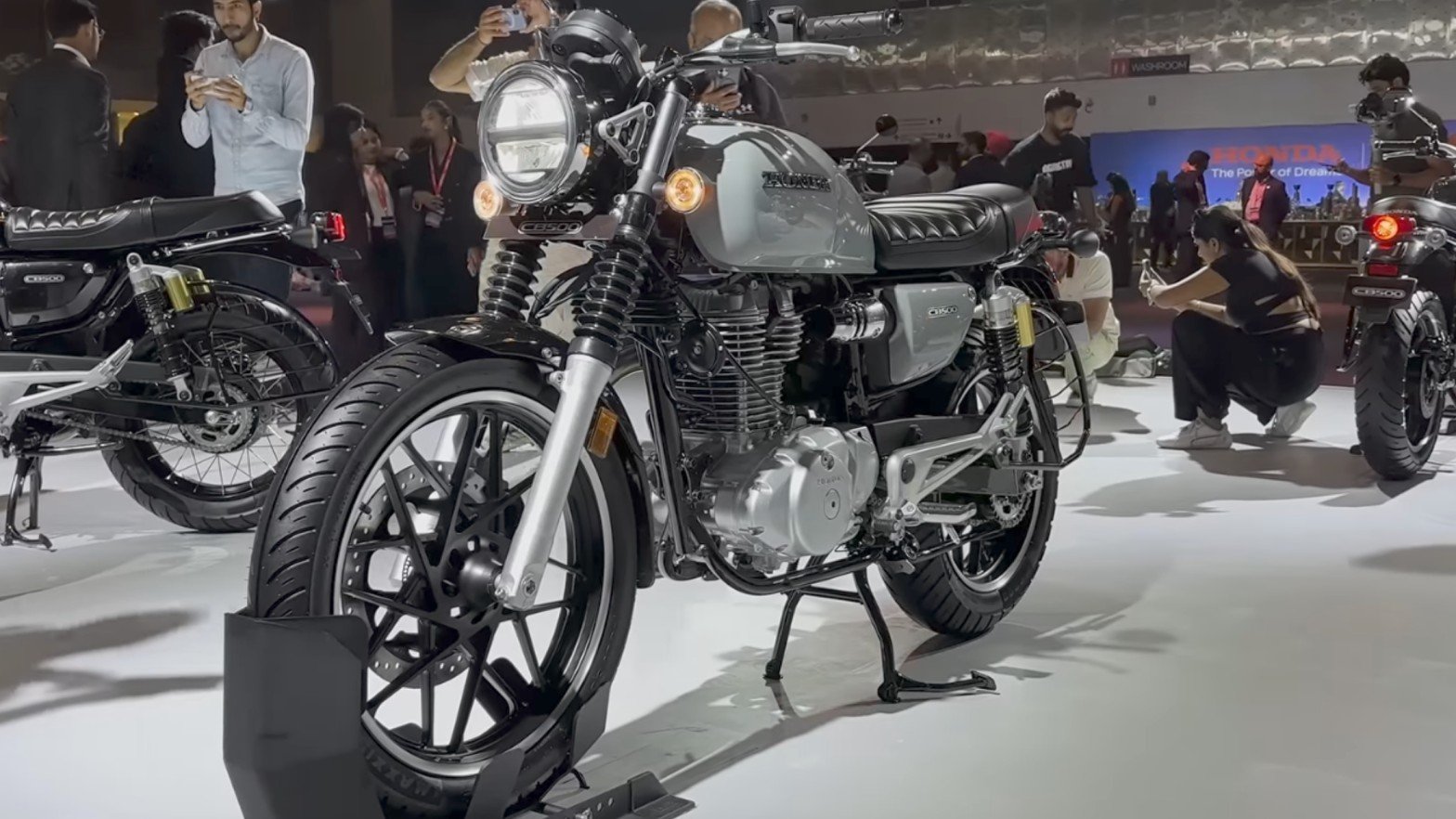
The Honda CB500 review starts with an unusual proposition for the Indian motorcycle market. Instead of using the familiar parallel-twin engine found in several international Honda 500cc motorcycles, Honda has developed a 501cc single-cylinder petrol engine for this India-focused retro roadster.
Honda launched the CB500 in India in September 2026, with prices starting at Rs. 2.75 lakh ex-showroom. The motorcycle is offered in three variants and is positioned above Honda’s CB350 family, bringing more engine capacity while retaining a classic roadster design.
The result is a motorcycle aimed at riders who want the visual simplicity of a traditional roadster but also want a substantially larger engine than the typical 350cc retro motorcycles.
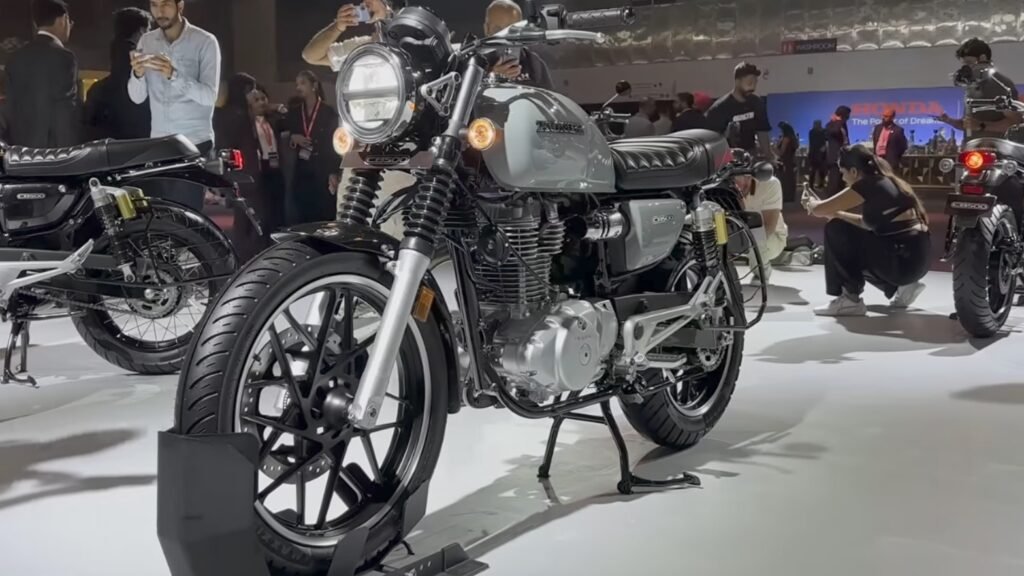
Honda CB500 Quick Facts
| Detail | Honda CB500 |
|---|---|
| Motorcycle type | Retro roadster |
| Engine | 501cc, single-cylinder |
| Cooling | Air and oil cooled |
| Maximum power | 27.6 bhp / about 28 hp |
| Maximum torque | 43.3 Nm |
| Gearbox | 5-speed |
| Clutch | Assist and slipper clutch |
| Traction control | Honda Selectable Torque Control |
| ABS | Dual-channel |
| Instrument console | Analogue-digital |
| Connectivity | Honda RoadSync |
| Variants | 3 |
| Starting price | Rs. 2.75 lakh |
| Top variant price | Rs. 3,01,900 |
| Manufacturing | India |
| Launch | September 2026 |
Specifications and pricing are based on Honda’s published product information as reported by current Indian automotive sources.
Table of Contents
Honda CB500 Design: Classic Roadster With CB750 Inspiration
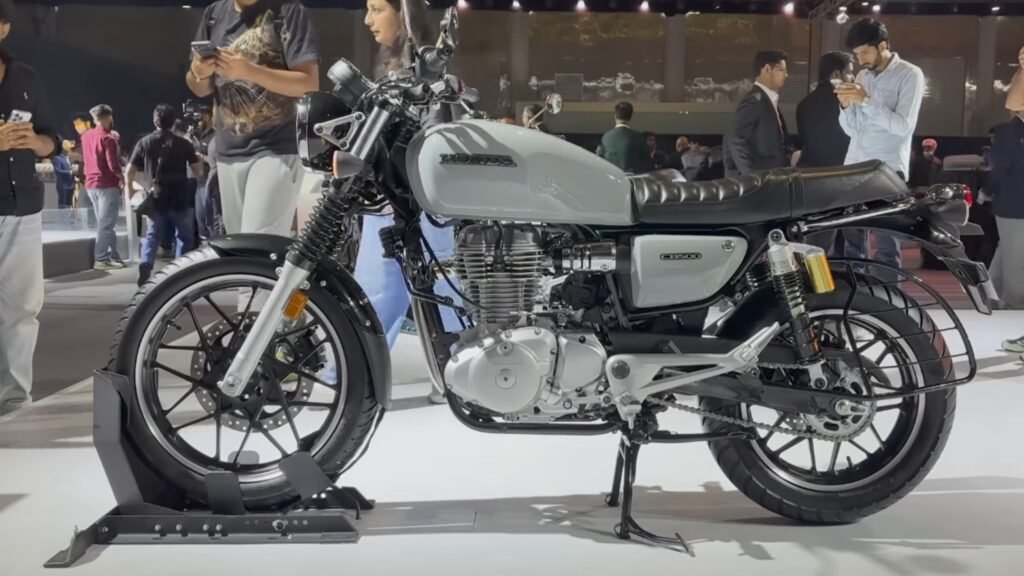
The design is one of the strongest reasons to consider the CB500.
Honda has given the motorcycle a traditional roadster silhouette with a round LED headlamp, teardrop-shaped fuel tank, single-piece seat and exposed engine. Chrome-finished elements around the engine and exhaust further reinforce its retro character.
The styling also takes inspiration from the legendary Honda CB750. Rather than attempting an aggressively modern appearance, the CB500 stays close to the classic motorcycle formula.
A Familiar Honda CB Family Design
There is also a clear visual connection with Honda’s CB350 range.
That is not necessarily a drawback. The familiar proportions make the CB500 instantly recognisable as a Honda retro roadster, while the larger engine and increased road presence give it a more substantial appearance.
The five-colour range also gives buyers several ways to personalise the motorcycle. The Pearl Igneous Black version with golden tank pinstripes is particularly distinctive.
Honda CB500 Engine: The Big Single Is the Main Attraction
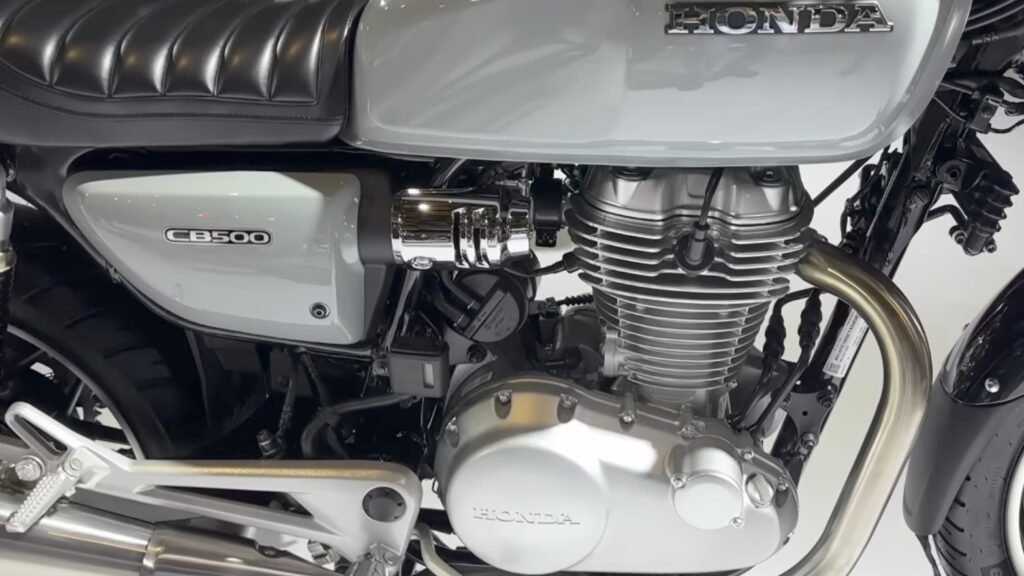
The biggest talking point in this Honda CB500 review is undoubtedly its engine.
Honda has fitted a new 501cc, single-cylinder, air- and oil-cooled engine. It produces around 27.6 bhp and 43.3 Nm, with the torque figure considerably higher than the peak power number would suggest.
The engine is paired with a five-speed gearbox and an assist/slipper clutch.
What Does the Big Single Mean for Riders?
On paper, the engine is clearly tuned more towards torque and relaxed riding than outright top-end performance.
That should suit the CB500’s retro-roadster identity. Instead of chasing high peak power, Honda appears to have focused on creating a motorcycle with a substantial engine character and accessible performance.
However, this distinction is important: official power and torque figures are available, but a comprehensive independent road test is required before making definitive claims about acceleration, refinement, highway behaviour or vibration levels.
501cc Engine vs Typical 350cc Retro Bikes
The CB500’s 501cc displacement puts it considerably above Honda’s CB350 family in engine capacity.
It also gives the motorcycle a distinctive position because the Indian market currently has very few large-capacity single-cylinder retro roadsters. The segment was previously represented by motorcycles such as the Royal Enfield Classic 500, which was discontinued several years ago.
Honda CB500 Features: Retro Looks, Modern Equipment
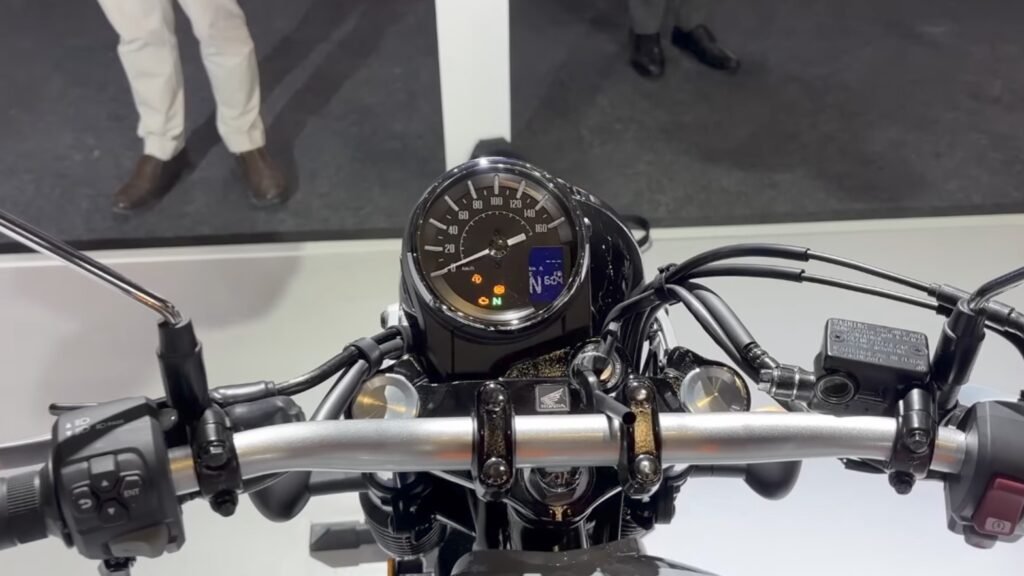
Despite its old-school styling, Honda has not made the CB500 a basic motorcycle.
The equipment list includes:
- Honda Selectable Torque Control (HSTC)
- Dual-channel ABS
- Front and rear disc brakes
- Assist and slipper clutch
- All-LED lighting
- Analogue-digital instrument console
- Honda RoadSync smartphone connectivity
- Gear-position information
- Trip and odometer information
The combination of traction control and dual-channel ABS is particularly relevant because the CB500 has considerably more engine capacity than Honda’s 350cc retro motorcycles.
Analogue-Digital Instrument Cluster
Honda has avoided fitting an overly complicated fully digital dashboard.
Instead, the CB500 uses an analogue speedometer with a digital inset. The digital section provides information such as the odometer, trip meter and gear position, while RoadSync connectivity adds smartphone-related functionality.
This approach fits the motorcycle’s retro character better than a large TFT screen would.
Honda CB500 Variants and Prices
The Honda CB500 review also needs to consider the three-variant strategy because wheel design is one of the key differences between versions.
| Variant | Wheel Type | Price* |
|---|---|---|
| CB500 Alloy | Alloy wheels | Rs. 2,75,000 |
| CB500 Spoke | Cross-spoke tubeless | Rs. 2,99,900 |
| CB500 Spoke with Stripe | Cross-spoke tubeless + graphics | Rs. 3,01,900 |
*Ex-showroom Bengaluru pricing reported at launch.
Honda has kept the mechanical package broadly consistent while using wheel type, paint and graphics to differentiate the variants.
Which Variant Makes the Most Sense?
The choice largely comes down to design preference and the intended use of the motorcycle.
The base Alloy version provides the lowest entry price. The Spoke variant adds cross-spoke tubeless wheels, while the top version gets additional graphics and a distinctive colour treatment.
The tubeless spoke-wheel setup is particularly interesting because it combines the visual appeal of wire-spoke wheels with the practical advantages of tubeless tyres.
Honda CB500 Ride and Handling: What We Can Confirm
A responsible Honda CB500 review should separate specifications from riding impressions.
At present, the motorcycle’s engine output, equipment and hardware are documented. However, there is not yet enough independently published long-term road-test information to make definitive statements about:
- Real-world acceleration
- Highway cruising behaviour
- Ride comfort over broken roads
- Actual fuel economy
- High-speed stability
- Vibration levels
- Braking feel
- Long-distance rider comfort
The 43.3Nm torque figure and long-stroke single-cylinder configuration suggest that the motorcycle has been designed around accessible torque rather than outright performance, but the real-world character can only be properly established through an extended ride test.
Expected Riding Character
Based on the specifications and positioning, the CB500 should be viewed as a relaxed retro roadster rather than a sports motorcycle.
Its relatively modest peak power combined with substantial torque should suit city riding and steady highway cruising. But these are specification-based expectations, not substitutes for independent road-test results.
Honda CB500 Safety Equipment
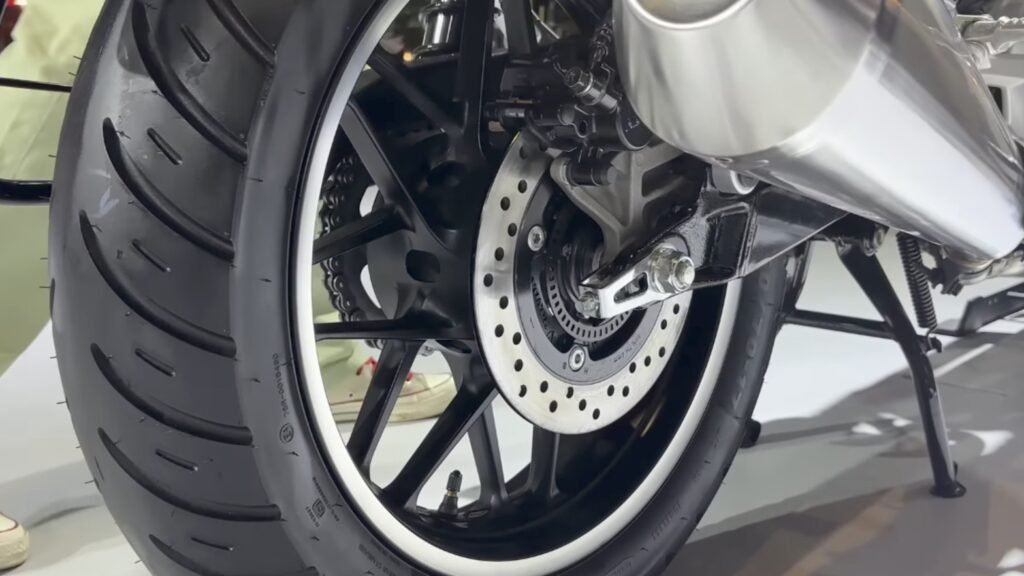
Safety equipment is another area where the CB500 moves beyond the traditional big-single formula.
The motorcycle gets dual-channel ABS and Honda’s Selectable Torque Control as standard equipment. HSTC is designed to help manage rear-wheel slip when available traction is limited.
The assist/slipper clutch also helps reduce rear-wheel instability during aggressive downshifts while making clutch operation easier.
For a motorcycle with more than 500cc of displacement, this modern safety package is an important part of its overall specification.
Honda CB500 Practicality and Everyday Use
The CB500 is not designed to be a minimalist weekend-only motorcycle.
Its conventional roadster ergonomics, torque-focused engine and modern safety equipment make it suitable in principle for everyday use. The RoadSync connectivity also adds some modern convenience without changing the motorcycle’s traditional appearance.
The larger question is fuel efficiency and running costs.
Honda has not established a definitive real-world mileage figure through an independently verified long-term test at the time of writing, so quoting a fixed mileage number would be premature.
Honda CB500 Rivals in India
The motorcycle occupies an unusual space in the Indian market.
At its launch price, the CB500 sits below motorcycles such as the Royal Enfield Interceptor 650 and BSA Gold Star 650 while offering substantially more displacement than typical 350cc retro roadsters.
| Motorcycle | Engine character | Positioning |
|---|---|---|
| Honda CB500 | 501cc single-cylinder | Large retro roadster |
| Honda CB350 | 348cc single-cylinder | Mid-size retro roadster |
| Royal Enfield Interceptor 650 | 648cc parallel twin | Larger retro roadster |
| BSA Gold Star 650 | 652cc single-cylinder | Premium large-capacity retro |
The CB500 therefore does not fit neatly into the existing 350cc or 650cc categories. Its biggest distinction is the combination of a 500cc single-cylinder engine, traditional styling and Honda’s modern electronics.
Honda CB500 India: Why This Motorcycle Matters
The Honda CB500 review reveals an interesting change in Honda’s Indian strategy.
Honda has previously relied heavily on the 350cc category for its modern-classic motorcycles in India. The CB500 gives the company a new product sitting above that range without immediately moving to a large twin-cylinder motorcycle.
The motorcycle is also manufactured in India, which has helped Honda position it below several established 650cc alternatives on ex-showroom pricing.
That local manufacturing strategy is significant because price is likely to be one of the biggest factors in how Indian riders perceive the motorcycle.
The Big-Single Formula Returns
The CB500 also brings back a format that has largely disappeared from the Indian market: a relatively large-capacity single-cylinder retro roadster.
The Royal Enfield Classic 500 previously occupied a similar broad concept, although the Honda is a completely different motorcycle with modern electronics, a new engine and contemporary safety equipment.
Honda CB500 Review Verdict: Who Is It For?
The CB500 appears aimed at riders who want more engine capacity and road presence than a conventional 350cc retro motorcycle but do not necessarily want a heavier, more powerful 650cc twin-cylinder machine.
Its strongest documented attributes are:
- 501cc single-cylinder engine
- 43.3Nm of torque
- Classic Honda styling
- Three variants
- Cross-spoke tubeless wheel option
- Traction control
- Dual-channel ABS
- Slipper clutch
- Honda RoadSync connectivity
- Made-in-India production
- Starting price of Rs. 2.75 lakh
The final buying decision, however, should also consider the rider’s priorities around performance, weight, highway usage, refinement, service costs and riding comfort.
Conclusion
The Honda CB500 review points to a motorcycle that is deliberately different from Honda’s existing mid-capacity offerings in India. Its 501cc single-cylinder engine, classic CB-inspired styling and relatively accessible launch price give it a distinctive identity.
The motorcycle does not attempt to compete purely on peak power. Instead, Honda has combined a torque-focused big single with modern equipment such as HSTC, dual-channel ABS, a slipper clutch and RoadSync connectivity.
At Rs. 2.75 lakh ex-showroom for the base variant, the CB500 enters an interesting space between 350cc retro motorcycles and larger 650cc machines.
What remains to be established through a detailed independent road test is equally important: real-world refinement, vibration levels, fuel economy, ride comfort and highway performance. Until those results are available, the CB500’s specifications and equipment provide the clearest picture of what Honda has brought to the Indian market.
Frequently Asked Questions
What is the Honda CB500?
The Honda CB500 is a retro roadster launched in India with a 501cc single-cylinder, air- and oil-cooled engine.
What is the Honda CB500 price in India?
The CB500 starts at Rs. 2.75 lakh ex-showroom for the Alloy variant. The Spoke variant costs Rs. 2,99,900, while the Spoke with Stripe variant costs Rs. 3,01,900.
What engine does the Honda CB500 use?
It uses a 501cc single-cylinder engine with air and oil cooling. The motor produces around 27.6 bhp and 43.3Nm.
Does the Honda CB500 have traction control?
Yes. Honda Selectable Torque Control is offered as part of the motorcycle’s standard equipment.
Does the Honda CB500 have ABS?
Yes. The motorcycle gets dual-channel ABS with disc brakes at both ends.
How many Honda CB500 variants are available?
There are three variants: Alloy, Spoke and Spoke with Stripe.
Is the Honda CB500 made in India?
Yes. The motorcycle is manufactured in India.
What are the main rivals of the Honda CB500?
Its positioning places it between 350cc retro motorcycles and larger 650cc models. The Royal Enfield Interceptor 650 and BSA Gold Star 650 are among the motorcycles it competes with on price and positioning.
Read Also
Impressive Voge CU-X Hybrid Unveiled With 6kW Motor and 2-Battery Setup
2027 Kawasaki Versys 650 Launched in India with New Colour
Yamaha YZF-R2 : Performance, Mileage, Features, Comfort & Verdict