
Ducati has officially launched the 2026 Monster in India at Rs 13.99 lakh (ex-showroom), bringing a completely reworked version of one of the brand’s most iconic nameplates to Indian roads. The new Monster arrives with a smaller but lighter engine, a fresh monocoque chassis, and updated electronics — a meaningful overhaul rather than a cosmetic refresh.
This matters because the Monster has long been Ducati’s most accessible model in India, and this launch directly affects existing owners, buyers who’ve been waiting through months of teasers and spy shots, and anyone shopping the premium naked-bike segment against rivals like the Triumph Street Triple RS and Kawasaki Z900. This article covers what’s confirmed at launch, what’s changed from the outgoing model, and how it stacks up against the competition.
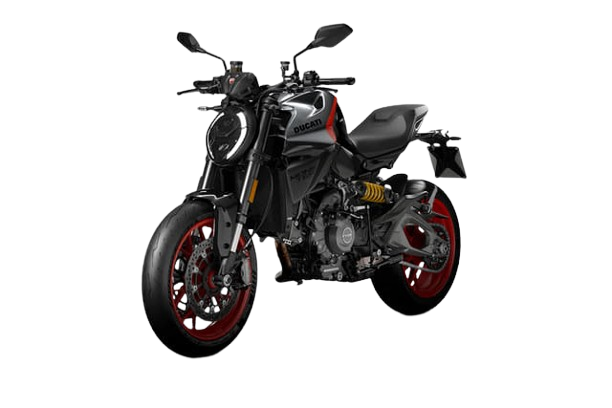
Key Highlights
- The 2026 Ducati Monster is priced at Rs 13.99 lakh, ex-showroom, close to industry pre-launch estimates of around Rs 14 lakh.
- It uses a new 890cc V-twin engine, down in displacement from the outgoing model’s 937cc L-twin, producing 109.4 bhp at 9,000 rpm and 91 Nm at 7,250 rpm.
- The bike sits on a new aluminium monocoque chassis and is around 4 kg lighter than the outgoing model.
- It brings back the Monster’s classic big-tank design, a deliberate return after criticism of the previous generation’s styling.
- A higher-spec Monster Plus variant adds a small windscreen and seat cowl, expected at a premium over the base price.
- Colour options at launch are Ducati Red and Iceberg White.
- Rivals in India include the Triumph Street Triple 765 RS and Kawasaki Z900.
Table of Contents
What’s New?
This is the most significant update to the Monster nameplate in India in years. Rather than a mid-cycle refresh, Ducati has re-engineered the bike from the ground up: a new engine platform, a new chassis, a design that consciously returns to the Monster’s original “big-tank” identity, and a full generation jump in electronics. It becomes the fourth Ducati model in India to use the 890cc V2 platform, joining the Streetfighter V2, Panigale V2, and Multistrada V2.
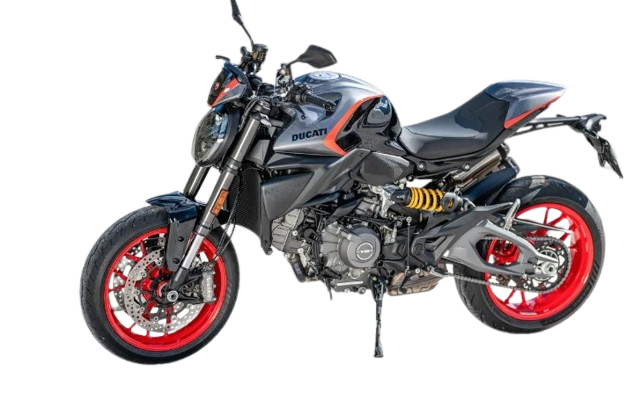
Design Updates
The most talked-about change is visual: the Monster’s large, muscular fuel tank is back, addressing criticism that the outgoing generation strayed too far from the model’s classic silhouette. The tank integrates vents that echo the second-generation Monster, and its shape allows for a wider lock-to-lock steering range. The oval LED headlight has been redesigned with a fresh daytime running light signature, the tail section adopts a sleeker, more sculpted shape, and the engine remains fully exposed — a Monster signature — with a small trellis-tubing section peeking out beneath the seat as a nod to the original design.
Engine & Performance
The headline mechanical change is the switch to an 890cc, liquid-cooled V-twin, shared with the Streetfighter V2. It produces 109.4 bhp at 9,000 rpm and 91 Nm of torque at 7,250 rpm — marginally lower peak figures than the outgoing 937cc engine’s 111 bhp and 93.5 Nm, though peak power and torque now arrive earlier in the rev range (versus 9,250 rpm and 6,500 rpm on the old bike), which should translate to punchier real-world response.
The engine is paired with a six-speed gearbox and a bi-directional quickshifter, and Ducati has extended the valve clearance service interval to 45,000 km, a meaningful reduction in long-term maintenance costs for owners.
Features & Technology
The 2026 Monster brings a more modern electronics suite than its predecessor, including:
- Multiple riding modes
- Traction control
- A larger full-colour TFT display
- Bi-directional quickshifter
- Full LED lighting
These additions are aimed squarely at bringing the Monster’s electronics package in line with rivals that have offered more sophisticated rider aids for some time.
Suspension & Brakes
The new Monster uses a Showa 43mm upside-down front fork and a Showa monoshock adjustable for preload at the rear, mounted to the new aluminium monocoque frame. Specific brake hardware details weren’t emphasised at launch, though Ducati’s naked-bike range typically pairs radial-mount Brembo calipers with dual-channel ABS — buyers should confirm exact brake specifications with a dealer for full clarity.
Price & Variants
- Monster (base): Rs 13.99 lakh, ex-showroom
- Monster Plus: Expected to cost approximately Rs 20,000–30,000 more than the base variant, adding a small windscreen and a seat cowl
This pricing sits close to, but below, most pre-launch industry estimates that had pointed to around Rs 14 lakh, and is a step up from the outgoing Monster’s Rs 13.84 lakh starting price. On-road prices will be meaningfully higher depending on your city — confirm exact figures with your local Ducati dealer.
Launch Timeline
- October 2025: The new-generation Monster is unveiled internationally, with an India launch expected the following year.
- Throughout 2026: Design patent filings and teaser campaigns build anticipation for the India launch.
- Early August 2026: Ducati India issues an official “block your date” teaser for August 10.
- August 10, 2026: The 2026 Ducati Monster is officially launched in India at Rs 13.99 lakh.
Colour Options
The 2026 Monster is available in two colours at launch:
- Ducati Red
- Iceberg White
Both the standard Monster and Monster Plus variants share these colour options.
Specifications Table
| Specification | Details |
| Engine | 890cc, liquid-cooled, V-twin |
| Power | 109.4 bhp @ 9,000 rpm |
| Torque | 91 Nm @ 7,250 rpm |
| Gearbox | 6-speed with bi-directional quickshifter |
| Fuel Tank | 14 litres |
| Mileage (claimed/expected) | Not officially disclosed at launch; treat any figure as an estimate until confirmed |
| Kerb Weight | 175 kg (wet, without fuel); ~4 kg lighter than outgoing model |
| Chassis | Aluminium monocoque |
| Front Suspension | Showa 43mm USD fork |
| Rear Suspension | Showa monoshock, preload adjustable |
| Display | Full-colour TFT |
| Connectivity | Not detailed at launch; confirm with dealer |
| Riding Aids | Multiple riding modes, traction control |
| Service Interval (valve clearance) | 45,000 km |
Competitor Comparison
- Triumph Street Triple 765 RS: Typically praised for sharper outright performance and fully adjustable suspension at a lower price point than the Monster; the Monster counters with Ducati’s V-twin character and design pedigree.
- Kawasaki Z900: A more affordable, four-cylinder alternative with strong reliability credentials, appealing to buyers prioritising value over brand prestige.
The Monster’s core appeal remains its distinctive V-twin sound and character, along with Ducati’s badge value — attributes that don’t show up on a spec sheet but matter significantly to buyers in this segment.
Pros & Cons
| Pros | Cons |
| Return of the iconic big-tank Monster design | Marginally lower peak power/torque than outgoing model |
| Lighter aluminium monocoque chassis | Priced above key rivals like the Z900 |
| Improved electronics (riding modes, traction control) | Mileage and some specs not disclosed at launch |
| Extended 45,000 km valve service interval | Only two colour options at launch |
| Shares proven 890cc engine with Streetfighter V2 | Premium pricing typical of Ducati ownership costs |
Who Should Buy This Bike?
- Daily commuters: Not the primary use case for a premium naked like this, though its ergonomics are more usable day-to-day than a full sportbike.
- College students: Unlikely to be the target buyer given the price point.
- Highway riders: A strong option — the V-twin’s low-and-mid-range torque and refined chassis suit confident highway riding well.
- First-time buyers: Possible for those entering premium biking directly, but the Monster’s price and performance level suit riders with some prior experience better.
- Enthusiasts: The clearest target audience — riders who value Ducati’s design heritage, V-twin character, and brand prestige alongside genuine performance.
1. What is the price of the 2026 Ducati Monster in India?
The 2026 Ducati Monster is priced at Rs 13.99 lakh, ex-showroom.
2. What engine does the 2026 Monster use?
An 890cc, liquid-cooled V-twin producing 109.4 bhp at 9,000 rpm and 91 Nm of torque at 7,250 rpm, shared with the Streetfighter V2.
3. Is the new Monster more powerful than the outgoing model?
Peak figures are marginally lower than the outgoing 937cc model’s 111 bhp and 93.5 Nm, but power and torque now peak earlier in the rev range for punchier real-world response.
4. What is the Ducati Monster Plus, and how much extra does it cost?
The Monster Plus adds a small windscreen and a seat cowl, and is expected to cost approximately Rs 20,000–30,000 more than the base Monster.
5. What colours is the 2026 Monster available in?
Ducati Red and Iceberg White, across both the standard Monster and Monster Plus variants.
6. How does the Monster compare to the Triumph Street Triple RS?
The Street Triple RS is generally regarded as sharper on performance and offers fully adjustable suspension at a lower price, while the Monster leans on Ducati’s V-twin character and design heritage.
7. Is the new Monster lighter than the previous generation?
Yes, it’s approximately 4 kg lighter, helped by the switch to an aluminium monocoque chassis and the smaller-displacement engine.
8. What is the service interval for the new Monster’s engine?
Ducati has extended the valve clearance service interval to 45,000 km, reducing long-term maintenance costs compared to the outgoing model.
Conclusion
The 2026 Ducati Monster’s India launch delivers on most of what was expected heading into August 10 — a price close to industry estimates, a genuinely reworked engine and chassis, and a deliberate return to the design that made the Monster famous in the first place. For existing Ducati fans and anyone shopping the premium naked-bike space, this is a real generational update rather than a cosmetic one, and the practical takeaway is straightforward: if the classic Monster silhouette and V-twin character are what draw you to this bike, Ducati has delivered exactly that at Rs 13.99 lakh, with the higher-spec Monster Plus as a modest step-up for those wanting extra touring comfort.